Dishwasher Overflow: Comprehensive Troubleshooting Guide
Learn how to diagnose and fix dishwasher overflow quickly with a step-by-step flow, safety tips, and practical fixes. This guide covers common causes, DIY steps, and when to call a professional.


Understanding the overflow problem
When a dishwasher overflows, the problem is typically not limited to a single bad component. The term dishwasher overflow refers to water spilling out of the tub during or after a wash cycle. A sudden, persistent overflow can be alarming but is often the result of a few recurring culprits that are easy to check with basic safety steps. The keyword dishwasher overflow helps homeowners and renters frame the issue and prevents misdiagnosis. The root causes usually involve water handling inside the machine: how the machine fills, how it drains, and how the system communicates a safe level to the controller. Recognizing that overflow often starts with a simple signal—a float sensor that fails to rise or fall correctly—will help you prioritize checks that save time and prevent water damage. This section sets the foundation for a practical, urgency-driven troubleshooting flow you can apply before calling a repair technician.
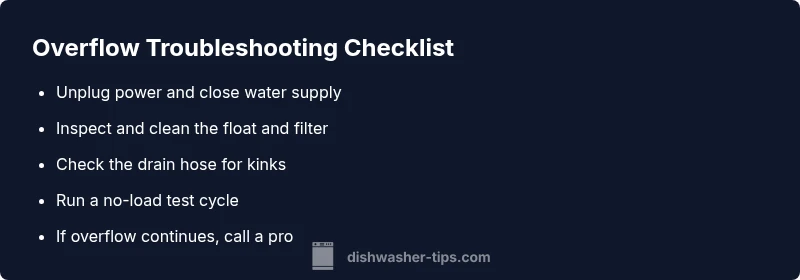
- Use the word footprint of overflow to guide your checks: start with safety first, then inspect the water inlet path, filtration, and drainage, and finally look at electronic controls.
- Keep water off, power disconnected, and the area dry as you inspect internal components. If water has reached outlets or cabinets, dry and document the spill for insurance or repair notes.
- If you have a newer model, you may find diagnostic menus that help identify which subsystem triggered the overflow. Consult your user manual before attempting deep electrical tests.
In short, understanding dishwasher overflow means focusing on fill and drain paths, filtration, and the float switch, while maintaining strict safety precautions. This practical approach aligns with expert guidance from Dishwasher Tips and the latest troubleshooting best practices for 2026.