Why Does My Dishwasher Vent Overflow? A Practical Troubleshooting Guide
Urgent, practical troubleshooting for dishwasher vent overflow, with a clear diagnostic flow, step-by-step fixes, and maintenance tips to prevent recurrence in 2026.


The vent overflow is usually caused by a blocked vent path, a misrouted or kinked drain hose, or a clogged sump that prevents proper venting. Start with the simplest checks: clean the vent opening, inspect the drain hose for kinks, and verify the float switch. If the problem persists, unplug the unit and call a pro.
Why a Dishwasher Vent Overflows
The question "why does my dishwasher vent overflow" often points to one of a few common culprits. In many homes, a blocked vent path or air vent cap prevents steam from escaping properly, causing pressure to build inside the cabinet and water to be forced out through the vent tube. Dishwasher Tips analysis notes that misrouted or weakened drainage paths are another frequent cause, especially when a dishwasher is installed with an awkward hose layout. A clogged sump or filter can also raise the internal water level sufficiently to bubble up and vent through the overflow. Addressing these issues promptly can prevent water damage and mold growth.
According to Dishwasher Tips, most overflow events stem from simple maintenance gaps rather than complex electrical faults. A systematic check of the vent, hoses, and filters usually resolves the issue without professional service.
Quick Checks You Can Do Right Now
- Power off the dishwasher and unplug or switch off the circuit breaker before poking around.
- Inspect the vent opening; clear any lint, dust, or debris with a soft brush.
- Check the drain hose for kinks, crimps, or a loose connection to the drain or disposal.
- Look at the dishwasher’s filter and sump; remove and rinse any food debris.
- Verify the float switch moves freely and triggers the water shutoff correctly.
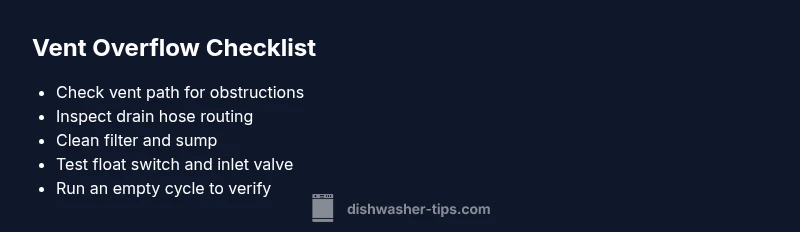
- Run a test cycle with no load to see if overflow occurs again and monitor the vent area.
If you see water spreading from the vent during the cycle, recheck hose routing and vent obstruction before attempting more invasive steps. If the problem persists, it may require professional assessment.
Inspect the Vent Path and Air Gap
The vent path should be unobstructed so steam can escape upward rather than through the vent tube. Clean any screens in the air gap and make sure the vent tube isn’t cracked or collapsed. A partial blockage at the vent cap can mimic a clogged drain, so clear the path from the interior to the outside vent.
Pro tip: use a flexible brush and mild soap to gently dislodge debris. Dry everything completely before running another cycle to prevent condensation from dripping back into the tub.
Review the Drain System: Hose, Filter, and Sump
Why it matters: A misrouted drain hose or a low-height drain can cause siphoning and backflow toward the vent. Inspect the hose for sharp bends and ensure it’s secured with proper clamps. Check the drain pump filter for debris and clean as needed. A blocked sump can raise the overall water level during cycles, increasing vent pressure.
Tip: remove and rinse the filter under warm water; avoid using any metal tools that could scratch the plastic. Reassemble and test.
Float Switch and Water Inlet: The Hidden Culprits
A faulty float switch can fail to detect an overfill, allowing the tub to fill too much and forcing steam to vent aggressively. Inspect the float ball for smooth movement; if it sticks, replace the switch or call a professional. Also check the water inlet valve for debris in the screen that might cause overfilling.
Safety note: only handle electrical components with the power disconnected. If you’re not comfortable testing the valve or using a multimeter, skip ahead to a pro.
Common Misconfigurations That Cause Overflow
- Incorrect drain hose height or route that creates siphon back into the tub.
- Cracked vent hose or loose vent connections.
- Overly aggressive wash programs or high fill levels set unintentionally.
- Clogged filter or sump debris restricting normal drainage.
- Improper dishwasher-to-disposal connection.
Correcting hose routing, vent integrity, and program settings often resolves overflow without needing replacement parts.
What to Do If Overflow Persists: Safety and Next Steps
If you observe water gushing from the vent after trying the quick checks, shut off power and water supply, and contact a licensed appliance technician. Persistent overflow can indicate a failing float switch, inlet valve, or internal pump issue that requires professional diagnosis. Do not operate the dishwasher when water is leaking or the electrical panel shows signs of moisture.
Prevention: Maintenance to Avoid Future Overflow
Schedule a monthly vent and filter clean, inspect hose routing, and run a short, empty cycle to verify proper venting. Keep the air gap clear and confirm the drain line remains free of kinks. A small investment in routine maintenance can prevent costly water damage and the risk of electrical hazards.
Steps
Estimated time: 60-90 minutes
- 1
Power down and access vent area
Unplug the unit or switch off the circuit breaker. Remove access panels or lower spray arm to reach the vent area safely.
Tip: Always cut power before opening any appliance panels. - 2
Inspect the vent path
Look for obstructions in the vent tube and cap. Use a soft brush to remove lint or debris.
Tip: Be gentle to avoid bending the vent tube. - 3
Clean vent cap and air gap
Remove the cap, clean any screens, and rinse with warm water. Dry completely before reassembly.
Tip: Dry thoroughly to prevent condensation. - 4
Check drain hose routing
Trace the drain hose from the tub to the sink or disposal. Ensure no kinks and that it has proper slope and clamp at connections.
Tip: Ensure height is sufficient to prevent siphoning. - 5
Clean filter and inspect sump
Remove and rinse the filter and sump area. Clear debris that could reduce drainage efficiency.
Tip: Use a soft cloth to wipe dry before reinstall. - 6
Test the float switch
Manually lift and release the float to confirm it moves freely. If it sticks, replacement is likely required.
Tip: Ensure power is off while testing the float. - 7
Inspect water inlet valve and screens
Check the inlet valve screen for debris and test operation with the appliance powered off the circuit (if you have the right tools).
Tip: Electrical testing should be performed by qualified personnel. - 8
Run a test cycle and observe
Run an empty cycle and watch the vent area for any signs of overflow. Keep towels handy in case of a spill.
Tip: Have a tray or towel nearby during testing.
Diagnosis: Dishwasher vent overflowing during cycles
Possible Causes
- highBlocked vent path or vent cap
- highBlocked or kinked drain hose or improper drain connection
- mediumFaulty float switch or faulty water inlet valve causing overfill
- mediumClogged filter or sump debris
Fixes
- easyClean vent opening and ensure air path is clear; remove obstructions
- easyInspect and straighten drain hose, clear clogs, verify drain connection
- mediumTest and replace faulty float switch; check water inlet valve operation
- easyClean filter and sump, remove debris; ensure screens are intact
- easyIf overflow persists, call a licensed technician
People Also Ask
What is the vent in a dishwasher and why does it overflow?
The vent allows steam to escape; if blocked, pressure builds and water can escape. Overflow often indicates vent or drain issues.
Dishwasher vents let steam escape; if blocked, overflow can happen.
Is dishwasher vent overflow dangerous?
Overflow can lead to water damage and electrical hazards. Stop using the appliance and unplug if you notice ongoing overflow.
Overflow can be risky—turn it off and unplug if it keeps happening.
Can I fix vent overflow myself?
Many causes are user-serviceable, like vents, hoses, and filters. Electrical components should be handled by a pro if you're unsure.
You can try basic checks, but electrical parts are better left to a pro.
How can I prevent dishwasher vent overflow?
Regular cleaning, proper hose routing, and testing cycles can prevent overflow.
Keep up with cleaning and correct hose setup to prevent overflow.
What should I do if water leaks behind the dishwasher?
Shut off power and water, inspect hoses, and check installation. Call a pro if the leak persists.
Turn off power and water, then check hoses; call a pro if it continues.
When should I call a professional?
If you can’t identify or fix the issue after guided steps or electrical parts are involved, seek repair help.
If in doubt, contact a professional for diagnosis.
Watch Video
What to Remember
- Start with simple checks: vent path, hoses, and filters.
- If overflow persists, inspect float switch and inlet valve.
- Clean the sump and filter to restore drainage.
- Test cycles to confirm venting is restored.
- Prevent future overflow with routine maintenance.