Why Is My Dishwasher Draining Through the Overflow? A Practical Troubleshooting Guide
Learn practical steps to diagnose and fix why your dishwasher drains through the overflow. This comprehensive troubleshooting guide covers common causes, safe checks, and proven fixes from Dishwasher Tips.


Most overflow drainage on a dishwasher is caused by a blocked drain hose or a faulty float switch. Start by unplugging the unit, inspecting the drain hose for kinks, and testing the float assembly. If water continues to spill, check the drain pump and filters, then run a test cycle. If unresolved, consult a pro.
Understanding the Overflow Symptom
Water spilling from the dishwasher during a cycle can be alarming. If you’re asking why is my dishwasher draining through the overflow, you’re not alone. This symptom is usually tied to a drainage path that has a blockage, a kinked hose, or a water-level control that isn’t signaling the pump to stop filling. According to Dishwasher Tips, overflow problems are among the most common calls we troubleshoot in homes, especially with aging models where hoses become brittle or sensors stick. The good news is that most overflow events are fixable with a systematic approach. Start by powering the unit down at the outlet or breaker and, if you notice any pooling, shut off the water supply to prevent further spillage. Then proceed with careful, step-by-step checks that isolate the problem without replacing parts prematurely. The goal is to identify the root cause and apply the simplest, safest fix first.
Understanding the Overflow Symptom
Water spilling from the dishwasher during a cycle can be alarming. If you’re asking why is my dishwasher draining through the overflow, you’re not alone. This symptom is usually tied to a drainage path that has a blockage, a kinked hose, or a water-level control that isn’t signaling the pump to stop filling. According to Dishwasher Tips, overflow problems are among the most common calls we troubleshoot in homes, especially with aging models where hoses become brittle or sensors stick. The good news is that most overflow events are fixable with a systematic approach. Start by powering the unit down at the outlet or breaker and, if you notice any pooling, shut off the water supply to prevent further spillage. Then proceed with careful, step-by-step checks that isolate the problem without replacing parts prematurely. The goal is to identify the root cause and apply the simplest, safest fix first.
Steps
Estimated time: 60-90 minutes
- 1
Power off and safety prep
Unplug the dishwasher or flip the circuit breaker and shut off the water supply. Remove standing water with towels and ensure the area is dry before you begin. This first step prevents electric shock and keeps you safe while you inspect components.
Tip: Use a flashlight to inspect dark areas; wear gloves for hygiene and grip. - 2
Inspect the drain hose for kinks
Locate the drain hose connected to the sink/disposer. Check for kinks, twists, or sagging that could impede proper drainage. Detach and inspect the interior for blockages; reattach securely with clamps.
Tip: Ensure the hose rises above the base of the tub to prevent backflow. - 3
Check the float switch and water level sensor
Access the float assembly and verify it moves freely; wipe away any soap scum or debris. Lift the float gently to confirm it rises and falls smoothly. If the sensor seems stuck or unresponsive, plan for replacement.
Tip: Test with the unit unplugged to avoid accidental activation. - 4
Inspect the drain pump and filter screen
Remove the bottom panel and check the filter screens for debris. Clear any hair, food particles, or mineral buildup. Inspect the pump impeller for wear or damage and listen for a grinding sound that indicates a damaged part.
Tip: Keep screws organized so you don’t misplace components during reassembly. - 5
Run a controlled test cycle
Reconnect power and run a short test cycle with a small, light load. Observe whether water drains properly and if the overflow reoccurs. Check all connections for leaks during the cycle.
Tip: Place towels around the base to catch any residual water during testing. - 6
Evaluate results and plan next steps
If overflow persists, record observations (which stage, water level, noises) and contact a professional. Do not continue using the unit if you notice burning smells, melted wiring, or sparking.
Tip: Document observations to share with a technician for faster service.
Diagnosis: Dishwasher overflow draining through the overflow tube during or after a cycle.
Possible Causes
- highClogged or kinked drain hose
- highFaulty float switch or water level sensor
- highDrain pump obstruction or failure
- mediumBlocked overflow path or siphon effect in plumbing
Fixes
- easyStraighten or replace the drain hose, ensure proper routing, and remove any kinks or submersion that could cause backflow.
- mediumTest the float switch and water level sensor; clean or replace if sticky or unresponsive.
- mediumInspect the drain pump and impeller for debris; clean screens and replace if damaged.
- mediumVerify the overflow plumbing path and clamps; ensure there are no leaks or disconnections that promote siphoning.
People Also Ask
Why is my dishwasher draining through the overflow?
Overflow usually happens when the drain path is blocked or a sensor misreads water level. Inspect the drain hose, float switch, and pump, then clear debris and re-test. If it persists, a professional inspection is advised.
Overflow is usually caused by a blocked drain hose or a faulty float switch. Check those parts and test again; if it doesn’t fix, call a professional.
How do I check the drain hose for clogs?
Unclip the hose from the disposal or drain, run water through it, and look for signs of buildup. Use a flexible brush to clear inside and reconnect firmly with clamps.
Unclip the hose, run water through it, and use a brush to clear any buildup before reclipping it.
Can a faulty float switch cause overflow?
Yes. If the float switch sticks or the sensor misreads the water level, the machine may overfill. Clean the float area or replace the switch as needed.
A faulty or stuck float switch can cause overfilling; clean or replace it if needed.
How do I reset the dishwasher's water level sensor?
Power down the unit, check for debris around the sensor, and then power up. If issues persist, a sensor replacement may be required.
Power down, clean the sensor area, and power back up; replace the sensor if it still malfunctions.
Should I run the dishwasher empty to test after fixes?
Yes, run a cycle with no dishes to verify proper draining and to avoid leaks while testing the repair.
Run an empty cycle to verify the fix before loading dishes.
When should I call a professional?
If overflow recurs after checking hose, float, and pump, or you notice burning smells, corrosion, or electrical issues, contact a technician promptly.
Call a professional if the overflow continues after checks or you notice electrical issues.
Watch Video
What to Remember
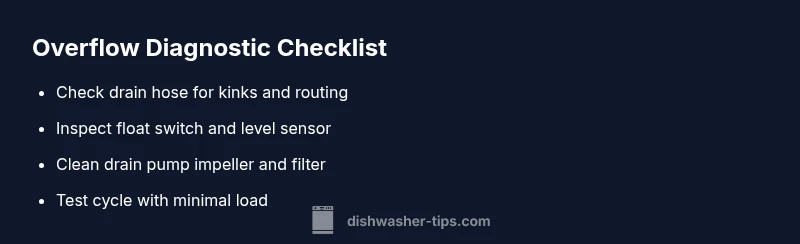
- Check the drain hose first and foremost
- Test the float switch and level sensor
- Inspect the drain pump and filter
- Run a test cycle with minimal load
- Call a pro if overflow returns after checks