Dishwasher Overflow into Sink: Troubleshooting and Fixes
Learn how to diagnose and fix dishwasher overflow into sink fast with practical steps, safety tips, and prevention strategies from Dishwasher Tips. Focus on float switches, air gaps, and drainage to stop backflow and protect your kitchen.


Likely cause: an overflowing dishwasher is usually triggered by a failed float switch, a blocked air gap, or a kinked drain hose allowing backflow into the sink. Quick fix in 2–3 steps: 1) unplug and shut off water supply, 2) inspect the float assembly and ensure it can move freely, 3) remove blockages from the air gap and drain hose, then restart with a short test cycle.
Why dishwasher overflow into sink happens
The water that spills into the sink during a dishwasher cycle is often the result of three failure points: the float switch, the air gap, and the drain hose. When the float fails to stop filling, or the air gap is blocked, or the drain hose is kinked, water can back up into the sink rather than drain away. According to Dishwasher Tips, understanding how these components normally work helps homeowners diagnose quickly and avoid unnecessary repairs. In a typical machine, water should rise until the float rises and shuts off the fill valve, then drain through a clear hose to the plumbing system. If any of these parts are out of spec, you’ll see a dishwasher overflow into sink. By recognizing these signals early, you can prevent minor floods from turning into costly water damage in your kitchen.
First steps to take if you notice water
If you notice water pooling near the dishwasher or spilling into the sink, act quickly and methodically. Safety comes first: unplug the unit, turn off the cold water supply, and keep towels handy to absorb spillover. Do not reach into the dishwasher while it is plugged in or if there is visible electrical moisture. Move any sensitive items away from the cabinet, and inspect the immediate drain path: is the sink drain clear, is the disposal inlet free of debris, and is the drain hose free of kinks? A calm, stepwise approach prevents escalation and makes it easier to pinpoint the issue.
Common culprits: float switch, air gap, drain hose, sink drain
Four components account for the majority of overflow scenarios. The float switch should rise freely as water fills; if it sticks or fails, the machine will overfill. The air gap is a backflow prevention device that must be unobstructed and properly connected to the drain hose. A kinked or blocked drain hose can force water back into the sink rather than moving to the household drain. Finally, a clogged sink drain or a blocked connection to a garbage disposal can backpressure the dishwasher and reveal itself as an overflow. Each culprit has a simple check you can perform before moving to more advanced steps.
Diagnostic flow you can follow
Follow a structured diagnostic path to identify the root cause. Start with the easiest checks (air gap clearance, hose routing) and move toward the more involved tests (float switch operation, electrical safety). If you find multiple issues, address the simplest fix first to reduce risk. Always confirm after each step by running a brief test cycle with a manageable amount of water. If the overflow persists, escalate to professional service to avoid water damage and electrical hazards.
Safe fixes you can perform without tools
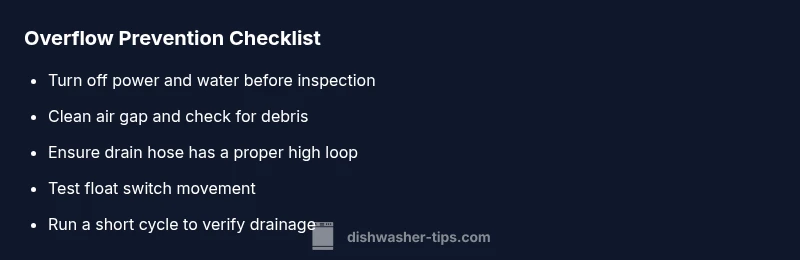
Begin with non-invasive steps that reduce risk. Clean the air gap and verify it’s free of debris. Inspect the drain hose for kinks and proper slope; straighten and reattach as needed. Test the float switch by lifting the float manually to see if the fill valve shuts off promptly. If the water still overflows, there may be an internal sensor or valve issue requiring replacement. Use towels to dry the area and verify there are no leaks around clamps and hose connections.
When to call a professional and how to choose one
If you are uncomfortable working with electrical components, smell gas-like odors (not common in dishwashers, but a red flag), or see persistent leaks after the basic checks, call a licensed appliance technician. Look for technicians with experience in dishwashers and backflow prevention systems, and ask about warranty coverage on parts. Dishwasher Tips recommends requesting a written estimate and asking about the expected timeline for parts availability before scheduling a service visit.
Prevention tips to avoid future overflow
To prevent future overflow, ensure regular maintenance of the float switch and air gap. Periodically inspect and clean the air gap to remove mineral buildup and debris. Route the drain hose according to the manufacturer’s guidelines, typically with a high loop to prevent backflow. Consider a yearly inspection of hoses and clamps and use a dishwasher-safe cleaner sparingly to avoid residue buildup near the air gap. Consistent maintenance dramatically reduces the likelihood of an overflow.
Steps
Estimated time: 60-90 minutes
- 1
Power down and secure area
Unplug the dishwasher and shut off the water supply. Remove dishes and clear counter space. Dry any standing water to prevent slips. This makes future checks safer and easier.
Tip: Keep a bucket handy for leaks during testing. - 2
Check the float switch for movement
Open the access panel if needed and gently move the float up and down to see if the fill valve responds. If it remains stuck or doesn’t shut off, the float switch may be faulty.
Tip: Do not force the float; if resistance is felt, stop and plan for replacement. - 3
Inspect the air gap for debris
Locate the air gap on the sink or countertop. Remove the cap and clean any mineral buildup or debris with warm water and a brush. Reassemble and flush with a short cycle.
Tip: Wear gloves to avoid sharp edges around the air gap cover. - 4
Examine the drain hose routing
Trace the drain hose from the dishwasher to the sink or disposal. Look for kinks or crush points and verify there is a proper high loop. Re-secure clamps as needed.
Tip: Avoid tight bends that can trap water and pressure. - 5
Test the system with a short run
After reassembling, run a brief cycle with minimal load and monitor the water level. Confirm water flows out and no overflow occurs into the sink.
Tip: Stand by with towels in case of a spill. - 6
Check sink and disposal connections
Make sure the sink drain is clear and the disposal inlet is unobstructed. Clear any clog that could back up into the dishwasher.
Tip: Never mix cleaners that can create suds and blockages. - 7
Decision point: call a professional if needed
If the overflow recurs after these steps or you notice electrical hazards, consult a professional plumber or appliance technician. They can replace sensors or valves safely.
Tip: Ask for an upfront written estimate and parts warranty.
Diagnosis: Water overflowing from dishwasher into sink
Possible Causes
- highBlocked or malfunctioning air gap
- highFaulty float switch or water-level sensor
- mediumKinked or clogged drain hose
- mediumBlocked sink drain or disposal connection
- lowIncorrect dishwasher installation or hose routing
Fixes
- easyClean or replace the air gap and verify clearance; remove debris
- mediumInspect float switch for smooth movement and test; replace if stuck
- easyUnkink and straighten drain hose; ensure it has proper slope
- easyClear sink drain or disposer inlet; check for blockages
- mediumVerify proper hose routing; reseat connections per manual
People Also Ask
Why does my dishwasher overflow into the sink?
Overflow into the sink is most often caused by a blocked air gap, a faulty float switch, or a kinked drain hose that allows backflow. Inspect these components in order to locate the culprit.
Overflow is usually due to a blocked air gap, a faulty float switch, or a kinked drain hose.
How do I test the float switch safely?
Unplug the unit and remove access to the float. Gently raise and lower it to see if the fill valve stops correctly. If it doesn’t respond, the float switch may need replacement.
Unplug the unit, check the float, and test its response; replace if it’s faulty.
Can a blocked air gap cause backflow even with a good float?
Yes. A clogged air gap can prevent proper drainage and force water back into the sink. Clean it and ensure a clear path for the drain hose.
A clogged air gap can back up water into the sink.
What if the drain hose looks fine but still overflows?
Check for hidden kinks and ensure the hose has a proper high loop. Reconnect clamps firmly and route away from sharp edges.
If the hose seems fine, check for kinks and proper routing.
When should I call a professional?
If the overflow persists after basic checks or you encounter electrical hazards, contact a licensed technician for diagnosis and replacement of faulty components.
Call a professional if the problem persists or there are electrical hazards.
Can overflow cause damage to cabinets or floors?
Yes. Prolonged water exposure can warp cabinets and promote mold; dry the area quickly and inspect seals and finishes.
Yes, prolonged exposure can cause damage; dry quickly.
Watch Video
What to Remember
- Inspect float, air gap, and drain hose first
- Shut off power and water before any inspection
- Test after each fix to confirm resolution
- Route hoses per manufacturer guidelines
- Call a pro if leaks persist or you’re unsure