Why Does My Dishwasher Air Gap Overflow? A Practical Troubleshooting Guide
Urgent, practical troubleshooting for dishwasher air gap overflow. Learn causes, safe fixes, and prevention tips to stop water backing up into your sink.


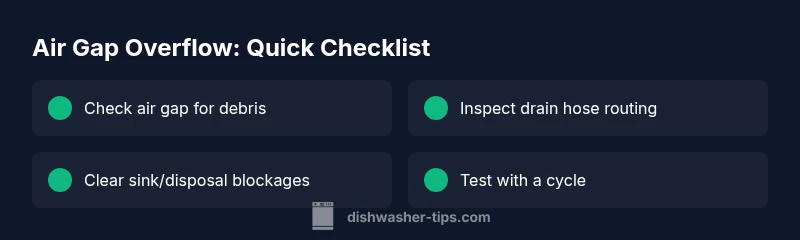
Overflow at the air gap is most often caused by a clog, an improper drain hose height, or a blocked sink/garbage disposal. Start by releasing any debris from the air gap cover, then straighten the drain hose, and ensure the hose loop and high drain path are correct. If water continues to back up, inspect the sink drain for blockages.
What causes an overflow at the air gap?
In many homes, a dishwasher air gap overflow isn’t a mystery once you understand how the system is supposed to work. The air gap is a small, often chrome-plated device located on the sink or countertop that creates a vertical air break between the dishwasher drain and the home’s plumbing. Its job is to prevent wastewater from siphoning back into the dishwasher. When water overflows, the likely culprits are debris blocking the air gap, a drain hose that is too short or too loose, a blocked sink drain, or a downstream blockage such as a garbage disposal. Improper installation or missing high loop can also contribute. Regular inspection reduces surprises; look for visible gunk, check the screen, and verify the hose is correctly connected to the disposal or sink drain. In short, most overflow events trace back to flow restrictions or routing issues.
Safety first: power off and precautions
Before you touch anything, switch off the dishwasher at the circuit breaker and, if possible, turn off the water supply to avoid accidental sprays. Wear rubber gloves and use towels or a bucket to manage any standing water. Do not immerse electrical components or attempt repairs if you see damaged cords or signs of burning. If you’re unsure, it’s safer to pause and seek professional help. This is especially important for renters who may not have permission to access electrical outlets. The goal is to avoid shock, burns, or property damage while you identify the overflow source.
Inspect the air gap cap and hose connections
Remove the air gap cap and screen, if present, and thoroughly rinse away any debris. Use a small brush or pipe cleaner to clear hidden clogs. Reassemble firmly, ensuring any O-rings are intact and seating correctly. Check that the hose clamp is tight at both ends and that the hose is not kinked or crushed. A mis-seated cap or a loose connection can easily trigger a backflow and overflow when the dishwasher runs.
Check the drain hose routing and loop
The drain hose needs a proper high loop above the sink’s water level and should connect to the disposal or sink drain with a secure clamp. If the hose is routed too low or bent, gravity can push wastewater back toward the air gap. If you have a disposer, ensure the knockout plug is removed and that the hose connects firmly. A poorly routed hose is one of the most common causes of overflow.
Check the sink drain and garbage disposal
A partial sink drain blockage or disposal jam can force wastewater back into the air gap. Run lots of water down the sink while observing the air gap area. If the sink drains slowly or gurgling noises occur, clear the blockage. For disposals, make sure it’s powered on and inspect for jammed food particles. Do not put your hands into running disposals—use tongs or pliers.
Examine the dishwasher’s drain filter and siphon
Some models have a removable filter and siphon that trap food particles. Remove the filter and clean it under running water. Clean any debris from the siphon inlet to restore proper flow. Reinsert the filter according to the manufacturer’s instructions. A clogged filter can reduce drainage efficiency and contribute to overflow during a wash cycle.
Common scenarios and how they differ
Scenario A: Debris in the air gap cap causes a localized blockage—clearing the cap typically resolves it. Scenario B: A blocked sink drain or disposal creates backpressure that affects the air gap—address the upstream blockage first. Scenario C: A poorly routed drain hose without a proper high loop leads to siphoning back—but correcting routing usually fixes it. Understanding the scenario helps you pick the right fix without wasteful trial-and-error.
How to verify if the issue is upstream in the plumbing
Test by running the dishwasher while observing the sink drain. If the sink drain burps or backs up during the cycle, the problem is upstream. Use a plunger or a drain snake to clear the blockage in the sink or disposal. If the problem persists after clearing, it may require a professional assessment of the home’s plumbing to rule out a larger blockage or sewer line issue.
Preventive maintenance to avoid future overflow
Regularly inspect the air gap for debris and clean it monthly. Check hose clamps and routing at least quarterly. Avoid pouring grease or coffee grounds down the sink, and schedule periodic professional inspections if your home has aging plumbing. A proactive approach reduces surprises and keeps the dishwasher drainage system flowing smoothly.
Steps
Estimated time: 30-60 minutes
- 1
Power down and gather tools
Turn off the dishwasher at the breaker and shut off the sink water valve if possible. Gather towels, a bucket, a flashlight, and basic tools. This keeps you safe and prepared for the inspection.
Tip: Label each disconnected hose to avoid mix-ups during reassembly. - 2
Inspect the air gap
Remove the air gap cap and clean the screen. Look for visible debris and rinse thoroughly. Reassemble and ensure a snug fit.
Tip: Use a thin brush to reach tight spots inside the gap. - 3
Check drain hose routing
Trace the hose from the dishwasher to the sink/disposer. Look for kinks, crimps, or a hose that’s too low. Re-seat and re-clamp as needed.
Tip: Ensure the hose has a continuous loop above the sink water line. - 4
Test sink and disposal
Run water down the sink and operate the disposal if present. Watch for slow drainage or backflow toward the air gap. Clear any visible blockages.
Tip: Never put your hands near a running disposal; use tongs. - 5
Inspect filter and siphon
Remove and clean the dishwasher’s drain filter. Clear debris from the siphon inlet and reinsert the filter per instructions.
Tip: Check the owner’s manual if you’re unsure of filter removal steps. - 6
Run a test cycle
With everything reassembled, run a short wash cycle and observe the air gap. If overflow persists, move to professional help.
Tip: Keep towels ready to manage any residual overflow.
Diagnosis: Dishwasher air gap overflowing into sink
Possible Causes
- highClog in air gap cap or debris buildup
- highBlocked sink drain or garbage disposal
- mediumKinked or improperly routed drain hose
- lowAir gap missing or incorrectly installed
Fixes
- easyClean or replace air gap cap and screen; remove debris; reassemble firmly
- easyClear sink drain or disposal blockage; run disposal with water
- easyUnkink/re-route drain hose; create proper high loop
- mediumCheck for misinstallation; consult a professional if unsure
People Also Ask
What is an air gap and what does it do?
An air gap is a small device that creates a physical air break between the dishwasher drain and the plumbing, preventing backflow into the dishwasher. It’s a safety feature required in many homes.
An air gap creates a safe air break between the dishwasher drain and home plumbing, preventing backflow.
Why does the air gap overflow after a wash?
Overflow usually means a blockage somewhere—either in the air gap, the drain hose, or the sink/disposal. It can also result from improper hose routing or a slow sink drain.
Overflow normally points to a blockage or routing issue in the drain path.
Can a clogged disposal cause overflow?
Yes. If the disposal is blocked or not draining properly, wastewater has nowhere to go and can back up into the air gap. Clear the blockage and test the disposal.
A clogged disposal can back up into the air gap; clear it and test.
Do I need a plumber for this?
Many air-gap overflows can be fixed with household tools and careful inspection. If you still see water backing up after checks, a licensed plumber can assess downstream plumbing and drainage.
You can often troubleshoot at home, but a plumber may be needed if the problem persists downstream.
How often should I maintain the air gap?
Inspect and clean the air gap every few months or whenever you notice slow drainage. Regular maintenance helps prevent clogs and overflow.
Clean the air gap a few times a year or if you notice slow draining.
Is it safe to run water through the air gap during testing?
Yes, but do not force water into damaged hoses or exposed wiring. Use gentle water flow and observe the air gap during a controlled test cycle.
Yes, run a controlled test with gentle water flow and observe the air gap.
Watch Video
What to Remember
- Inspect air gap and debris first.
- Verify hose routing and high loop.
- Clear upstream sink/disposal blockages.
- If overflow persists, seek professional help.