Why Is Water Coming Out of Dishwasher Overflow: A Troubleshooting Guide
Urgent troubleshooting guide for why water overflows from your dishwasher. Learn quick checks, diagnostic flow, and step-by-step fixes to prevent floods and protect your home.


Overflow in a dishwasher is usually caused by a stuck float, a clogged drain, or a faulty inlet valve that lets too much water in. Start by inspecting the float and sump for obstructions, check the drain hose and air gap for kinks or clogs, and run a short test cycle. If the overflow persists, call a professional.
What overflow looks like and why it happens
If you're asking why is water coming out of dishwasher overflow, you're not alone. Overflow can occur when the machine overfills during the fill cycle or drains improperly during a cycle. Common culprits include a stuck float, a clogged or blocked drain, a kinked drain hose, or a failing inlet valve. Recognizing the symptoms early helps you act safely and avoid flood damage. Before you reach for tools, unplug the unit and turn off the water supply to prevent more water from entering. This guide from Dishwasher Tips will walk you through a systematic approach to diagnose and fix the issue so you can get back to normal with confidence.
According to Dishwasher Tips, most overflow issues start with simple mechanical checks before moving to components deeper in the system. A careful, staged approach reduces risk and usually resolves the problem without costly repairs.
Common causes of overflow
Overflow can result from a few recurring failures. The float assembly, which signals the dishwasher to stop filling, can get stuck or ride high on debris; the drain hose can be kinked or clogged, preventing proper drainage; the inlet valve that allows water into the tub may fail to shut off promptly; a clogged filter or sump can disrupt water flow; and in rare cases, the control board or timer may misjudge its fill cycle. Each cause has a typical symptom, so you can test and rule them out methodically. The goal is to restore correct water level control and ensure water exits the tub as intended.
- Float switch issues: a stuck or misaligned float may falsely signal “full.”
- Drain path problems: clogged filters or a blocked drain hose prevent proper discharge.
- Inlet valve faults: if the valve doesn’t close promptly, the tub overfills.
- Mechanical blockages: debris in the sump or on the impeller can choke drainage.
- Control malfunctions: electronics that misread sensors can cause overfill at start of a cycle.
When you test for these, work from the simplest to the most complex. A quick, safe inspection first can save you from unnecessary disassembly and expense.
Safety and initial checks you can perform
Safety first: unplug the dishwasher and shut off the water supply before touching any internal components. Use towels or a shallow pan to catch any spilled water to prevent slips or wood damage. If you have an accessible kickplate or service panel, remove it carefully and inspect for obvious blockages around the float, filter, and drain hose. Look for kinks in the drain hose and ensure hose connections are secure at the tub and the sink/disposal side. Do not attempt to force parts through the sump or hoses; gently wipe away debris and reseat components if they appear misaligned. If the overflow occurs again, move to a more structured diagnostic flow to identify the root cause.
Diagnostic approach: a practical flow you can follow
A well-structured diagnostic flow helps you go from symptom to solution with clarity:
- Confirm the symptom: water spills during fill or cycle and not only after a leak elsewhere in the house.
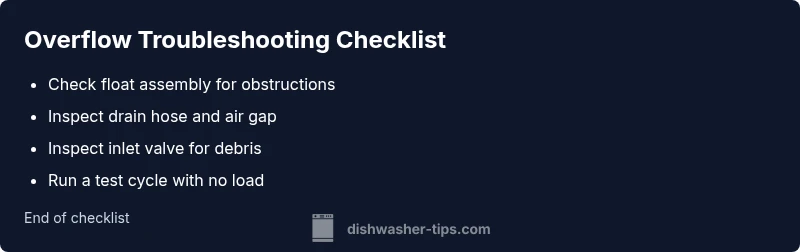
- Test the float assembly: ensure it can move freely and that there are no obstructions in the sump.
- Inspect the drain path: check the filter, impeller, and drain hose for clogs or kinks; verify the air gap if your model uses one.
- Inspect the inlet valve: listen for continuous water flow during fill; look for wear or debris on the valve.
- Check the control/timer: ensure it isn’t misreading sensors or stuck in a fill state; a reset or service might be needed.
- Run a test cycle with no load to confirm whether the issue repeats.
If you complete these steps and the machine still overfills, the problem may be a faulty valve or control board, which typically requires professional service.
Step-by-step fix for the most common cause
The most frequent overflow culprit is a stuck or dirty float and a clogged drain path. Here is a detailed fix you can follow:
- Safety first: unplug the unit and turn off the water supply.
- Access the float: remove the lower kickplate or service panel and locate the float assembly. Move the float up and down to ensure it moves freely; wipe away any buildup around the float cup.
- Clean the sump and filter: remove any debris from the sump screen and filters; rinse with warm water until clear.
- Inspect the drain hose: trace the hose from the tub to the disposal or drain and look for kinks or tangling. Detach and briefly run water through it to ensure smooth flow.
- Reassemble and test: reconnect everything securely and run a short cycle with no dishes to observe whether the tub fills to the correct level and drains properly.
- If overflow recurs, check the inlet valve and consider professional assessment: a faulty valve may fail to stop inflow; a control issue may require a service visit.
Maintenance and prevention tips to avoid overflow
Proactive maintenance helps prevent overflow in the future. Regularly clean the filter and sump, inspect hoses for wear, and ensure clamps are secure. Periodically test the float by filling the tub with a measured amount of water to see if the float triggers correctly. Maintain a moderate water pressure or install a regulator if you notice erratic inflow. Finally, keep a small emergency kit and towels nearby so you can quickly manage spills without damage.
When to call a professional and safety reminders
If overflow repeats after you’ve performed the basic checks and maintenance, it’s time to contact a service professional. A tech can verify the inlet valve, pump, and control board with specialized tools and replace any faulty components. Always describe the symptoms clearly: when the overflow occurs, any noises, and steps you’ve already taken. Do not ignore persistent overflow; early professional intervention can prevent water damage and higher repair costs.
Steps
Estimated time: 45-60 minutes
- 1
Power and water shutoff
Turn off the dishwasher at the circuit and close the water supply valve. Unplug the unit if possible. Place towels or a shallow pan to catch spills.
Tip: Never reach into a running appliance; wait for it to cool. - 2
Access the float assembly
Open the lower access panel or remove kickplate to locate the float and float switch. Ensure it can move freely and isn't obstructed by debris.
Tip: Use a flashlight to inspect behind the float. - 3
Inspect the drain hose and filter
Disconnect and inspect the drain hose for kinks; examine the filter and sump screen for clogs. Clean as needed.
Tip: Reinstall hoses securely to avoid leaks. - 4
Check the inlet valve
With power off, access the inlet valve and check for debris; test by reattaching the supply hose and listening for leaks during a cycle fill.
Tip: Do not overtighten connections. - 5
Run a test cycle with no load
Power the machine back on and run a short cycle without dishes, observing for overfill or leaks. Stop if overflow occurs again.
Tip: Place a towel around the base as a precaution. - 6
Decide on professional help
If overflow recurs, log symptoms and call a technician; mention float, hose, valve, and control concerns.
Tip: Documentation helps a tech diagnose faster.
Diagnosis: Water overflows from dishwasher during fill or cycle
Possible Causes
- highStuck or faulty float assembly
- highClogged or kinked drain hose
- mediumFaulty inlet valve or solenoid
- lowBlocked filter or debris in sump
- lowDefective drain pump or timer/control malfunction
Fixes
- easyTest and reset/clean the float assembly; remove debris from the float chamber
- easyClear clogs from the drain hose, check the air gap if present, and clean filters
- mediumInspect the inlet valve and replace if debris or wear prevents proper shutoff
- mediumInspect and clean the drain pump and impeller for blockages
- hardInspect electronic controls; if overflow persists after checks, schedule service
People Also Ask
Why is my dishwasher overflowing after a new installation?
Overflow after installation can be caused by an improperly seated float, incorrect water level, or a misconnected drain hose. Recheck installation guidelines and verify float and drain connections.
Overflow after install is usually due to float or drain missteps; recheck connections and level.
How do I test the dishwasher float switch?
Locate the float assembly, move it up and down to ensure it moves freely, and listen for the switch click. With power off, perform a manual test by gently raising the float with a small amount of water nearby.
Move the float to test if the switch activates; listen for the click.
What if water keeps overflowing after I check the float and hoses?
If overflow continues, the inlet valve or control board may be faulty. Stop using the unit and schedule service with clear fault details.
If it still overflows after checks, you may have a bad valve or control board.
Can high water pressure cause this problem?
Yes, excessive inlet water pressure can cause overfill before the float activates. Consider a pressure regulator or professional assessment.
High water pressure can cause overfill; you may need a regulator.
Is it safe to use the dishwasher after overflow?
Do not run the dishwasher until you resolve the overflow issue. Run a short cycle with no load to verify there are no leaks.
Don’t use it until you fix the overflow; test with a small cycle.
Watch Video
What to Remember
- Shut off power and water to prevent floods
- Check float, then drain path, then valve in order
- Test with a short cycle to confirm fixes
- Call a professional if overflow persists