How to Fix a Dishwasher: A Step-by-Step Troubleshooting Guide
Learn to diagnose and fix common dishwasher problems at home with a step-by-step approach, essential tools, and safety tips. From clogs to leaks, this guide helps homeowners troubleshoot efficiently and confidently.


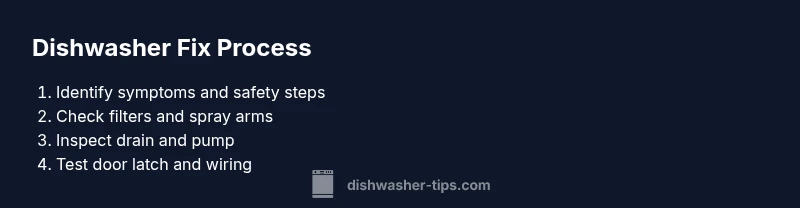
By diagnosing symptoms, gathering simple hand tools, and following a safe, step-by-step plan, you can fix many common dishwasher problems at home. Start with unplugging the unit, inspecting the filter and spray arms, checking the door latch, and testing the drain and pump. If issues persist, proceed to targeted parts replacement or call a pro.
Diagnosing the Problem: The Triage Workflow
According to Dishwasher Tips, most DIY dishwasher fixes start with a clear triage: identify symptoms, confirm safety, and map the likely causes. Begin by observing the current state: do you hear grinding or buzzing, is there standing water, are dishes wet or dirty, and is the door latch secure? Create a short symptom list, then prioritize checks that address multiple potential issues. This focused approach prevents unnecessary disassembly and keeps the repair within a reasonable time frame. The triage workflow also helps you decide when a problem is best handled by a professional. By validating the issue at a high level, you save time and reduce the risk of accidental damage. Remember to consult your dishwasher’s user manual for model-specific safety warnings and part locations.
Not Draining or Standing Water: Quick Drainage Diagnosis and Fixes
Standing water at the bottom of the tub usually points to a clog in the filter, sump, or drain pump, or to a kinked drain hose. Start by removing the wash tub bottom panel if accessible, then inspect and clean the filter screen. Rinse the sump area to remove debris and test the drain pump for obstructions. Ensure the drain hose is not pinched and that the disposal connection is clear. After reassembly, run a short cycle with no dishes to confirm drainage. If water remains, the issue may be a faulty pump or a blocked air gap, which is more common in units with hard water.
Not Cleaning Dishes Properly: Targeted Cleanliness Checks
Dishes that come out wet or still dirty point to insufficient water temperature, clogged spray arms, or a clogged filter. Check the water heater to ensure it reaches the recommended temperature, usually around 120-140°F (49-60°C). Remove and clean spray arms, paying attention to small holes that trap minerals. Clean the filter and sump as described above. Use the correct amount of detergent for your water hardness and consider a rinse aid if films persist. Finally, verify that rinse cycle options are selected correctly and that the timer isn’t skipping the final rinse.
Not Starting or Running: Electrical and Latch Checks
If the dishwasher won’t start or stops mid-cycle, inspect the door latch and switch, the control panel, and the power supply. Confirm the dishwasher is properly plugged into a functioning outlet and that the circuit breaker hasn’t tripped. Examine wiring harness connections behind the access panel for signs of wear or loose terminals. If you hear unusual sounds during operation, there may be a failing motor or pump. For safety, unplug before opening panels and avoid touching live circuitry. If you are uncomfortable with electrical work, skip to professional service.
Leaks, Floods, and Water on the Floor: Quick Diagnostic and Fixes
Leaks usually trace to door gaskets, tub seals, supply lines, or the drain hose. Inspect seals around the door for cracks or stiffness and replace if necessary. Check water inlet and supply hose fittings for tightness and corrosion. Inspect the tub bottom for cracks, and replace seals that show wear. Use a towel or bucket to manage minor leaks during inspection. After components are replaced, run a test cycle with no dishes to observe any new leaks.
Cleaning and Replacing Essential Components: Routine Maintenance
Maintain performance by cleaning or replacing key parts on a routine schedule. Clean or replace filters every month or as recommended by the manufacturer. Inspect spray arms for mineral build-up and remove any obstructions. For hard water areas, consider mineral-softening filters. Keep the door gasket flexible with light lubrication if permitted by the manufacturer. Document any replacement parts and the dates they were installed.
Authoritative Sources and Practical Safety Tips
For safety and accuracy, rely on reputable sources when troubleshooting. See resources from government and educational sites for general appliance safety and best practices. Always unplug the dishwasher before inspecting internal components and wear protective gear when handling sharp edges or moving parts. These steps reduce the risk of electrical shock and potential flooding.
When to Call a Professional: Thresholds and Expectations
If you encounter persistent leaks, a burning smell, buzzing noises, or error codes you can't resolve, it’s wise to call a licensed technician. A pro can confirm electrical faults, compressor issues, or non-trivial pump failures that require specialized tools and parts. Prepare your model number, symptoms, and a brief maintenance history to speed up diagnosis and ensure an accurate estimate.
Tools & Materials
- Protective gloves(Grip while handling sharp edges)
- Work apron or old clothing(Keep you clean during disassembly)
- Screwdriver set (Phillips and flathead)(For access panels and screws)
- Torx drivers(Some models use Torx screws)
- Multimeter or voltage tester(Check continuity and power supply)
- Nitrile gloves(Electrical safety and grip)
- Bucket and towel(Contain water spills)
- Old toothbrush or small brush(Clean filter and spray arms)
- Spray arm cleaning pin or needle(Clear clogged holes)
- Replacement gaskets or filters (on hand)(Keep spares for common models)
- Owner’s manual or model-number reference(Identify parts and safety warnings)
Steps
Estimated time: Total time: 60-90 minutes
- 1
Power down and unplug
Unplug the dishwasher and switch off the circuit breaker before opening any panels. This eliminates electrical shock risk and ensures safety during inspection.
Tip: Test the outlet with a tester before touching internal components. - 2
Check and clean the filter
Remove the filter assembly, rinse under running water, and scrub away debris. A clogged filter reduces water flow and cleaning efficiency.
Tip: Do not use abrasive cleaners that can damage the mesh. - 3
Inspect spray arms
Remove spray arms and inspect holes for mineral buildup. Clean with a small brush and reassemble.
Tip: Use a pin to clear stubborn mineral plugs. - 4
Test drainage path
Disconnect the drain hose and check for kinks or blockages. Flush with water to verify free flow.
Tip: Ensure the air gap (if present) is clear. - 5
Check door latch and seals
Inspect the door latch and gasket for wear or damage. Replace if necessary to ensure a proper seal.
Tip: Test that the door latches securely with a gentle push. - 6
Verify water supply and inlet valve
Ensure the water inlet valve opens when the cycle starts and that the supply line is secure.
Tip: If the door is open, water may not enter; fix the latch first. - 7
Inspect electrical connections
Behind access panel, check for loose wires or burn marks. Re-seat connectors as needed.
Tip: Do not twist or yank wires; unplug before touching. - 8
Run a test cycle
With no dishes, run a short cycle to observe performance and leaks. Listen for abnormal noises.
Tip: Record any codes or symptoms for future reference.
People Also Ask
My dishwasher won't start. What should I check first?
Start by verifying the door latch is engaged, the outlet has power, and the circuit breaker is on. If the display shows an error code, consult your manual for model-specific instructions.
First check the door latch, power outlet, and circuit breaker. If you see an error code, refer to your manual for model-specific steps.
Why is there standing water after a cycle?
Common causes are a clogged filter or drain, a kinked hose, or a faulty pump. Clean the filter, inspect the drain hose, and test the pump for obstruction.
Most often it's a clog in the filter or drain, or a blocked pump. Clean and test these parts.
Dishes come out wet or dishes are not clean. What to do?
Check water temperature, spray arms, and filter. Ensure detergent is appropriate for water hardness and that the final rinse is selected. Clean parts and run a test cycle.
Make sure the water is hot enough, spray arms aren’t blocked, and the filter is clean.
How often should I clean the filter?
Clean the filter at least once a month, or more often if you notice buildup. Rinse under running water and remove debris.
Clean the filter monthly or sooner if you see debris buildup.
Should I replace parts myself?
Replace common wear items like gaskets or filters if you can safely access them. For major components like pumps or electronics, consider professional service.
You can replace gaskets or filters if accessible; for major parts, call a pro.
What safety steps are essential when troubleshooting?
Always unplug the unit, wear protective gloves, and avoid touching live wiring. Follow manufacturer guidelines for any component you handle.
Unplug the machine and wear gloves; don't touch live wiring.
Watch Video
What to Remember
- Diagnose first, then plan parts replacement.
- Clean filters and spray arms for optimal performance.
- Unplug before any internal inspection for safety.
- When in doubt, consult a pro.