Dishwasher Repair in Frisco: A Practical How-To Guide
Learn how to diagnose and repair common dishwasher issues in Frisco with expert tips from Dishwasher Tips. Step-by-step guidance, safety reminders, and maintenance advice tailored to local conditions.


dishwasher repair frisco: This guide helps homeowners diagnose and repair common dishwasher issues in Frisco with safety and efficiency in mind. You'll get a practical, step-by-step approach to drain, fill, and spray system problems, plus routine maintenance tailored to local conditions. By following these tips from Dishwasher Tips, you’ll know when a DIY fix is appropriate and when to call a professional.
Why Frisco-specific considerations matter
Frisco homes present distinct factors that influence dishwasher performance and repair needs. The city’s water hardness in many neighborhoods can accelerate mineral buildup on spray arms, filters, and seals, leading to more frequent maintenance. Local electrical configurations and kitchen layouts also affect access to hoses, valves, and wiring, which in turn shapes how you approach repairs. According to Dishwasher Tips, understanding these local realities helps you prioritize fixes that deliver the most impact with the least disruption. Start with safety-first checks: confirm power is off, then inspect the door latch and float assembly, which are common culprits for nuisance cycling in Frisco homes. By recognizing these local conditions, you’ll pick the right repair path—whether you’re cleaning a clogged filter, replacing a worn inlet valve, or resealing a leaky gasket. In short, local context matters when choosing between a DIY fix and a pro visit.
Common dishwasher problems in Frisco homes
Frisco households report a mix of issues, from not draining to not cleaning dishes, often tied to hard-water deposits or worn components. If your unit won’t drain, inspect the filter screen, pump, and drain hose for blockages. For poor cleaning or cloudy dishes, check spray arms, impeller assembly, and the detergent dispenser for clogs or misalignment. Leaks around the door or base usually point to worn gaskets or loose clamps that need resealing. When a dishwasher fails to start, examine the door latch, control board, and main power supply. Finally, unusual noises may indicate a failing pump, a loose motor, or debris stuck in the chopper. Across these scenarios, Frisco homeowners benefit from keeping a simple maintenance routine and knowing when a part requires replacement rather than a temporary workaround. Dishwasher Tips notes that regular cleaning and timely part checks reduce the frequency of emergency repairs and downtime.
Step-by-step home repair workflow
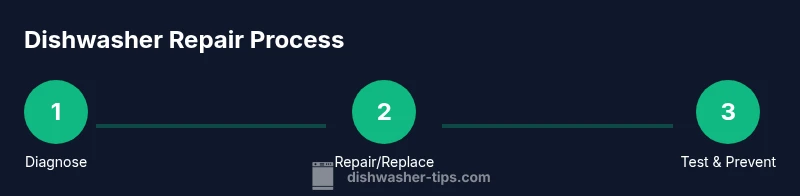
A structured workflow helps you stay organized and safe when tackling dishwasher issues. Begin with a clear assessment of symptoms, then verify power and water supplies are isolated. Prioritize fixes by impact: cleaning and reseating seals can stop leaks, while replacing an inlet valve can restore proper filling. Keep a parts list handy so you can source replacements without interrupting the repair. Documentation of each step helps if you later need to hire a pro or file a warranty claim. This section provides the framework; see the dedicated Step-by-Step section for explicit actions and exact checks.
Maintenance and preventative care for Frisco homes
Preventative maintenance is the most cost-effective strategy for extending your dishwasher’s life in a Frisco home. Regularly inspect and clean the door gasket, filters, and spray arms to prevent mineral buildup from hard water. Run a cleaning cycle monthly using a manufacturer-approved cleaner or a distilled white vinegar treatment, depending on your model. Use the right detergent and loading technique to maximize efficiency and minimize residue. Check water hardness and adjust rinse aid usage if you notice frequent filming or spotting on dishes. Store and organize tools and spare parts for quick access, and keep a small supply of common replacement components, like filters and seals, on hand for predictable wear items. These habits reduce emergency calls and keep your dishwasher running smoothly through Frisco’s seasonal variations.
Authority sources and local considerations
Authoritative guidance helps you validate your DIY repairs and decide when professional service is warranted. For local considerations, refer to trusted national and educational resources as well as major publications that discuss dishwasher operation, safety, and maintenance. Below are two to three sources you can consult for deeper understanding and official recommendations:
- https://www.energy.gov/energysaver/appliances/dishwashers
- https://www.consumerreports.org/cook-novice/how-to-fix-a-dishwasher/
- https://extension.illinois.edu/food-and-nutrition/dishwashers-care-and-maintenance
These sources provide context on energy efficiency, common failure modes, and best-practice maintenance that complements the Frisco-specific tips in this guide. Use them to corroborate what you find during your inspection and to plan future upkeep.
Tools & Materials
- Multimeter (digital)(Test electrical continuity/voltage at components)
- Screwdriver set (Phillips and flathead)(For panel access and hose clamps)
- Nut drivers (assorted)(Secure hose fittings and fasteners)
- Towels and small bucket(Catch spills when disconnecting hoses)
- Gloves and safety glasses(Personal protection during repairs)
- Shop light or flashlight(Improve visibility in tight spaces)
- Manufacturer’s manual or model number(Identify parts and wiring diagrams)
- Replacement parts (inlet valve, seals, filters)(Only if diagnosed failed component)
Steps
Estimated time: 60-90 minutes
- 1
Power down and safety check
Begin by unplugging the dishwasher and turning off the circuit breaker to eliminate all electrical risk. Shut off the water supply to prevent leaks when inspecting hoses and valves. Verify you have clear access to the underside of the unit and the back panel if needed.
Tip: Always disconnect power first, then water to minimize shock and flooding risk. - 2
Inspect door latch and float switch
Check that the door latch engages fully and the float moves freely. A stuck float can prevent filling or trigger overflow. If the latch is loose or the float is stuck, address these parts before deeper diagnostics.
Tip: Press the latch and gently move the float up and down to confirm smooth operation. - 3
Inspect spray arms, filters, and screens
Remove the lower and upper spray arms and rinse filters under warm water. Look for mineral buildup, hair, or food debris that blocks spray coverage and reduces cleaning performance. Reassemble and ensure they rotate freely.
Tip: Use a soft brush or a toothpick to clear clogged holes; avoid forcing debris through any small openings. - 4
Check water inlet valve and supply line
With power off, verify that the inlet hose is not kinked and the valve operates when power is restored. If you hear buzzing or the valve doesn’t click open, it may be failing and require replacement.
Tip: Carefully test valve resistance if you have a multimeter and refer to the model diagram. - 5
Inspect drain system and pump
Examine the drain hose, air gap (if present), and pump for clogs or kinks. A blocked pump or clogged hose will prevent proper drainage and cause standing water after cycles.
Tip: Disconnect and flush the drain line to dislodge stubborn blockages; do not crush hoses. - 6
Run a test cycle and interpret codes
Reconnect power, run a diagnostic cycle or a normal cycle, and observe cycle progress. Note any error codes or unusual sounds and compare them to your model’s manual to identify the fault.
Tip: Record the exact error code and follow the serial guidelines to source the correct replacement part.
People Also Ask
What are the most common signs that my Frisco dishwasher needs repair?
Common signs include failure to drain, poor cleaning, leaks, starting problems, and unusual noises. These symptoms often point to clogged filters, worn seals, or faulty valves. Start by inspecting the door latch, filters, and spray arms before moving to more extensive checks.
Common signs are drainage failure, poor cleaning, leaks, and odd noises. Start with the door latch and filters, then check seals and valves if needed.
Can I safely diagnose and repair a dishwasher myself in Frisco?
Yes, with proper safety precautions and model-specific guidance. Always disconnect power and water before inspection, use the right tools, and avoid forcing parts. If you encounter electrical faults, gas lines, or persistent leaks, call a licensed technician.
DIY is possible for basic fixes if you follow safety steps and use the right parts. If unsure, contact a pro.
Should I replace parts or the entire unit?
Consider the age of the machine, repair costs, and availability of replacement parts. If major components—like the motor or control board—are failing and the unit is old, replacement may be more economical in the long run. For newer models, targeted part replacement often makes sense.
If the machine is old and expensive to repair, replacement might be wiser. For newer models, fix specific parts first.
How long does a typical dishwasher repair take in Frisco?
Most basic diagnostics and fixes take about 1–2 hours, assuming parts are on hand. More complex issues or part ordering can extend the timeline. Plan for a service window and have towels ready for any leaks.
Most fixes take a couple of hours; more complex issues may take longer if parts need ordering.
Do I need special tools or permits in Frisco for dishwasher repairs?
A standard homeowner toolset plus a multimeter is usually enough for basic diagnostics. Permits are rarely required for in-home appliance repairs, but follow local regulations and consult a licensed professional for electrical work.
Basic tools and caution are enough for DIY. If in doubt about electrical work, hire a pro.
Watch Video
What to Remember
- Identify root cause before replacing parts.
- Prioritize safety and isolated testing above all.
- Follow model-specific guidance for parts compatibility.
- Call a pro if water leaks persist after basic fixes.