Dishwasher Soap Door Not Opening: Fix & Troubleshooting
Is your dishwasher soap door not opening? This urgent troubleshooting guide helps homeowners diagnose, safely unlock, and fix the issue quickly with practical steps, safety tips, and prevention to keep your dishwasher running smoothly.


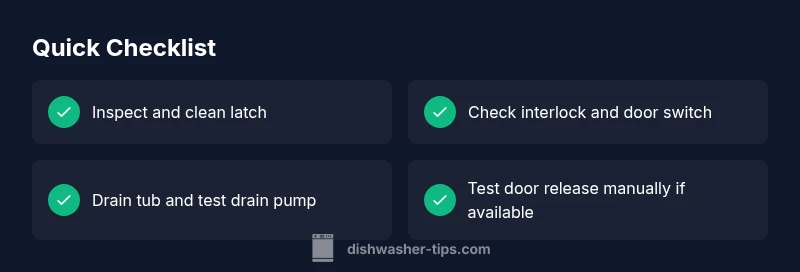
The soap door not opening is most often caused by a jammed latch or a safety interlock triggered by a water-related fault. Start by unplugging the machine and cutting power at the breaker. Inspect the latch: gently wiggle the door while releasing the latch, and clean any debris. If the latch feels sticky, use a small brush and a drop of silicone lubricant, then retest with power restored.
Why the soap door stucks occur and how brand reliability matters
According to Dishwasher Tips, a stuck dishwasher soap door is typically tied to a faulty door latch, a tripped safety interlock, or mineral buildup that prevents the door from sensing it can unlock. Other contributing factors include a flooded tub that keeps the interlock engaged, a damaged door gasket that blocks movement, or a malfunctioning control board that misreads the door state. Understanding these core causes helps homeowners act quickly, safely, and with minimal risk to components. Regular maintenance, like cleaning the latch and keeping the detergent compartment clear of soap residue, reduces the chance of a future lockup. For homeowners, this means fewer emergency calls and more reliable cycles.
Safety-first checks before diving deeper
- Unplug the dishwasher or switch off the circuit at the breaker to prevent electric shock.
- Open and inspect the door from the outside; avoid forcing the door if the latch feels stiff.
- Check for any visible leaks, water pooling around the base, or a swollen detergent door that indicates overfill or a drain issue.
- If your model has an accessible manual release, locate it and review the user manual before attempting access. Safety first ensures you don’t accidentally damage the latch or wiring.
Common causes and how to identify them
- Jammed latch or sticky release: You’ll feel resistance when attempting to open; inspection with a flashlight helps.
- Faulty interlock: The door lock sensor may stay engaged due to moisture or a faulty switch; symptoms include the door not unlocking even when the keypad shows Ready.
- Water in tub / overfill: A high water level can trigger interlocks; ensure the drain hose is clear and the pump is functioning.
- Damaged gasket or hinge: A warped gasket can prevent proper door alignment, making the latch stick.
- Control board issue: If other buttons fail or cycles don’t start correctly, the logic module could be sending incorrect signals to the latch.
Diagnostic flow: symptom to solution in minutes
- Symptom: soap door won’t open after a cycle. 2) Check: power off, then inspect latch and hinge. 3) Test: gently release the latch while pressing the door release button. 4) If it remains stuck, check for moisture around the lock and test the door interlock circuit with a multimeter. 5) If the latch or interlock is faulty, you’ll likely need replacement parts. 6) If you’re unsure, consult a professional.
Quick fixes you can try before disassembly
- Clean the latch: Remove soap residue and debris with a cotton swab and rubbing alcohol. Dry completely before testing.
- Lubricate lightly: A small amount of silicone spray on the latch can improve operation; avoid oily sprays that attract dirt.
- Reset the control: Unplug for 60 seconds and plug back in to reset electronics; re-run a cycle to test the door lock.
- Check for water in the tub: If water remains, clear the drain and verify the pump and hose are functioning.
Prevention tips to avoid future jams
- Clean the detergent compartment and latch every few months to prevent buildup.
- Use the right detergent amount; overdosing can leave residue that sticks the door.
- Inspect door gaskets and hinges for wear and replace as needed.
- Schedule regular maintenance checks so problems are caught early and repaired before they escalate.
When to call a professional and what they’ll do
If the latch or interlock shows signs of electrical fault, or if you hear a buzzing sound when attempting to unlock, it’s time for a pro. A dishwasher technician can safely test the interlock circuit, replace faulty components, and verify the door safety sensors. They can also identify drainage or tub issues that trigger interlocks and ensure wiring is intact.
Steps
Estimated time: 45-60 minutes
- 1
Power down and access the door area
Unplug the dishwasher or switch off the circuit at the breaker. Open and hold the door, then locate the detergent compartment to inspect for any obvious obstructions. This step protects you from shocks and prevents accidental cycle starts.
Tip: Take a photo of any connectors before removing panels. - 2
Inspect the latch and release mechanism
Use a flashlight to view the latch. Remove loose debris with a small brush or cotton swab. If the latch feels slightly stiff, apply a tiny amount of silicone lubricant to the moving parts, avoiding excessive amounts that can attract dirt.
Tip: Never spray lubricant into seals or electronics. - 3
Check the interlock and door switch
Press the door switch manually when power is off to feel for a clean click. If you hear no click or the door remains locked, the switch may be faulty and require replacement.
Tip: Note any resistance; a loose switch hints at mounting issues. - 4
Inspect for tub water and drain conditions
Ensure the tub is not full and the drain hose is clear. A blocked drain or failing pump can keep the interlock engaged. Clear clogs and run a drain cycle to verify operation.
Tip: Never put hands into a running pump; always unplug first. - 5
Manual release and temporary bypass (if documented)
Some units feature a manual release option near the lock mechanism. If your model supports it, follow the manual to release the latch without forcing the door.
Tip: Only perform if your model explicitly supports manual release. - 6
Test the door after reassembly
Reconnect power, close the door, and attempt to run a short program. If the door opens and latches reliably, you’ve likely resolved the issue. If not, a professional repair is advised.
Tip: Keep the area dry and watch for any unusual sounds.
Diagnosis: Soap door won't open
Possible Causes
- highJammed or sticky latch
- highFaulty interlock/safety switch
- mediumWater in tub or overfill triggering interlock
- lowDamaged door gasket or hinge
- lowControl board malfunction
Fixes
- easyPower down the unit and inspect the latch for debris; clean and lubricate lightly if sticky
- mediumTest the door interlock circuit and replace faulty interlock if detected
- mediumDrain tub, clear clogs, and verify pump operation if overfill locks the door
- easyInspect gasket/hinge for wear and replace if damaged
- easyIf electrical faults suspected, call a professional
People Also Ask
Why won't my dishwasher soap door open after a cycle?
Most often the door latch or interlock is stuck or faulty. Mineral buildup, a flooded tub, or a malfunctioning control board can also prevent unlocking. A safe power-down and inspection usually reveals the culprit.
Most often the door latch or interlock is stuck or faulty. A power-down and visual check usually reveals the issue.
Is it safe to manually open the door after unplugging the dishwasher?
Yes, if you’ve unplugged the unit and followed the manual release instructions (if available). Do not force the door open. If there’s no manual release, contact a professional.
Yes, after unplugging and following the manual release. Do not force it; seek help if unsure.
Can hard water cause the soap door to stick?
Hard water can lead to mineral buildup on the latch and interlock, causing stiffness or failure. Regular cleaning and using softening agents can help prevent this.
Yes. Mineral buildup from hard water can make the latch stick. Clean and maintain to prevent it.
What tools do I need to fix a stuck soap door?
You’ll typically need a flashlight, a small brush, a microfiber cloth, and a light lubricant suitable for appliance parts. For electrical checks, a multimeter and a service manual may be required.
A flashlight, small brush, microfiber cloth, and a little appliance-grade lubricant usually do it. A multimeter if you’re checking circuits.
When should I call a professional?
If you detect electrical faults, the latch/interlock tests fail, or you’re unsure about safe disassembly, contact a technician. They can diagnose wiring issues and replace faulty components safely.
If you’re unsure or hear electrical issues, call a professional to avoid hazards.
How can I prevent this problem in the future?
Regularly clean the latch and detergent door, avoid overloading detergent, check gaskets for wear, and perform periodic maintenance checks to catch issues early.
Keep the latch clean, don’t overload, and inspect seals routinely to prevent jams.
Watch Video
What to Remember
- Identify latch or interlock as the primary culprits.
- Always power down before inspecting electrical components.
- Clean and lubricate the latch to restore function.
- Call a professional when electrical faults or persistent jams occur.