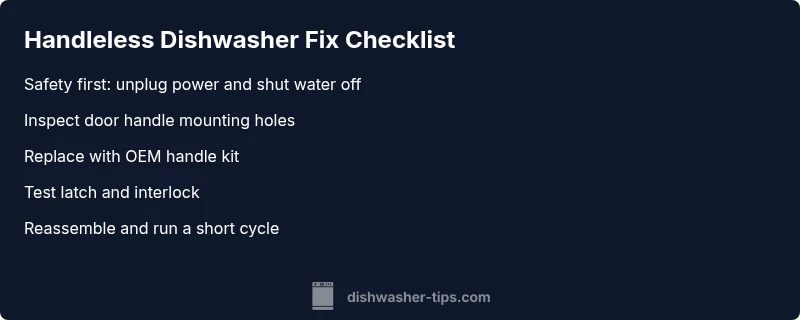
Dishwasher Without Handle: Troubleshooting and Fixes
Urgent troubleshooting guide for a dishwasher without a handle. Learn quick fixes, replacement steps, safety checks, and professional tips to restore safe operation fast.


The door handle or latch is the most likely problem when a dishwasher is described as a dishwasher without handle. For a quick fix, install a temporary pull tab or adhesive handle if the door still opens and seals, or replace the door-handle/latch assembly for a secure, long-term solution. Always unplug the unit before any repair and verify the door lock functions after reassembly.
What a handleless dishwasher means in practical terms
In the world of dishwashers, a model described as a dishwasher without handle typically means the exterior handle is broken, missing, or no longer functional, while the internal latch and interlock system may still operate. This can create a safety hazard if the door cannot be secured, or if you’re forced to pull on a fragile panel to open the door. For homeowners, understanding the distinction between the visible handle and the door’s locking mechanism helps you decide whether you need a cosmetic repair or a full mechanical replacement. Throughout this guide, we’ll use the term "dishwasher without handle" to describe any unit where the exterior pull is either absent or unusable, and where the repaired solution must restore both access and safety. According to Dishwasher Tips, ensuring proper latch engagement is critical to prevent leaks and ensure the unit runs only when the door is firmly closed, which is a safety baseline for all fix attempts.
Safety first: power, water, and workspace readiness
Before you touch anything, power down the machine. Unplug the unit or switch off the circuit breaker to avoid electric shock. If your model has an accessible water shutoff, turn it off to prevent accidental leaks. Clear the surrounding area of detergents and sharp tools and work on a clean, stable surface. Wearing gloves can protect you from sharp edges on the door panel. With the unit powered down, you’ll have a safer environment to inspect the handle area, the latch, and the mounting screws. The Dishwasher Tips team emphasizes starting with safety as the baseline to avoid any incidental injuries during repair attempts.
Quick checks you can perform without disassembling critical components
There are several non-destructive checks you can perform to gauge the extent of the problem:
- Look for visible damage on the door panel or handle mounting holes.
- Try to engage the door lock manually by pressing the latch with a flat tool while attempting to close the door gently.
- Confirm there are no loose screws in the door frame that could cause misalignment.
- If your model uses a recessed latch, verify that it spring-loads back when released. If the door opens without resistance and seals when closed, you’re likely dealing with a cosmetic handle issue or a loose latch rather than a total door replacement. The next steps will guide you through securing temporary access while you order a proper replacement part.
Common failure points when the handle is missing or nonfunctional
Understanding where failures typically occur helps you decide whether a straightforward fix will suffice:
- Exterior handle is broken, cracked, or entirely missing.
- Door latch or strike plate is worn, preventing full engagement.
- Mounting screws are loose or stripped, causing misalignment.
- Door panel deformation or hinge misalignment keeps the latch from seating properly.
- Interlock switch or control board detects an open door and prevents cycles. A visual inspection of each area can pinpoint the primary culprit. If you find damaged internal hardware, plan for replacement rather than temporary fixes to ensure long-term safety.
Temporary solutions for short-term use while awaiting parts
If immediate use is essential, consider these safe, temporary alternatives:
- Attach a removable pull tab or adhesive handle that allows you to open the door without stressing the door panel.
- Use a non-intrusive grip tape around the door edge as a stop-gap to mimic a handle without adding bulk or risk of damage.
- Keep a spare replacement handle kit on hand if your model supports universal replacement parts. Keep in mind these are short-term measures; you should still plan for a proper replacement to ensure proper latching and leak prevention. Always test the door by running a short cycle with nothing inside to check for leaks.
Replacing the handle assembly: what you need to know
Replacing a handle and latch assembly typically requires removing the door panel and anchors, then installing the new kit according to your model’s manual. You’ll need basic hand tools, replacement parts, and patience. After installation, reassemble the door, reconnect power, and perform a dry run before loading dishes. This section outlines model-agnostic steps, but always consult your dishwasher’s service manual for exact points of access and torque specs. A properly installed handle not only improves usability but also ensures the door interlock reliably prevents operation when the door is ajar.
When to call a professional and warranty considerations
If you encounter stubborn screws, stripped mounting holes, or a defective door interlock, professional repair is the safer path. A technician can verify electrical interlock integrity and door alignment, preventing future leaks or dishwasher failure. If your unit is under warranty, check the terms—many warranties require professional service for door handle or latch failures to avoid voiding coverage. The Dishwasher Tips team notes that attempting non-approved repairs could affect warranty status and long-term safety, so evaluate the cost and risk before proceeding beyond basic fixes.
Prevention and maintenance to avoid future handle failures
A simple maintenance routine can extend the life of your dishwasher door hardware:
- Periodically inspect the door handle and screws for wear or loosening.
- Tighten mounting screws to the recommended torque when found loose.
- Use the door gently; avoid yanking on the panel or door edge.
- Keep the door seal clean to prevent latch misalignment caused by debris.
- Schedule annual checks or professional maintenance if your dishwasher model is prone to latch or handle wear. Regular checks help you catch wear before a handle breaks, reducing emergency repairs and keeping your kitchen running smoothly.
Steps
Estimated time: 60-120 minutes
- 1
Power off and prepare the workspace
Unplug the dishwasher and shut off the water supply. Clear the area, remove dishes, and set a container to catch any incidental drips. This step ensures you can work safely without risk of electric shock or water damage.
Tip: Label power cords and note which circuit controlled the dishwasher for easier restoration. - 2
Access the door panel
Remove the screws from the outer door panel and gently pry the panel away to expose interior hardware. Keep track of screws and small parts so reassembly is smooth. This step may vary by model; consult your manual for specific locations.
Tip: Use a magnetic pad to keep screws from rolling away. - 3
Inspect and remove the old handle
Carefully inspect the handle mounting holes and latch area. Disconnect any hardware holding the handle, then remove the damaged component. If the latch is separate, assess whether it’s worn or misaligned.
Tip: Take a photo of how parts were installed before removal. - 4
Source and prepare the replacement parts
Obtain the exact replacement handle kit or latch assembly for your dishwasher model. Check compatibility and gather necessary tools such as screwdrivers and a hex key set.
Tip: Prefer OEM parts for guaranteed fit and reliability. - 5
Install the new handle and latch
Align the new handle with the mounting holes and secure with screws. Reconnect any interior latch components and ensure the mechanism sits flush and ticks back when released.
Tip: Hand-tighten screws first, then snug with a screwdriver to avoid over-tightening. - 6
Reassemble the door panel
Snap the interior panel back into place and reinsert screws. Make sure the door edges align evenly and there’s no binding when closing the door.
Tip: Replace any weather seal if it appears worn or damaged. - 7
Test the door and interlock
Plug in the unit, restore water supply, and run a short cycle with no dishes. Confirm the door latches securely and that the cycle starts as expected when the door is closed.
Tip: Observe for leaks around the door gasket during the test. - 8
Final safety check and maintenance
If the test cycle passes, perform a full wash to confirm consistent operation. If issues arise, revert to documentation or consult a professional. Keep a spare parts kit on hand for next time.
Tip: Document model, parts, and date of replacement for future maintenance.
Diagnosis: Door opens or closes with difficulty; exterior handle missing or nonfunctional; door may not latch securely.
Possible Causes
- highBroken or missing exterior door handle
- mediumWorn latch or strike plate preventing latch engagement
- lowLoose or stripped mounting screws or hinge misalignment
- lowDoor panel damage from impact or deformation
Fixes
- mediumReplace the door handle/latch with a model-appropriate kit
- easyInstall a temporary pull tab or adhesive handle for short-term use
- easyTighten screws, reseat hinges, and realign the door to improve latch engagement
- hardIf the latch/electrical interlock is faulty, contact a professional for repair or replacement
People Also Ask
What should I do if I can't find a replacement handle for my dishwasher model?
Check with the manufacturer for an OEM replacement or compatible universal kit. If unavailable, consider a temporary handle option approved by the brand and plan a professional replacement.
Check with the manufacturer for an OEM replacement or a compatible universal kit. If not available, use an approved temporary handle while planning a professional replacement.
Is it safe to run the dishwasher without a proper handle?
No. A missing or nonfunctional handle can prevent the door from sealing properly and may bypass safety interlocks, risking leaks or electrical hazards.
No, running a dishwasher without a proper handle can cause leaks or safety hazards due to a door not sealing correctly.
Can I repair the handle myself, or should I call a pro?
If you have basic tools and model-specific guidance, a DIY handle replacement is feasible. For tricky latches or interlock issues, a professional is safer and may protect your warranty.
A DIY replacement is possible with the right parts, but for tricky issues or warranty protection, consider a pro.
How long does a handle replacement usually take?
Typically 1-2 hours, depending on access to the door and availability of the correct parts.
Usually about one to two hours, depending on access and parts.
Will a temporary pull tab affect warranty?
Warranties vary by brand; check the terms. Some temporary fixes may not void warranty if used correctly, but replacements should be made with approved parts.
Warranty terms vary—check them, but using approved replacement parts is safest for long-term coverage.
When should I call a professional for a handle repair?
If screws are stripped, panels are damaged, or the interlock is faulty, professional repair is recommended to prevent leaks and ensure safe operation.
Call a professional if screws are stripped, hardware is damaged, or the interlock isn’t working.
Watch Video
What to Remember
- Inspect handle area early to confirm damage.
- Plan for proper replacement parts, not just a temporary fix.
- Always power off before repairs.
- Test latch engagement after reassembly.
- Consult a professional for complex issues or warranty constraints.