Dishwasher Soap Unclog Toilet: Safe, Practical Steps
Learn whether dishwasher soap can unclog a toilet, plus safe steps, alternatives, and when to call a pro. A practical guide from Dishwasher Tips for homeowners and renters facing minor clogs.


According to Dishwasher Tips, dishwasher soap unclog toilet is a home remedy option for mild blockages caused by soap scum or grease. It is not a guaranteed fix and can cause overflow if the clog is severe. Use it as a cautious, last-resort step alongside a plunger or plumber’s snake, and always prioritize safety. This quick answer guides you toward safer steps and appropriate expectations.
Understanding the premise of dishwasher soap unclog toilet
Toilet clogs are a common home frustration, and the phrase dishwasher soap unclog toilet refers to using dishwashing soap as a lubricating, softening agent to help loosen soap scum, grease, or hair that’s blocking the drain. This tactic is not a universal cure and should be considered only for mild blockages where wastewater still drains slowly. The Dishwasher Tips team emphasizes that success depends on the clog type, the plumbing layout, and how promptly you respond. Before attempting any method, prepare your workspace, wear gloves, and read safety warnings carefully. A measured approach reduces the risk of splashes or unintended reactions with other cleaners. The goal is to improve water flow without creating a bigger mess or damaging pipes. Throughout this article, you’ll see practical steps, safety notes, and real-world scenarios to help homeowners and renters decide when to try this method and how to proceed.
Understanding the premise of dishwasher soap unclog toilet
The technique sits in a spectrum of options from simple plunging to professional interventions. While dishwasher soap can help dissolve some organic buildup, it won’t fix a hard obstruction like a solid object or a severely blocked drain. If you notice gurgling, water rising without draining, or a persistent odor, consider stopping and contacting a plumber. For many households, the strategy is best reserved for minor, partial blockages and used in combination with other tools like a plunger or a drain auger. The key is to manage expectations and prioritize safety, especially in homes with older piping or septic systems.
Understanding the premise of dishwasher soap unclog toilet
Tools & Materials
- Rubber plunger (flange-type recommended)(Choose a sturdy plunger specifically for toilets; the flange helps seal the drain opening.)
- Dishwasher soap (liquid or powder, standard household brand)(Use a mild formulation; avoid highly caustic cleaners or tablets that contain extra chemicals.)
- Warm water (not boiling)(Warm water helps dissolve buildup without risking pipe damage.)
- Bucket or large container(For overflow control and cleanup.)
- Gloves(Protects hands from splashes and bacteria.)
- Toilet auger (plumbing snake)(Useful if plunging fails or the clog is deeper in the drain.)
- Towel or old cloth(Place around the toilet base to catch any spills.)
Steps
Estimated time: 30-60 minutes
- 1
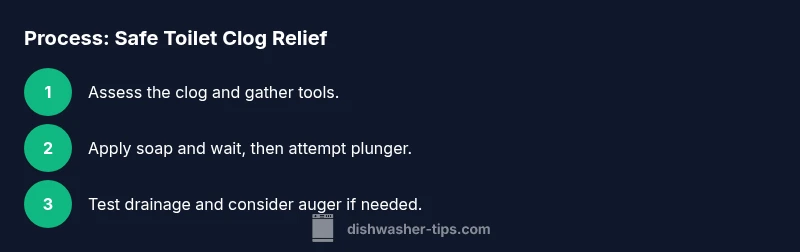
Assess the clog and prepare
Put on gloves, clear the area, and remove any objects around the toilet. Check that water level is not dangerously high and that you have a towel ready for spills. The aim is to set up a safe, controlled environment before introducing any liquids or tools.
Tip: If the toilet is near overflowing, bail out some water with a cup and stop before proceeding. - 2
Apply dishwasher soap
Add 1/4 to 1/3 cup of liquid dishwasher soap into the toilet bowl. For powder, use a small amount and swirl it with a little warm water to create a soapy layer. This step aims to coat the block and reduce friction while you work.
Tip: Avoid using bleach or ammonia cleaners in the same bowl to prevent chemical reactions. - 3
Let the soap work
Pause for 10–15 minutes to give the soap a chance to lubricate and soften buildup. While waiting, prepare your plunger and ensure the drain area is dry around the rim to create a good seal.
Tip: Do not use boiling water; hot water is sufficient and safer for pipes. - 4
Add warm water to boost flow
Carefully pour warm water into the bowl from waist height to create a gentle force that helps push the softened material toward the trap. Do not splash aggressively or pour from too high, which could cause overflow.
Tip: Aim for a steady pour and watch for a change in drainage behavior. - 5
Plunge with purpose
Place the plunger fully over the drain opening and push down and pull up with controlled force. Repeat 15–20 cycles, then pause and observe if the water level drops and the drain starts to clear.
Tip: A good seal is critical; ensure the plunger remains completely covered by water. - 6
Evaluate and proceed
If water begins to drain slowly, you’ve likely loosened the clog. Test flush after a few minutes. If the blockage remains, consider a toilet auger or contacting a professional.
Tip: If you hear gurgling or see frequent backups, stop and call a pro.
People Also Ask
Can dishwasher soap really unclog a toilet by itself?
In many cases, dishwasher soap can help with minor buildup, but it is not a guaranteed cure for a clogged toilet. For solid blockages, a plunger or auger is more reliable. Always use it as part of a broader approach and with caution.
Soap alone often isn’t enough for a real clog; combine with plunging or snaking when safe.
Is this method safe for septic systems?
Using small amounts of dish soap is generally safer for septic systems than harsh chemical cleaners, but heavy use can upset bacterial balance. If in doubt, limit soap and consult a plumber or septic professional.
Be cautious about septic balance; use minimal soap and monitor for any odor or flow changes.
What should I do if the clog doesn’t clear after using soap?
If soap and plunging do not clear the clog, stop and try a toilet auger. If there is still no improvement, call a licensed plumber to avoid damaging the toilet or plumbing.
If it remains clogged, it’s time to call a professional.
Can dishwasher soap damage pipes or seals?
Using gentle dishwasher soap in small amounts is unlikely to damage pipes, but aggressive products or improper use can cause foaming and pressure that stress seals.
Avoid aggressive cleaners and follow the steps carefully to protect pipes.
When should I call a plumber?
If there is repeated backup, poor drainage after multiple attempts, or signs of underlying issues (gurgling, slow drain, or sewage smell), a plumber should assess the system.
If problems persist, a pro visit is wise.
Are there safer alternatives to soap for a minor clog?
Yes. A standard plunger, pipe-friendly enzyme cleaners, or a drain snake are typically safer and more effective for minor clogs than relying solely on soap.
For most minor clogs, start with plunging or a drain snake.
Watch Video
What to Remember
- Dishwasher soap unclog toilet is a potential aid for mild blockages, not a guaranteed fix.
- Follow safe steps with proper tools and avoid mixing cleaners.
- Plunging, combined with warm water and careful waiting, often yields the best results.
- If the clog persists, seek professional help to prevent damage.