Dishwasher Unclog: How to Clear a Clogged Drain
A comprehensive, expert guide to unclogging a dishwasher drain safely, with practical steps, tools, maintenance tips, and troubleshooting for common clogs.


Learn how to unclog a dishwasher drain safely and effectively with a practical, step-by-step approach. You’ll diagnose drain signs, locate the blockage, select the right tools, and perform a thorough cleaning. The guide emphasizes safety, avoiding harsh chemicals, and maintenance habits to prevent future clogs. This quick answer sets the stage for the detailed steps that follow.
Understanding the Signs of a Clogged Dishwasher Drain
A dishwasher that won’t drain, or leaves standing water after a cycle, is a common sign of a clogged drain. In many homes, food debris, fat, and mineral buildup accumulate at the sump or in the drain hose, restricting flow. Diagnosing the problem begins with identifying where the blockage is active: the filter, the sump, the hose, or the disposal connection. According to Dishwasher Tips, recognizing the symptom and its likely location saves time and prevents unnecessary disassembly. This explanation helps you examine the symptoms safely and methodically, so you can choose the right approach rather than guess and risk damaging components. A calm, methodical approach to “dishwasher unclog” saves both time and parts.
Core Causes of Dishwasher Drain Clogs
Most clogs originate from simple everyday use. Food particles, starch, and grease can bind to the filter and sump, while mineral buildup from hard water can coat the drain pathways over time. Improper load practices—such as densely packing the bottom rack or washing oversized items—increase debris in the sump. A damaged or mis-seated filter, a clogged drain hose, or a disconnected air gap can also create backflow. Dishwasher Tips notes that routine filter cleaning and correct loading patterns dramatically reduce clog risk. Understanding these causes helps you target the actual blockage rather than performing unnecessary checks. Preventive maintenance is easier than repeated DIY fixes.
Safety First: What Not to Do When Unclogging
Never poke at electrical components or operate a dishwasher with the front panel open while powered. Do not mix chemical drain cleaners with a dishwasher’s interior or sump—these caustic substances can damage seals and contaminant pathways. Always unplug the unit before hands-on work, wear gloves, and protect the floor with towels. Avoid using metal utensils to probe hoses; these can scratch plastic fittings or push debris further into the system. If a blockage is severe, step back and re-evaluate rather than forcing parts apart. This guide prioritizes safety so you can perform a reliable unclog without injury or unintended damage. Dishwasher Tips emphasizes safety as a foundation for successful maintenance.
Step-By-Step Diagnostics: Accessing the Drain Area
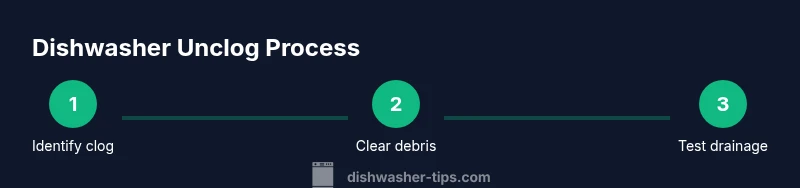
Start by powering off and unplugging the dishwasher, then remove the lower rack to access the base. Remove the filter or screen to inspect the sump for visible debris. Use a flashlight to look for clogs around the impeller, pump housing, and drain inlet. If you see obvious debris, carefully remove it with tongs or a soft brush, avoiding damage to seals. Trace the drain hose to its connection at the disposal or sink for kinks or clogs. The diagnostic phase should be methodical: identify the likely blockage, test the path, and plan the cleaning strategy. Dishwasher Tips suggests documenting each step with photos to aid reassembly.
Cleaning the Filter, Sump, and Drain Path
With the filter out, rinse it under running water and scrub away any residue. Wipe the sump interior with a damp cloth to remove sludge, then use a soft brush to clear the sump screen and trap area. Reinsert the filter and run a quick rinse cycle to observe flow. If water still pools, inspect the pump inlet for stubborn deposits and remove as needed. Avoid aggressive scraping that could gouge plastic components. Regular filter maintenance reduces future buildup and improves drainage efficiency, a key practice recommended by Dishwasher Tips.
Clearing the Hose and P-Trap with Gentle Methods
Trace the drain hose from the sump to the sink connection, looking for kinks or pinches. Detach the hose carefully and rinse it with warm water to flush out loose debris. For stubborn clogs, use a soft brush and a flexible rod or plumber’s auger if accessible. A wet-dry vacuum can be used cautiously on the hose outlet, not on the interior sump. Reconnect the hose securely, ensuring there are no leaks. Gentle, patient flushing prevents pushing debris deeper into the system and reduces risk of damage. This step-by-step approach aligns with best practices for a safe dishwasher unclog.
Using Baking Soda, Vinegar, and Enzyme Cleaners Safely
Baking soda and vinegar can help soften minor buildup when used in small, controlled amounts. Pour a half cup of baking soda into the sink or dishwasher via the drain and flush with warm water. Follow with a cup of white vinegar after a few minutes to activate gentle fizzing that can loosen residue. Avoid mixing strong cleaners with the dishwasher’s interior or with harsh chemical agents; enzymes can be gentler on plastic parts but may require longer dwell times. Dishwashing maintenance guidance from Dishwasher Tips favors mechanical cleaning and routine filter checks over chemical cocktails.
When to Use Mechanical Tools (Plunger, Wire) and How
If the blockage remains after cleaning, a non-snap plunger might help dislodge a partial obstruction. Use it on any accessible drain opening, maintaining a gentle seal and steady pressure. A flexible drain snake or auger can reach deeper into the hose or trap, but avoid forcing it through the sump or into the pump housing. Keep the device clean and disengage it if you encounter resistance. If you must apply leverage, do so slowly to avoid cracking hoses or fittings. This section facilitates safer, more controlled mechanical clearing.
Maintenance Habits to Prevent Future Clogs
Establish a simple routine: clean the filter weekly during heavy-use periods, run hot water through the dishwasher before and after cycles, and use an appropriate rinse aid. Load dishes to prevent food particles from entering the sump, and avoid washing items that shed fibers or large food scraps. Periodic checks of the drain hose and air gap (if present) help identify wear or blockages early. Dishwasher Tips recommends treating your appliance like a small plumbing system—regular checks minimize downtime and keep drainage smooth.
Quick Troubleshooting Checklist and Next Steps
If standing water persists after all cleaning, re-check the filter and hose connections for secure seating and signs of damage. Confirm that the sink trap and disposal aren’t contributing to a backflow condition. If a partial clog returns after several cycles, consider a professional inspection to assess the pump, inlet screen, and spray arms for wear. With proper maintenance, most residential clog issues can be resolved without extensive disassembly or costly repairs. This section provides a concise, actionable path forward for continued performance and confidence in your dishwasher unclog efforts.
Tools & Materials
- Power outlet and 3-prong plug(Ensure the unit is unplugged before handling any components.)
- Bucket(Catch water and debris during disassembly.)
- Towels or rags(Protect the floor and catch splashes.)
- Gloves (rubber or nitrile)(Keep hands clean and safe from debris.)
- Flashlight or headlamp(Inspect dark sump and hoses thoroughly.)
- Screwdriver set (Phillips and flathead)(Remove access panels or filters as needed.)
- Pliers or tongs(Handle debris safely without damaging parts.)
- Soft brush or old toothbrush(Clean fragile surfaces without scratching.)
- Drain snake or auger (optional)(Use only if accessible and safe for your model.)
Steps
Estimated time: 45-75 minutes
- 1
Disconnect power and access area
Unplug the dishwasher and remove the lower rack to access the base. This step prevents electric shock and gives you room to inspect the drain path. Keep the work area dry to avoid slips or accidental shocks.
Tip: Never work on a plugged-in appliance. - 2
Remove the filter and inspect the sump
Take out the filter or screen, then look into the sump for visible debris. A flashlight helps, and use tongs to pick out large particles without scratching surfaces.
Tip: Document how parts came apart for easy reassembly. - 3
Check the drain hose for kinks
Trace the hose from the sump to the sink connection. A kink or pinch can mimic a clog—straighten or replace if needed.
Tip: A gentle bend is fine; avoid sharp U-turns. - 4
Flush the drain path with warm water
Rinse the sump, hose, and connection with warm water to loosen residue. Use a brush to dislodge stubborn buildup, then reassemble.
Tip: Rinse cycles help verify drainage after reassembly. - 5
Reassemble and test
Secure the filter, reinsert the lower rack, plug in the unit, and run a short test cycle with no dishes to confirm drainage.
Tip: If water remains, recheck every step or consider professional help. - 6
Finalize maintenance plan
Schedule regular filter cleanings and light monthly checks of hoses to prevent future clogs.
Tip: Consistency beats dramatic DIY fixes.
People Also Ask
What should I do first if my dishwasher won't drain?
Start by unplugging the unit, then remove the bottom rack to inspect the filter and sump for obvious blockages. Clear debris with tongs or a brush and test with a short drain cycle.
First unplug the dishwasher, remove the bottom rack, inspect the filter and sump for debris, clear what you can, and run a quick test cycle.
Is DIY unclogging feasible for most homes?
Yes for minor clogs and routine maintenance like filter cleaning and hose checks. If the issue persists or involves the pump, consider professional service.
Yes, most minor clogs can be fixed at home by cleaning the filter and checking hoses; bigger problems may need a pro.
Safe methods without disassembly?
Yes—start with cleaning the filter, running hot water, and flushing the drain hose. Avoid chemical cleaners inside the dishwasher and never force debris through the pump.
Try cleaning the filter and flushing the hose first; if it’s not clear, don’t force anything inside the pump.
Why does water come back after unclogging?
Partial blockages or an air gap issue can cause partial backflow. Recheck the filter, hose, and disposal connections to identify lingering restrictions.
Sometimes water comes back due to a partial blockage or a misconnected air gap. Recheck the path.
How often should I clean the dishwasher filter?
Clean the filter at least once every 1–2 weeks during heavy use; more often if you notice debris or poor drainage.
Try cleaning the filter every one to two weeks when you use the dishwasher a lot.
What to Remember
- Identify where the clog most likely resides before disassembly
- Prioritize filter cleaning and sump inspection for quick wins
- Avoid harsh chemicals; use mechanical cleaning methods first
- Secure all hoses and connections to prevent future leaks
- Maintain a regular cleaning schedule to minimize recurring clogs