Dishwasher Water Not Draining: Troubleshooting Guide
A comprehensive, safe troubleshooting guide to diagnose and fix dishwasher water not draining, with quick checks, step-by-step fixes, and prevention tips for busy homes.


Most dishwasher drainage issues are caused by a simple clog or kink in the drain path. Start by unplugging the unit, removing the bottom panel, and cleaning the filter and sump debris. If that doesn't fix it, inspect the drain hose for kinks and check the air gap. If unresolved, contact a professional.
What "dishwasher water not draining" means
If you see standing water at the bottom of the tub after a cycle, you're dealing with a drainage issue. In most homes the phrase dishwasher water not draining points to a blockage or a kink in the drainage path, rather than a failing pump. Quick checks can restore function without tools or professional help. This guide explains the meaning, common symptoms, and the initial actions you should take to minimize standing water, prevent overflow, and keep your unit running smoothly. By understanding the drainage path—from the tub to the disposal or sink drain—you can identify where water is getting stuck and begin a safe, methodical fix.
Quick checks you can perform safely
Before pulling apart panels, perform a few safety-first checks. Unplug the dishwasher and turn off the water supply to prevent leaks. Remove the lower access panel to inspect the filter and sump for obvious debris. Clean the filter thoroughly and flush loose debris into the waste line. Check the drain hose for kinks, pinches, or a crushed section, and ensure it runs to the sink connection without sharp bends. If your model has an air gap, verify it’s clear of obstructions. Finally, run a short test cycle with a small amount of water to see if drainage improves.
Common culprits: filters, pump, and hose
The most frequent causes of dishwasher drainage problems are blockages and restricted flow. A clogged filter or sump debris can prevent water from reaching the pump, causing standing water. A kinked or blocked drain hose can stop water from leaving the tub. The drain pump itself can fail or jam due to worn impellers or electrical faults. In some homes, an undersized or blocked air gap will also hinder drainage. Finally, if the dishwasher connects to a garbage disposal, a disposal clog or air inlet issue can back up into the machine.
Diagnostic approach: how to test each component
A systematic diagnostic path helps you narrow down the root cause. Start with the simplest checks: confirm power to the unit and inspect the filter and sump for debris. If clear, test the drain hose by disconnecting it and running water through it to ensure unobstructed flow. Listen for the drain pump during a cycle—no sound or a buzzing could indicate a faulty pump. If available, check the air gap and ensure the disposal connection is free of clogs. Document findings as you go to guide later steps.
Safety notes and what not to do
Never use a chemical drain cleaner inside a dishwasher. These products can damage seals, hoses, and the pump. Always unplug the unit before inspecting electrical components and use a bucket and towels to manage water spills. If you encounter exposed wiring, frayed hoses, or a burning smell, stop and call a professional. Avoid prying or forcing hoses beyond their connectors, which can cause leaks and further damage.
Maintenance to prevent future drainage problems
Once drainage is restored, implement a simple maintenance routine to prevent recurrence. Clean the filter every 1–2 cycles until it’s free of debris. Run a rinse cycle with hot water and a small amount of vinegar or a manufacturer-approved cleaner to minimize grease buildup. Regularly inspect the drain hose and air gap for signs of wear, and ensure the disposal connection remains clear. A quick monthly check can save you from larger failures and costly repairs.
When to replace or call a professional
If you’ve completed the diagnostic flow and still see standing water after a full cycle, or you hear grinding, scraping, or notice a burning odor, it’s time to call a professional. A malfunctioning drain pump, failed motor, or extensive hose damage may require replacement parts. In some cases, the best option is a unit replacement if the model is old or the repair would exceed a practical portion of the appliance’s value. The sooner you involve a pro, the less risk you face of water damage.
Quick-start checklist at a glance
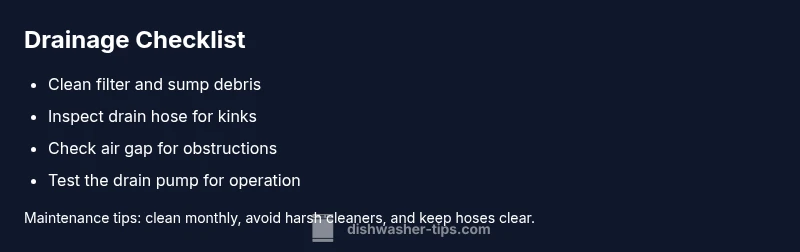
- Unplug the unit and switch off water supply
- Inspect and clean the filter and sump
- Check drain hose for kinks or blockages
- Verify the air gap (if present)
- Test the drain pump and listen for operation
- Run a test cycle with clean water to confirm drainage
Steps
Estimated time: 45-60 minutes
- 1
Power down and prepare
Unplug the dishwasher and turn off the water supply. Move the unit if needed to access the bottom panel safely. Have a towel and bucket ready for water that may spill.
Tip: Label wires if you disconnect any to help reassembly. - 2
Access and clean the filter
Remove the lower kick panel or filter assembly. Rinse the filter under running water to remove food particles and rinse the sump area with a soft brush. Dry before reassembly.
Tip: Plan to clean the filter monthly to prevent buildup. - 3
Inspect the drain hose
Trace the drain hose from the tub to the connection at the sink or disposal. Look for kinks, crush points, or signs of wear. Detach and flush the hose with water to clear obstructions.
Tip: Don’t force the hose; loosen clamps gently to avoid leaks. - 4
Check air gap and disposal links
If you have an air gap, remove and clean it. Inspect the disposal inlet for clogs or a loose connection that could back up into the dishwasher.
Tip: Reattach securely to prevent leaks and backflow. - 5
Test the drain pump
Access the pump area if accessible. Look for obvious jams and check the impeller movement. If you have a multimeter, test for continuity; replace if faulty.
Tip: If the pump hums but won’t turn, avoid repeated attempts that could burn the motor. - 6
Run a diagnostic cycle
With everything reassembled, run a short cycle with a small amount of water to verify drainage. Listen for a steady pump sound and observe for any leaks.
Tip: If you hear grinding or see smoke, stop immediately and call a pro. - 7
Review and document
Note which steps fixed the issue or if it persists. Keeping a log helps you decide if you need professional service or part replacement.
Tip: Capture model and serial numbers for parts compatibility. - 8
Escalation if unresolved
If standing water remains, escalate to a licensed technician. There could be an internal seal leak or motor failure beyond simple clog removal.
Tip: Avoid DIY electrical work beyond basic inspection.
Diagnosis: Standing water in the dishwasher after a cycle
Possible Causes
- highClogged filter or sump debris
- highDrain hose kink or blockage
- mediumFaulty drain pump
- lowBlocked air gap
- lowDisposal connection issues or disposal clog
Fixes
- easyClean the filter and remove debris from the sump
- easyInspect drain hose for kinks and clear blockages
- mediumTest the drain pump and replace if electrical/mechanical fault is found
- easyClean the air gap and check disposal connections
- mediumAddress disposal issues or backflow paths if linked
People Also Ask
What is the most common cause of a dishwasher not draining?
The most common cause is a clogged filter, sump debris, or a blocked drain hose. Cleaning these parts solves many cases without professional help.
Usually a clog in the filter or drain hose. Cleaning those parts often fixes it.
Can a clogged garbage disposal cause this problem?
Yes. If the disposal is clogged or not connected properly, water can back up into the dishwasher. Check the disposal and clear jams if present.
Yes, disposal clogs can back up into the dishwasher. Check and clear jams.
Are chemical drain cleaners safe for dishwashers?
Chemical drain cleaners can damage dishwasher seals and pumps. Avoid them; use mechanical cleaning methods instead.
No, avoid chemical cleaners inside the dishwasher.
When should I call a plumber?
If the pump tests fail, or you cannot trace the blockage or replace a faulty pump, professional service is advised.
If testing shows pump failure or persistent blockage, call a pro.
How do I test the drain pump safely?
Access the pump, check for jams, and if possible, test continuity with a multimeter. Replace if not functioning.
Test for proper operation and continuity; replace if faulty.
What about the air gap—do I need to clean it regularly?
Yes, the air gap should be clear of obstructions to prevent backflow. Clean it during routine maintenance.
Keep the air gap clear to prevent backflow.
Watch Video
What to Remember
- Start with the simplest fix: clean the filter and sump.
- Check hoses and air gaps end-to-end for blockages.
- Test the drain pump if visible signs point there.
- Call a professional if you hear unusual noises or see burning smells.