Fix Dishwasher Near Me: A Complete Troubleshooting Guide
Learn practical, step-by-step strategies to fix a dishwasher near you. Safety, diagnostics, DIY fixes, and when to call a pro—brought to you by Dishwasher Tips.


This guide helps you fix a dishwasher near you by walking you through quick diagnostics, essential tools, and safe, beginner-friendly fixes. You’ll learn to identify drainage problems, poor cleaning, and leaks, then perform step-by-step checks before deciding whether to DIY or call a pro. Gather basic tools and a flashlight for best results.
Common symptoms and signals
If your unit runs but leaves dishes dirty, leaks water, or won't drain, it's time to investigate. According to Dishwasher Tips, drain-related clogs, worn door seals, and clogged filters are frequent culprits in home setups. Start with a visual inspection: look for standing water, grime around the filter, and visible cracks in hoses. Note any error codes on the display; even simple codes can guide diagnosis. Understanding these signs helps you decide whether you can safely fix it yourself or need to call a technician. Fixing a dishwasher near me often begins with confirming power is off, water supply is shut, and the floor is dry to prevent slips. A calm, methodical approach typically saves time and reduces the risk of accidentally damaging components.
Safety first: unplug, shut off water, and safeguard against shocks
Before you touch any internal parts, switch off power at the outlet and unplug the unit. If you can access the circuit breaker safely, turn it off there too. Close the water supply valve from under the sink or wall shut-off, and keep a dry towel handy to manage any residual moisture. Use a flashlight to inspect panels without creating a splash zone. Wearing gloves helps protect against sharp edges. This safety discipline minimizes risk as you diagnose common dishwasher issues near you.
Diagnostic approach: key components to inspect
Begin with the obvious signs: clean the filter, inspect the door gasket for cracks, and check for standing water in the sump. Drainage problems are among the most frequent culprits, so make sure the drain hose isn’t kinked and that clamps are secure. A quick test run with the filter removed can reveal whether debris is accumulating in the sump. Based on Dishwasher Tips analysis, drainage problems and worn seals account for many performance drops; recognizing these cues early saves time and money. Keep a small bucket nearby to collect water as you inspect hoses and connections. Document any damaged parts to streamline repairs or professional service.
Simple, low-risk DIY fixes you can try
Many fixes are straightforward and don’t require specialized parts. Start by cleaning the filter and spray arms, then reassemble and run a hot water cycle with an empty load to flush the system. Clear any clogs in the drain path by gently removing debris from the filter, sump, and hose ends. If you notice loose hose clamps, reseat and tighten them. Inspect the door seal; a worn gasket can cause leaks during cycles. Remember to check for obvious things like accumulated soap scum or mineral buildup that reduces cleaning efficiency. If odors persist, consider running a vinegar rinse as a maintenance measure. These steps empower you to restore performance without tools beyond a basic set.
When to call a professional and what to expect
If you encounter electrical smells, buzzing noises, or moisture near live components, stop immediately and call a professional. Leaks that persist after the above checks or any sign of mold growth require expert assessment. Have your model number, symptoms, and a note of any error codes ready when you contact a technician. The job may involve replacement parts like a drain pump, valve, or control board depending on diagnosis. For safety and reliability, professionals can confirm grounding practices, ensure code-compliant wiring, and perform tests that go beyond routine DIY fixes.
Maintenance tips to prevent future problems
Adopt a simple maintenance routine to extend the life of your dishwasher. Rinse dishes before loading to reduce soil, clean the filter weekly, and run an empty hot-water cycle monthly to prevent mineral deposits. Use the correct detergent type and rinse aid as recommended by your manual. Inspect door seals and spray arms every few months and address small leaks before they become bigger issues. The Dishwasher Tips team emphasizes consistent upkeep as the best defense against recurring breakdowns; a little effort now prevents costly repairs later.
Tools & Materials
- Owner’s manual and model/serial numbers(Required to reference diagrams and parts)
- Screwdrivers (Philips and flat-head)(Assorted sizes for panels and hose clamps)
- Flashlight(Bright, 2-3 AA batteries)
- Non-contact voltage tester(Optional for electrical checks)
- Multimeter(For checking continuity or heating element)
- Bucket, towels, and rags(Contain spills and keep surfaces dry)
- Replacement parts (drain pump, filters, spray arms as needed)(Only buy if the diagnosis confirms need)
Steps
Estimated time: 60-90 minutes
- 1
Power down and protect yourself
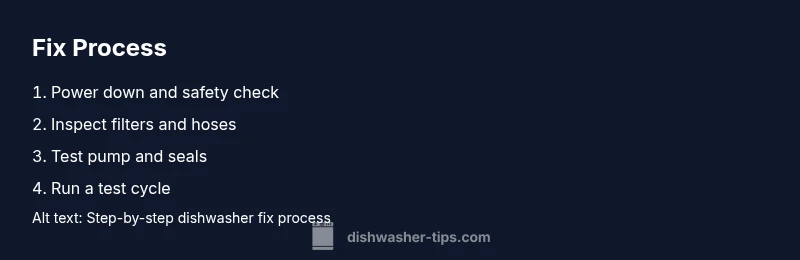
Unplug the dishwasher from the outlet and switch off the circuit breaker if accessible. Shut off the household water supply to the appliance. Wipe up any water on the floor and wear gloves to protect your hands from sharp edges. This step ensures you won’t be exposed to live electricity or a potential flood while you inspect.
Tip: Always verify power-off with a tester before touching internal components. - 2
Access the bottom panel safely
Remove the lower access panel or kick plate to expose the dishwasher’s interior. Expect a small amount of standing water; place towels and a shallow tray to catch spills. Take photos of any wires or hoses before disconnecting anything so you can reassemble accurately.
Tip: Keep track of screws by placing them in a labeled container. - 3
Inspect the filter and sump for blockages
Remove and rinse the filter; clear debris from the sump with your gloved hand or a soft brush. A clogged filter or sump can drastically reduce cleaning efficiency and lead to standing water. Reassemble once clean and dry, then wipe surfaces to prevent mineral buildup.
Tip: Use a flashlight to spot hidden debris in hard-to-see corners. - 4
Check the drain hose and clamps
Trace the drain hose from the sink to the dishwasher; check for kinks, pinches, or disconnections. Tighten or replace clamps as needed to ensure a secure path for wastewater. If the hose is cracked, replace it following manufacturer guidelines.
Tip: Never bend the hose sharply; use gentle curves to avoid future leaks. - 5
Test the pump and impeller
With the bottom panel off, manually spin the impeller to ensure it moves freely. Listen for grinding noises that could indicate a worn bearing. If the pump appears stuck or noisy, replacement parts may be required.
Tip: Inspect for burned smells or melted insulation around the motor. - 6
Inspect electrical connections
Look for loose or corroded wires at the control board or timer. Do not pull on harnesses; gently reseat any loose connectors. If you’re uncertain, contact a professional to avoid electrical hazards.
Tip: Always reseal the interior with the panel screws before testing. - 7
Run a test cycle and observe results
Reassemble the access panels, plug back in, and run an empty cycle on a hot setting to verify proper operation. Check for leaks, water flow, and cleaning performance. If issues persist, note symptoms and consider next steps with a pro.
Tip: Document any error codes shown during the test cycle.
People Also Ask
What are common signs that my dishwasher needs repairs?
Common signs include poor cleaning, not draining, and evident leaks. If you notice unusual noises or error codes, note them for diagnosis. These indicators help determine whether a DIY fix is feasible or if professional help is required.
Common signs include poor cleaning, drainage problems, and leaks. If you hear unusual noises or see error codes, note them to guide your next step.
Can I fix my dishwasher myself?
Yes, many routine issues can be addressed by a careful, methodical approach. Always start with safety, inspect the filter and hoses, and perform basic testing before replacing parts. If electrical or gas components are involved, contact a professional.
Yes, you can fix many simple issues yourself, but avoid electrical or gas work if you're unsure.
When should I call a professional?
Call a professional if you detect electrical issues, persistent leaks, unusual smells, or no heating during cycles. A pro can diagnose and replace electrical or control components safely and in compliance with code.
Call a professional if you notice electrical issues, ongoing leaks, or no heat.
What safety steps should I take before starting repairs?
Always unplug the unit and shut off water. Wear gloves, use a flashlight, and keep the work area dry. Do not attempt repairs if you're unsure about electrical connections.
Unplug the dishwasher, shut the water off, wear gloves, and stay dry.
How long do DIY dishwasher repairs take on average?
Most DIY fixes can be completed within a few hours, depending on the complexity and parts needed. Plan for some extra time if you need to source replacement components.
Most fixes take a few hours, depending on the problem and parts.
Watch Video
What to Remember
- Identify symptoms before disassembly.
- Always unplug and shut water off first.
- Keep your workspace organized and label parts.
- Know when to call a professional.