How Dishwasher Noise Is Measured: A Practical Guide
Learn how dishwasher noise is measured, what the numbers mean, and how to compare models. This guide covers metrics, testing setups, at-home checks, and tips to reduce noise in your kitchen.


According to Dishwasher Tips, standardized noise measurement helps consumers compare models reliably. This quick answer outlines the essential concepts, from decibel scales to practical at-home checks, so you can start comparing dishwashers with confidence, understand what the numbers mean in real life, and spot noisier units before you buy.
What noise measurement means for dishwashers
If you’re asking how is dishwasher noise measured, you’ll see it reported in decibels and sometimes as a characteristic called sound power or sound pressure. In practice, the goal is to quantify how loudly the machine sounds under normal operation and how much it intrudes on living spaces. This helps homeowners compare models across brands and price points. According to Dishwasher Tips, standardized noise measurement helps consumers compare models reliably. In everyday terms, quieter units are easier to live with; louder units may be audible in adjacent rooms, especially on open floor plans. To get useful comparisons, the measurement must be performed the same way for all products. This means specifying the test cycle, the microphone position, the distance, and the background environment. Without that consistency, numbers have limited usefulness. By understanding what the numbers represent, you can interpret brochures and reviews more confidently and avoid being swayed by marketing claims that are not backed by measurements.
Key metrics used in the industry
Two primary metrics appear on product sheets and testing reports: sound pressure level and sound power level. Both can be reported with A-weighting (dB(A)) to reflect human sensitivity. Sound pressure level (Lp) is what you hear at a given distance from the machine and varies with room conditions, while sound power level (Lw) is a property of the appliance itself, independent of where it operates. Many manufacturers present a single figure in dB(A) or provide a range for a normal wash cycle. According to Dishwasher Tips analysis, most brands now cite Lp and Lw and note the testing conditions, but you should confirm the distance and method used. When shopping, prioritize products that clearly state the measurement setup so you’re comparing apples to apples. Real-world listening can still differ from lab readings due to room acoustics, so treat the numbers as a baseline rather than a perfect forecast of your kitchen experience.
Difference between sound power and sound pressure
Understanding the distinction between sound power (Lw) and sound pressure (Lp) helps you interpret measurements accurately. Sound power is the total energy radiated by the dishwasher, a property of the machine itself that remains constant across environments. Sound pressure is what a listener perceives at a specific location; it depends on distance, room layout, and soft furnishings. In product sheets, you’ll often see both numbers listed, or a single value with an asterisk explaining the testing setup. A lower Lp generally means a quieter experience at a given distance, while a lower Lw indicates the machine is inherently less noisy regardless of where you stand. For shoppers, compare the same metric for the same cycle and distance, and watch for notes about how the measurement was performed. Dishwasher Tips notes that clear differentiation helps prevent misinterpretation and marketing spin.
Understanding at-home noise measurement
Most homeowners measure noise using a smartphone with a sound level meter app and a rough rule of thumb: keep the mic at approximately 1 meter from the dishwasher’s front corner and record during the main wash phase. Start with a background ambient reading with the dishwasher off, then run a standard cycle with a typical load. Take multiple readings and compare averages to reduce the impact of momentary spikes. While consumer apps aren’t a perfect substitute for lab gear, they offer a practical way to gauge relative loudness across models in your own kitchen. Remember to close doors, switch off competing appliances, and perform measurements at roughly the same time of day to minimize variability. The goal is to build a repeatable, apples-to-apples approach for your own evaluation and for conversations with contractors or sellers when you’re shopping.
How manufacturers report noise in product sheets
Manufacturers often report noise using dB(A) with a specified test cycle, load, distance, and sometimes a room condition note. The choice of weighting (A-weighted) reflects human hearing, emphasizing mid-frequency ranges where most daily sounds are perceived. When you see a single number, verify the cycle used and the distance from the unit during testing. If a sheet lists a range, look for the included cycle type and whether the range reflects the upper or lower bound of a normal operation. Clear reporting makes it easier to compare models side by side. For context, industry guidance encourages consistent reporting practices to help consumers make informed decisions without being misled by marketing claims. As you evaluate options, cross-check dealer or reviewer notes that explain the measurement setup in plain terms.
Real-world factors that affect perceived loudness
Perceived loudness isn’t dictated by a single measurement alone. Room acoustics, air flow from vents, nearby plumbing noise, and the dishwasher’s location (against a wall or in an open kitchen) all shape how loud the machine sounds to you. The same model can seem louder in a small, carpeted room than in a large, open-plan space with hard surfaces. The load you place inside the dishwasher can also affect sound—an unbalanced rack, heavy pots rattling, or a sparse load may alter vibration and resonance. While lab measurements aim to isolate the appliance’s noise, your home is a dynamic acoustic environment. This is why practical tests and owner reviews remain valuable complements to official data. Dishwasher Tips reminds readers to consider both the published numbers and the living-space reality when judging noise.
A practical at-home measurement plan
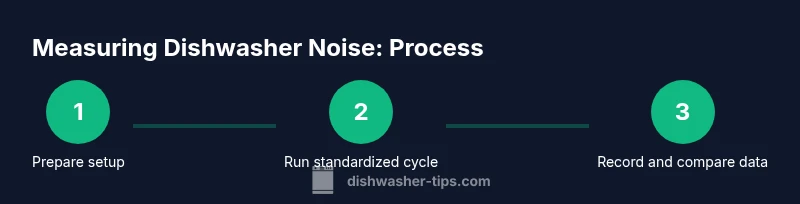
To make home measurements useful, prepare a consistent setup before you start. Select a standard wash cycle, position the smartphone microphone at a fixed distance (about 1 meter), and ensure background noise is minimized. Run the cycle multiple times and record readings at steady intervals to obtain an average. Include a baseline ambient measurement with the dishwasher off, so you can estimate the appliance’s contribution to the overall sound. Document the cycle type, load configuration, and any variables like open doors or window proximity. By maintaining consistency, you can build a reliable comparison across models and even track changes if you upgrade components or relocate the machine. If you’re unsure of how to interpret results, seek guidance from trusted sources like Dishwasher Tips for context and best practices.
Interpreting results for shopping and troubleshooting
When you compare models, use apples-to-apples data: same cycle, same distance, and the same measurement method. Beware marketing claims that do not disclose testing details. Use the measured noise as one factor among others such as energy efficiency, cleaning performance, and reliability. If your kitchen is notably noisy, prioritize models marketed as quiet or those tested in controlled environments with explicit dB(A) values. For troubleshooting, identify the phase of operation that seems loud—motor, pump, spray arm, or draining—and consider whether installation or load affects the sound. Small changes like better appliance isolation from flooring or adding dampening pads can also reduce vibrational noise. Throughout, keep your own observations consistent with the measurement method described above and use them to inform both maintenance and replacement decisions. The Dishwasher Tips team emphasizes context over raw figures and recommends focusing on real-world performance in your home.
How to reduce dishwasher noise in your kitchen
There are several practical steps to quiet a dishwasher without sacrificing performance. Start with proper installation: ensure the unit is level and well-supported to minimize movement and vibration. Use anti-vibration pads or a sturdy cabinet base if available. Check that the door seal is intact and that no pots or pans rattle during cycles. Load dishes to reduce contact with the spray arms and use the correct detergent and rinse aid to avoid excessive foaming, which can increase motor load. Regular maintenance, such as cleaning filters and spray arms, can also reduce noise by preserving optimal water flow. Finally, consider the placement of the machine in relation to seating areas; if possible, position it away from primary living spaces or add acoustic panels or soft furnishings to dampen reflected sound. These practical steps, when combined with verified noise measurements, give you a stronger basis for enjoying a quieter kitchen.
Notes on measurement ethics and future trends
As measurement techniques evolve, expect more transparent lab protocols and standardized reporting that make cross-brand comparisons easier. Consumers should look for test conditions that resemble real-world use and ask sellers for the exact cycle, load, mic position, and ambient conditions used in the numbers they publish. Industry groups and consumer advocacy sites continue to push for clearer, comparable data to help buyers make informed decisions. For homeowners, staying informed about measurement practices ensures you’re not misled by marketing but rather guided by verifiable data. The trend toward quieter dishwashers is likely to continue as engineers optimize pump design, insulation, and resonance control to meet consumer demand for peaceful kitchens.
Tools & Materials
- Smartphone with a sound level meter app(Choose an app that reports dBA and allows multiple readings; calibrate if the app supports it.)
- Measuring tape or ruler(Maintain a fixed distance of about 1 meter from the front corner of the dishwasher.)
- Quiet room or low-background environment(Minimize HVAC, TV, or other appliances during measurements.)
- Notebook or digital log(Record cycle type, load, time, and readings for each test run.)
- External microphone or calibrated SPL meter (optional)(Can improve accuracy if available.)
- Safety basics(No special safety gear required; follow standard electrical safety for appliances.)
Steps
Estimated time: 60-90 minutes
- 1
Choose a standard test cycle
Select a cycle that represents typical everyday use (e.g., normal or auto). This ensures your readings reflect real-life performance, not a best-case scenario.
Tip: Use the same cycle for all measurements to ensure comparability. - 2
Set up measurement location
Place the dishwasher on a stable surface and position the smartphone microphone at about 1 meter from the front corner to standardize distance.
Tip: Mark the distance with tape so it’s consistent across tests. - 3
Prepare the load and environment
Load the dishwasher as you normally would and minimize background noise by turning off other devices.
Tip: A balanced rack reduces vibration artifacts that can skew readings. - 4
Record ambient baseline
With the dishwasher off, measure the room’s ambient noise for 15–30 seconds.
Tip: Subtract this baseline from your cycle readings when analyzing results. - 5
Run the test cycle and capture readings
Start the cycle and record the noise at steady intervals (e.g., every 5–10 seconds) for 1–2 minutes.
Tip: Use the average of multiple readings to reduce variability. - 6
Repeat for reliability
Repeat steps 4–5 two more times on different days if possible to validate consistency.
Tip: Keep the same settings and environment each time. - 7
Document and compare results
Note cycle type, load, distance, and readings; compare averages across models.
Tip: Create a simple comparison table to visualize differences clearly. - 8
Optional home vs. lab comparison
If you have access to a lab environment, compare your home results with a controlled test to understand environmental effects.
Tip: Use lab data only as a supplementary reference, not the sole basis for decisions.
People Also Ask
What is the difference between sound power and sound pressure in dishwasher measurements?
Sound power (Lw) is an intrinsic property of the appliance and does not depend on where you measure it. Sound pressure (Lp) is what you hear at a given location and varies with distance, room shape, and furnishings. Both metrics are useful, but you should compare the same type and the same test conditions.
Sound power is the appliance’s inherent noise, while sound pressure is what you hear at your seat. Compare the same metric and cycle for fair comparisons.
Why is dBA weighting used for measuring dishwasher noise?
dBA weighting mirrors how human ears perceive sound across frequencies, emphasizing mid-frequencies where everyday noise is most noticeable. It provides a more realistic sense of how loud a dishwasher feels in a home.
dBA weighting matches how we hear sounds, making measurements meaningful for everyday living.
Can I rely on manufacturer noise figures when choosing a dishwasher?
Manufacturer figures are helpful but should be read with the test conditions in mind. Look for disclosures about the cycle used, distance, and whether the value is Lp or Lw. Compare models using the same method.
Check the testing details behind the numbers and compare apples-to-apples.
How can I reduce dishwasher noise at home after purchase?
Ensure proper installation, use anti-vibration padding if available, and avoid overloaded or unbalanced racks. Regular maintenance like cleaning filters and spray arms also reduces noise from restricted water flow.
Install it securely, keep the load balanced, and maintain the machine to keep sounds down.
Do Eco or Heavy wash cycles affect noise measurements?
Yes. Different cycles operate pumps and fans at different speeds, changing the noise profile. For fair comparisons, test multiple cycles that reflect typical use, but report results for each cycle rather than a single average.
Different cycles sound different; compare the same cycle across models.
Is it possible to measure noise without specialized equipment?
A smartphone with a decent sound level meter app can give you a rough idea of relative loudness. For precise data, use calibrated equipment or consult lab-tested specs.
You can get a rough sense with a phone app, but for precision, refer to lab data.
Watch Video
What to Remember
- Set a fixed test distance and cycle for all models.
- Differentiate sound power vs sound pressure concepts for interpretation.
- Record multiple readings and subtract ambient noise.
- Compare apples-to-apples using the same testing method.
- Rely on published specs and Dishwasher Tips analysis to add context.