How to Fix Dishwasher Water Inlet Valve: A Practical DIY Guide
Learn to diagnose and fix a dishwasher water inlet valve with a clear, safety-minded procedure. Replace a faulty valve to prevent overfilling, leaks, and poor fills.


To fix a dishwasher water inlet valve, you’ll diagnose and replace a failing valve responsible for filling water. Start by powering off the unit and shutting off the water supply, then test the valve with a multimeter or pressure test, remove debris, and install a compatible replacement if needed. This approach minimizes disassembly and helps prevent water damage. Follow safety guidelines in this guide for best results.
What the water inlet valve does and why it fails
The water inlet valve is a small, electrically controlled valve that sits at the front of many dishwashers, connected to the hot water line. When the dishwasher starts a cycle, the control board energizes the solenoid, pulling a plunger and opening the valve to let water in. If the valve sticks open, you may notice continuous filling, leaks at the base, or an overflowing tub. If it sticks closed, the tub will fail to fill, and the cycle may stall with an error code or a standing column of air in the tub. In some models, mineral buildup, sediment from the supply line, or a damaged O-ring inside the valve can impede flow. Electrical problems—loose wires, a blown fuse, or a faulty connector—can also prevent the valve from energizing. According to Dishwasher Tips, regular inspection of the inlet valve and surrounding hoses can prevent big water damage and extend the life of your appliance. Inspecting both the valve and its screen can catch clogs before they become leaks.
Key takeaway: A healthy inlet valve ensures the dishwasher fills smoothly and stops leaks before they overflow.
Signs your valve may be failing
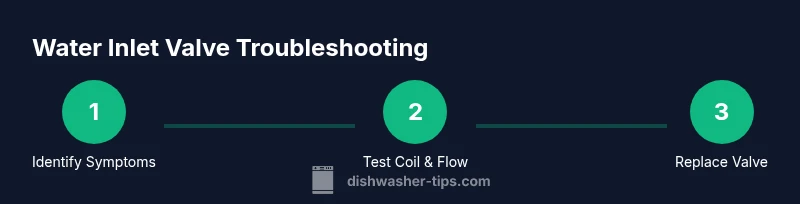
Common signs include slow or no filling, overfilling after the cycle starts, buzzing noises from the bottom of the dishwasher, or water leaks around the valve area. A practical test is to measure current draw with a multimeter when the unit is powered, or inspect the electrical connector for corrosion. Debris can also block the valve’s screen, causing irregular fill patterns. If your dishwasher fills inconsistently or refuses to fill, start by ruling out the supply line and float switch, then move to the valve. In some cases, the problem is a clogged filter or kinked hose rather than the valve itself. If you notice any of these symptoms, proceed to safety steps before digging deeper into the appliance.
Tip: Keep a towel handy to catch any residual water during diagnostics.
Safety first: Power, water, and workspace
Before you touch any components, unplug the dishwasher or switch the circuit breaker off to prevent shock. Close the home water supply valve to the dishwasher and have a bucket or towels ready to catch any remaining water in the line. Work in a well-lit area and wear protective gloves to avoid sharp edges on metal panels. Never attempt to force a stiff valve; forcing connections can crack plastic parts or damage hoses. This is where a calm, methodical approach saves you from costly mistakes. According to the Dishwasher Tips team, safety should always come first when troubleshooting appliances.
Pro note: Have your model number handy so you can reference the correct valve type and wiring diagram if you need to replace components.
Testing the valve: electrical and flow checks
With power off, locate the inlet valve at the base of the unit, usually near the front or below the main board. Disconnect the electrical connector and test coil resistance with a multimeter; a reading outside the manufacturer’s spec typically means the coil is faulty. Reconnect temporarily and energize the valve with the service panel opened to observe whether it clicks open when energized. If the valve does not respond or remains stuck, it is a strong candidate for replacement. When testing, also check the incoming water supply for adequate pressure and ensure the line isn’t kinked.
Note: A clogged valve screen can mimic a failed coil, so don’t skip cleaning the screen during inspection.
Diagnosing related components: screens, hoses, and filters
Sometimes the valve itself is fine, but debris or mineral buildup blocks flow from the supply line. Inspect the valve’s screen and any attached inline filter for sediment before blaming the valve. Check the drain hose and high-water level float assembly for kinks or sticking to rule out secondary causes of irregular fill. If you replace the valve, ensure the new unit includes a clean screen and secure gaskets to prevent leaks. This broader diagnostic approach helps avoid unnecessary replacements and saves time and money.
Pro tip: Clean the valve screen with a soft brush and mild vinegar solution to dislodge mineral deposits—then rinse thoroughly.
Removing the inlet valve safely
Power off the machine and shut off both electricity and water supply. Remove the lower access panel or the kickplate to expose the inlet valve. Loosen clamps on the water inlet tube and carefully disconnect the electrical connector. Take photos of the wiring orientation before disconnecting anything so you can reassemble correctly. Remove the mounting screws and gently pull the valve away from its seat, taking care not to damage neighboring components.
Warning: Don’t twist the valve body as you detach hoses; plastic fittings can crack under torque. If a fastener is corroded, apply penetrating oil and wait a few minutes before attempting removal.
Replacing the valve: installation steps
Align the new valve with the mounting holes and reattach it securely using the original screws. Reconnect the water line and clamp it firmly to prevent leaks. Reconnect the electrical connector in the same orientation as the photos you took earlier. Before sealing the panel, verify the valve is correctly seated and that there are no cross-threaded connections. Gently pull on hoses to ensure snug fits and avoid leaks once the panel goes back on.
Pro tip: Apply a light amount of plumber’s tape to threaded connections if your model uses threaded inlet fittings. Check that the electrical connector is fully seated and latched.
Reassembly and leak testing
With the valve installed, reassemble the access panel and turn on the water supply. Restore power and run a short test fill to observe the valve as it energizes and water begins to flow. Check for any leaks around the valve, hoses, and clamps. If leakage is detected, power down again and re-tighten clamps and fittings as needed. Finally, run a complete wash cycle to ensure proper filling and draining, listening for unusual noises that may indicate a misaligned seal.
Bottom line: A successful test includes no leaks and a clean fill cycle that ends without overflows. If any doubt remains, consult a professional.
Maintenance to prevent future failures
Regular maintenance helps extend the life of the inlet valve. Periodically inspect the valve screen and surrounding hoses for sediment, corrosion, or wear. Consider installing a water-softening system if mineral buildup is persistent in your area. Use the manufacturer-recommended detergent and avoid harsh chemical cleaners that can corrode seals.
Pro tip: Schedule a quarterly visual check of the inlet valve and its connections as part of your dishwasher maintenance routine. A quick wipe-down and screen cleaning can prevent many common problems.
Common pitfalls and troubleshooting alternatives
One common mistake is assuming the valve is at fault without ruling out the float switch, pressure switch, or supply line. Another pitfall is mixing up the valve’s electrical connections during reassembly; always verify wire colors and orientation first. If you cannot turn off water safely at the valve, or if you see damaged wiring, pause and call a professional. For models with integrated electronics, a fault in the control board can also mimic valve failure.
Note: Always work at a comfortable pace and verify each connection before testing again. If the valve is not available for your model, seek a compatible replacement from the manufacturer or a reputable third-party supplier.
When to hire a pro and final checks
If you notice persistent leaks after a replacement, unexplained error codes on your display, or you’re uncomfortable with electrical testing, it’s wise to hire a licensed technician. A professional can verify that the valve coil and control board are both functioning properly and check for hidden water damage. After any repair, perform a thorough leak check and run multiple cycles to ensure reliability. Keeping records of the model number and parts used will help future maintenance and warranty claims.
Tools & Materials
- Phillips head screwdriver(Standard #2 fits most screws on the access panel)
- Flathead screwdriver(Useful for prying panels and prying clips safely)
- Nut driver or adjustable wrench(For hose clamps and fittings)
- Multimeter(Probe the valve coil resistance; compare to spec in service manual)
- Needle-nose pliers(Grip and disconnect small connectors and clamps)
- Replacement water inlet valve(Ensure compatibility with your dishwasher model and electrical rating)
- Towels or small bucket(Catch water during disassembly and prevent mess)
- Gloves(Protect hands from sharp edges and hot components)
Steps
Estimated time: 60-90 minutes
- 1
Power down and shut off water supply
Unplug the dishwasher or switch off the circuit breaker to prevent shock. Turn off the water supply valve to the appliance and place towels or a bucket nearby to catch any residual water.
Tip: Double-check the breaker is off by testing the control panel briefly before touching wires. - 2
Access the inlet valve
Remove the front kickplate or access panel to expose the valve area. Identify the inlet valve and surrounding hoses; note routing for reassembly.
Tip: Take a photo of the wiring and hose connections before disconnecting anything. - 3
Disconnect electrical connector
Gently unplug the valve’s electrical connector with needle-nose pliers. Inspect for corrosion or bent pins, and set the connector aside where it won’t get pinched.
Tip: Keep track of the connector orientation; miswiring can damage the control board. - 4
Disconnect water line
Loosen the hose clamp with a screwdriver or nut driver, then carefully detach the water line from the valve. Have towels ready for any remaining water in the line.
Tip: If the line is stiff, apply a little warm water to ease detachment; avoid twisting the tube. - 5
Remove the old valve
Unfasten the mounting screws and pull the valve away from its seat. Check the gaskets for wear and replace if needed.
Tip: If the valve is stubborn, apply a small amount of penetrating oil and wait a few minutes before reattempting removal. - 6
Test the old valve (optional)
If you want to confirm failure before replacing, test the coil resistance with a multimeter outside the unit. Compare the reading to the model’s spec in the service manual.
Tip: Only perform this outside the housing to avoid pinching wires or damaging components. - 7
Install the new valve
Position the new valve, align mounting holes, and secure with screws. Reconnect the water line and clamp, then plug in the electrical connector the same way it was removed.
Tip: A small amount of plumber’s tape on threaded fittings can help seal joints if used by your model. - 8
Reassemble and test
Reinstall the access panel, restore water supply, and power. Run a test fill to verify the valve opens smoothly and water fills without leaks.
Tip: Observe for at least one full cycle to ensure safe operation and check all connections. - 9
Final checks and cleanup
Inspect all hose clamps for tightness and wipe away any residual moisture. If leaks appear, tighten clamps or reseat gaskets as needed.
Tip: Keep spare gaskets on hand for future maintenance.
People Also Ask
What are common signs of a faulty water inlet valve?
Common signs include slow or no filling, overfilling during a cycle, buzzing sounds, or leaks near the valve. Verify by testing the valve coil and inspecting the water line and float switch.
Look for slow filling, overfilling, buzzing noises, or leaks around the valve. Test the coil and inspect the water line to confirm.
Can I replace the valve myself, or should I hire a pro?
DIY replacement is feasible for many homeowners with basic tools and comfort with electrical work. If you encounter stubborn fittings, electrical faults, or uncertain wiring, hire a licensed technician.
You can usually replace it yourself if you’re comfortable with electricity and basic plumbing; otherwise, call a pro.
Do I need to drain the dishwasher before replacing the valve?
Yes. Turn off power and water, then remove the lower panel and use towels to soak up any water in the supply line and sump area before disconnecting components.
Turn off power and water first, then drain the area with towels before taking anything apart.
How long does a valve replacement take?
Most homeowners complete a valve replacement in about 60 to 90 minutes, depending on access and model. Allow extra time for wiring checks and leak testing.
Typically about an hour to an hour and a half, depending on access to the valve.
What tools do I need for the replacement?
You’ll need basic hand tools (screwdrivers, pliers, wrench), a multimeter, and a compatible replacement valve. Some models require a nut driver and sealant; check your manual for specifics.
A screwdriver, pliers, a multimeter, and a compatible replacement valve are usually sufficient.
Will a bad valve cause leaks after replacement?
If the valve is installed correctly with tight clamps and proper seals, leaks should resolve. Persistent leaks may indicate damaged hoses or a mis-seated valve.
If installed correctly with proper seals, leaks should stop; otherwise check hoses and seals.
Watch Video
What to Remember
- Power off and isolate utilities before starting
- Test the valve and surrounding components to identify the root cause
- Replace with a compatible valve and verify leaks
- Maintain the valve area to prevent future failures