How to Tell If Dishwasher Inlet Valve Is Bad: Quick Troubleshooting Guide
Learn how to tell if your dishwasher inlet valve is bad and fix water-fill problems fast with a clear, step-by-step troubleshooting guide from Dishwasher Tips.


The most likely issue is a faulty dishwasher inlet valve or a stuck float switch, which prevents water from entering the tub. Start by checking the water supply line, inspecting the inlet valve for debris, and testing the water inlet for voltage if you can. If the valve is clogged or not opening, replacement is usually required.
Why the Inlet Valve Fails
Understanding how to tell if dishwasher inlet valve is bad helps homeowners act quickly when a dishwasher won’t fill or fills erratically. The inlet valve is a simple solenoid-driven device that opens to allow water into the tub. Over time, mineral buildup, sediment, or debris can clog the valve screen, or the valve coil can burn out due to repeated cycling. Electrical issues, such as a loose harness connection or a faulty control board, can also keep the valve from energizing. In many cases, failures arise from normal wear and tear on older machines, but improper installations or abrupt water pressure changes can hasten the problem. If you’re hearing a buzzing or humming sound when the dishwasher should fill, that can indicate the valve is attempting to operate but is obstructed or dead. This section explains how these failures manifest and what to check first. This guide from Dishwasher Tips helps homeowners and renters understand how to tell if dishwasher inlet valve is bad and what to do next.
Common Symptoms That Point to the Valve
Several telltale signs suggest the inlet valve is the culprit. The most obvious is a dishwasher that won’t fill at all, or slowly fills, leaving the basket half-empty. Unexplained water leaks near the bottom of the dishwasher or around the inlet hose can also indicate a faulty valve seal. You might hear buzzing when the machine should be drawing water, or you may notice erratic fills that surge and stop. In some cases, a valve stuck in the open position causes overfill and flooding. If your unit halts mid-cycle with a water-related fault code, the inlet valve should be part of your diagnostic. Remember, other components—like the float switch or timer/control board—can mimic valve symptoms, so verify valve operation as part of a broader check.
Quick Checks You Can Do Safely
Before you dive into replacement, perform a few safe, low-risk checks. Start by confirming the water supply valve behind the dishwasher is fully open and the supply line is kink-free. Inspect the inlet hose for cracks or leaks and ensure the screen at the valve inlet is not clogged. If you have access to a multimeter and are comfortable with basic electrical testing, determine if the valve coil is receiving voltage when the dishwasher should fill. If you detect no voltage or a short, the control circuit or wiring is suspect. If the valve screen is clogged or debris is present, clean it carefully and reassemble. Always unplug or switch off the circuit breaker before touching electrical parts and never test live wiring without proper safety measures.
Diagnostic Flow: Symptom to Solution
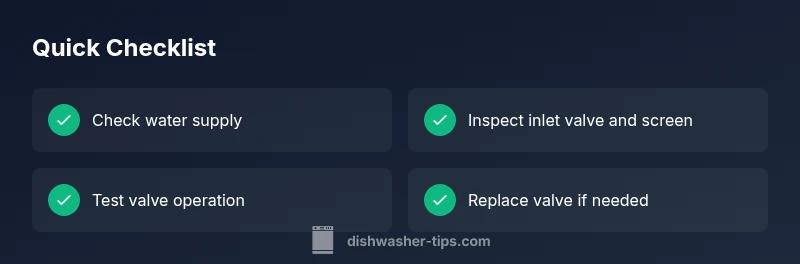
When diagnosing, move through a logical flow from symptoms to diagnosis to solution. If the unit doesn’t fill, verify the water supply first. If water is present but not entering, inspect the valve and screen. If the valve clicks but water doesn’t flow, test the coil and control signals. If the coil tests as open or shorted, replace the valve. For intermittent fills, consider possible wiring or float switch faults. Always re-test after each step to narrow down the likely cause. If you’re unsure or uncomfortable with electrical testing, seek professional help to avoid safety risks and incorrect diagnoses. This approach mirrors common troubleshooting workflows used by the Dishwasher Tips team.
Step-by-Step: Replacing the Inlet Valve
Replacing the inlet valve is typically straightforward but requires careful handling to avoid leaks. You’ll need new valve hardware compatible with your dishwasher model, pliers, a screwdriver, and a towel to catch spills. The steps outline a safe, practical path to a fix without diving into model-specific quirkiness. Here’s a concise guide: disconnect power and water, remove the access panel, detach the old valve, install the new valve with proper fittings, reconnect wiring, and test for leaks and proper fill. Remember to consult the model’s manual for torque specs and valve compatibility. This section provides a high-level overview; the STEP-BY-STEP block contains the detailed, model-agnostic procedure.
Prevention Tips to Avoid Valve Failures
Preventive care can extend valve life and reduce future breakdowns. Use clean, potable water to minimize mineral buildup; install a high-quality water filter if your supply is hard. Regularly inspect the inlet hose for signs of wear or cracks and replace damaged hoses promptly. Periodically clean the valve screen to prevent debris accumulation, especially if you have hard water or a history of clogs. Ensure the dishwasher is level, as improper tilt can affect valve operation. Finally, avoid running the dishwasher with an empty float or on a malfunctioning timer that could stress electrical components. Practicing these habits reduces the likelihood of recurring inlet-valve problems.
Steps
Estimated time: 30-60 minutes
- 1
Power down and shut off water
Unplug the dishwasher or switch off the circuit, then close the home water supply valve to the machine. This ensures no electrical current or water flow during inspection.
Tip: Label breakers and valves to simplify reassembly. - 2
Access the inlet valve and inspect connections
Remove the lower access panel or kickplate as instructed by the model manual. Locate the inlet valve, hoses, and wiring harness. Check that hoses are secure and not kinked or cracked.
Tip: Take a photo of wire connections before disconnecting any plugs. - 3
Test the valve coil and confirm no debris
Disconnect the wiring harness and set a multimeter to the resistance range. Compare readings to the manufacturer spec. Look for corrosion or burned contacts on the valve terminals.
Tip: If you don’t have a multimeter, a visual inspection for obvious damage is still helpful. - 4
Clean or replace the valve screen and screen filter
Remove the screen at the inlet and rinse with clean water. Use a small brush to remove mineral deposits. Reinstall securely to prevent leaks.
Tip: Keep track of tiny screens and O-rings; they are easy to lose. - 5
Replace valve if defective
Install the new valve with compatible fittings and ensure a tight seal. Reconnect wiring and confirm there are no cross-connections.
Tip: Double-check polarity and ensure hose clamps are snug but not over-tightened. - 6
Reconnect power, test the unit, and check for leaks
Restore power and water. Run a short cycle to verify proper fill and observe for leaks around the inlet. If water flow is still abnormal, revisit the coil test or wiring.
Tip: Watch for slow drainage after refilling, which can indicate downstream issues.
Diagnosis: Dishwasher won't fill with water
Possible Causes
- highPower or wiring issue to the inlet valve
- highClogged or sticky inlet valve coil
- mediumFaulty float switch or control board
Fixes
- easyVerify power at the inlet valve and check wiring for damage
- mediumClean the valve screen and reseat connections; replace valve if stuck
- hardReplace the inlet valve or control components if electrical test fails
People Also Ask
Why isn’t my dishwasher filling with water?
A faulty inlet valve, a clogged valve screen, or a faulty float switch are common causes. Start by checking the water supply and valve screen, then test the coil if you can.
If your dishwasher isn’t filling, the inlet valve or related components are likely at fault. Check the supply and valve, then test the coil.
Can a bad inlet valve cause leaks?
Yes. A damaged valve seal or fitting can leak water around the inlet hose. Inspect for cracks or loose clamps and replace the valve if the seal is compromised.
Yes, a bad valve can leak at the inlet; inspect seals and hoses and replace as needed.
Is it safe to test the valve without a meter?
Basic checks like ensuring power and connections are safe can be done without a meter. For accurate results, use a multimeter to test coil resistance and voltage.
You can do basic safety checks, but use a meter for precise valve testing.
How much does inlet valve replacement cost?
Costs vary by model and region, but expect parts plus potential labor if you hire a technician. Check your warranty status before replacing.
Costs vary; parts plus labor if you hire someone. Check warranty first.
Will cleaning fix a faulty valve?
Cleaning can resolve clog-related issues, but a burnt or worn coil usually requires replacement. Evaluate after cleaning the screen.
Cleaning may fix clogs, but a damaged coil typically needs replacement.
Do I need a professional to replace the inlet valve?
If you’re comfortable with basic appliance repair and electrical safety, you can replace the valve. For gas or electrical concerns, or if the unit is under warranty, call a pro.
You can replace it yourself if you’re comfortable with appliance repairs; otherwise, call a pro.
Watch Video
What to Remember
- Inspect the water supply first
- Clean or replace the valve if debris is present
- Test electrical signals before replacing
- Re-test thoroughly to prevent leaks