How to Check Dishwasher Inlet Valve: A DIY Guide
Learn how to check dishwasher inlet valve for proper water flow. This step-by-step guide covers safety, tools, testing with a multimeter, and when to replace the valve.


To check a dishwasher inlet valve, locate it at the bottom front of the dishwasher, shut off the water supply, and unplug power. Inspect the valve and its screen for debris. Use a multimeter to test coil continuity; if there is no continuity or the valve doesn't respond when power is reapplied, the valve is faulty and should be replaced or tested further.
What the dishwasher inlet valve does and why it matters
The dishwasher inlet valve controls water entering the appliance during fill cycles. If you’re exploring how to check dishwasher inlet valve, understand that a stuck or clogged valve can cause underfill, overfill, or no fill at all. The valve is typically connected to the home water supply line and wired to the dishwasher’s control board. Debris in the screen, a stuck coil, or a damaged electrical connection can prevent the valve from opening or closing properly. By understanding its role, you can diagnose many common filling problems without guessing. This guide walks you through locating the valve, safe testing techniques, and practical fixes. You’ll build confidence to verify whether the valve is the culprit or if another component—like the control board, flow sensor, or float switch—plays a role. Safety always comes first, and using the right tools protects both you and your dishwasher.
Common symptoms of a failing inlet valve
If the valve isn’t working as it should, you may notice one or more signs: the dishwasher takes longer to fill or never reaches the expected fill level, leaks may appear near the bottom, or the unit may overfill and spill water during a cycle. Some models produce a humming sound when the valve tries to open but can’t. Debris in the valve screen or a corroded connector can mimic other issues, so a careful test is essential. Remember, a valve can fail in two ways: it won’t open when energized, or it stays open, continuously allowing water to flow. Distinguishing between these modes helps you decide whether valve replacement or control-board diagnostics are needed.
Safety primer before you begin
Before touching electrical parts or plumbing, shut off the water supply and unplug the dishwasher. If you must access the bottom kick panel, place towels to catch any residual water. Work in a well-lit area and wear eye protection when removing panels or hoses. Never attempt to work on live electrical circuits, and avoid forcing hoses or fasteners that resist removal. If you are unsure about any step, pause and consult a professional. Safety and caution protect both your home and your appliance.
Tools and environment setup
Gather the essential tools you’ll need: a flathead and Phillips screwdriver for screws, needle-nose pliers for clamps, a multimeter for electrical tests, towels or a tray to catch spills, and a replacement inlet valve if a fault is confirmed. Have a bucket nearby to collect water and a camera or notes to document connections before you disconnect anything. Prepare a clean workspace and ensure the dishwasher is cool to touch before you begin.
Step-by-step diagnosis overview
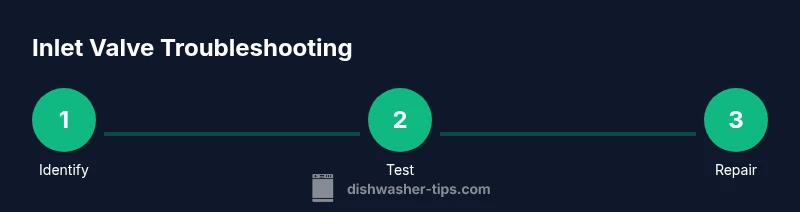
The following steps outline a practical approach to checking the inlet valve without guessing. You’ll inspect the valve area, test for debris, verify electrical continuity with a multimeter, and observe the valve’s behavior during a controlled test cycle. Each step is designed to be performed in sequence so you don’t miss a contributing factor. If at any point you feel uncertain, stop and re-check the previous steps or call a technician.
Maintenance and prevention tips
To reduce future valve problems, clean the intake screen regularly and use clean water in your supply line. Avoid introducing debris from new hoses or fittings, and install a water filter if your supply tends to be particulates-heavy. Periodically inspect wiring harnesses for signs of wear and replace damaged connectors before they fail. Keeping the area around the valve dry and free of clutter also lowers the risk of accidental damage during maintenance.
When to replace and what to expect
If testing shows no continuity on the coil, visible corrosion, or persistent filling problems after cleaning, the inlet valve is a strong candidate for replacement. Valve replacement is a moderately involved DIY task on many models, but it’s typically faster and less costly than a full appliance service call. Remember to disconnect power and water before starting, and use a valve compatible with your model. If in doubt, consult the model’s manual or a licensed technician.
Tools & Materials
- Flathead screwdriver(For loosening screws and clamps)
- Phillips screwdriver(For screws on valve or mounting bracket)
- Needle-nose pliers(To disconnect snaps or clamps)
- Multimeter(Set to continuity/ohms to test the coil)
- Bucket or tray(Catch any water when disconnecting lines)
- Towels or rags(Keep area dry and absorb spills)
- Replacement inlet valve(Only if tests indicate valve failure)
Steps
Estimated time: 30-60 minutes
- 1
Power down and prepare
Unplug the dishwasher and shut off the home water supply. Place towels to catch drips and create space for panel removal. If you need to access the toe-kick, do so gently and keep track of any screws.
Tip: Take photos of wire connections before disconnecting anything to simplify reassembly. - 2
Locate the inlet valve
The valve is typically at the bottom front where the water line enters. Use a flashlight to identify the valve, its hose, and the electrical connector. Consult your model’s manual if you’re unsure of the exact location.
Tip: Label connectors with painter’s tape to prevent mix-ups during reconnection. - 3
Inspect the screen and hoses
Check the valve screen for debris and clean gently with a soft brush. Look over hoses for kinks, cracks, or loose clamps. A clogged screen is a common cause of underfill or no fill.
Tip: Avoid metal tools that could scratch the valve; use plastic tools or a brush. - 4
Disconnect electrical connections and test continuity
With power off, disconnect the valve harness and set your multimeter to continuity. Touch the probes to the valve terminals and look for a closed circuit. If there is no continuity, the coil is faulty.
Tip: Keep track of wire colors and terminals; a quick sketch helps during reconnection. - 5
Reassemble and test the valve's operation
Reconnect the harness, restore power, and run a short cycle to observe whether the dishwasher fills normally. If it still misbehaves, you may need to replace the valve or check the control board.
Tip: Monitor for leaks during the test; a slow drip means you may have not tightened a connection properly. - 6
Decide on replacement or professional help
If the valve shows no continuity or the unit still misfunctions after cleaning, replacement is recommended. If you’re uncomfortable with electrical testing or the model requires special procedures, hire a professional.
Tip: Check for warranties or recall notices that might cover valve replacement.
People Also Ask
What is a dishwasher inlet valve and what does it do?
The inlet valve controls water flow into the dishwasher during the fill cycle. A faulty valve can cause underfill, overfill, or no fill at all. Testing and cleaning the valve area helps diagnose common filling issues.
An inlet valve controls water into the dishwasher. If it’s not working, the dishwasher may not fill properly; testing the valve area can help identify the problem.
How can I tell if my inlet valve is faulty?
Signs include poor or no filling, overfilling, leaks near the valve area, or a unit that hums as it tries to fill. To confirm, test electrical continuity with a multimeter and inspect for debris or corrosion.
Look for no fill, overfill, or leaks. Use a multimeter to test continuity and check for debris.
Is it safe to test the valve with a multimeter?
Yes, as long as you disconnect power and follow proper insulation practices. Keep metal probes away from water and only test the valve terminals with the unit unplugged.
Yes, but unplug the appliance and test only the valve terminals to stay safe.
Can a faulty inlet valve cause a dishwasher not to fill or overfill?
Yes. A valve that won’t open prevents filling, while one that remains open can lead to overfill. Diagnosing with both debris checks and continuity testing helps determine the cause.
It can cause both not filling and overfilling, depending on the failure mode.
Should I replace the valve myself or hire a technician?
If you’re comfortable with basic plumbing and electrical work, you can replace the valve. For complex models or uncertain wiring, consider a professional.
If you’re confident with basic DIY plumbing and safety, you can replace it yourself; otherwise, call a pro.
Will replacing the inlet valve fix a leak under the dishwasher?
A leak near the valve could be from a loose connection or worn O-rings. Replacing the valve often resolves related leaks if caused by valve failure, not by installation errors.
It can fix valve-related leaks, but ensure the connections are tight and seals are intact.
Watch Video
What to Remember
- Identify valve location early to speed checks.
- Clean the screen to resolve debris-related issues.
- Use a multimeter to verify coil continuity.
- Replace the valve if tests indicate failure.