How to Get Rid of Dishwasher Taste: A Practical Guide
Discover proven steps to remove dishwasher taste from dishes. Learn cleaning routines, detergent choices, rinse-aid tips, and maintenance to keep your dishwasher odor and flavor-free.


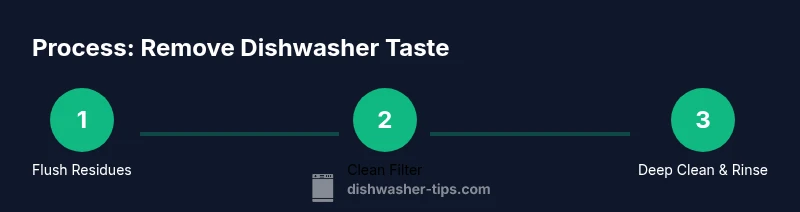
To get rid of dishwasher taste, start with a hot empty cycle to flush residues. Then clean the filter, spray arms, and door seals. Finish with a targeted deep-clean using a dishwasher-safe cleaner or baking soda, and adjust rinse aid and water hardness as needed.
Causes of Dishwasher Taste
According to Dishwasher Tips, many dishwasher taste issues originate from residue buildup, mineral deposits, and organic odors that cling to the filter, spray arms, and gasket. Food particles and fats can form a soap-like film that carries flavors onto clean dishes. Hard water leaves mineral residues that interact with detergents, producing metallic or plastic-like notes. New dishwashers or recently replaced hoses may retain manufacturing odors that transfer during cycles. Understanding these sources helps you target the right spots without over-cleaning the whole machine. Regular maintenance and mindful detergent use are essential for long-term taste control.
Quick Fixes You Can Try Today
Before diving into deep cleaning, try these fast steps to reduce flavors immediately. Run a hot cycle with an empty dishwasher to flush out loose residues. In parallel, inspect and rinse the filter under warm running water to remove trapped particles. Wipe the door seals and the gasket with a lint-free cloth to remove trapped soap scum. If you notice persistent odors, place a dishwasher-safe cleaner in the detergent chamber and run another hot cycle. Finally, check your rinse aid level and adjust to the manufacturer’s recommendation. These actions are effective for common household tastes without specialized tools.
Deep Cleaning Your Dishwasher
A thorough deep-clean targets the parts most likely to harbor odor: the filter, spray arms, and drainage pathways. Start by removing the lower rack and taking out the filter assembly; rinse under hot water and scrub with a soft brush to dislodge stubborn debris. Next, inspect each spray arm hole; clear any clogs with a straightened paper clip or pin. For a chemical-free approach, run a cycle with a dishwasher cleaner tablet in the detergent compartment, then follow with a hot rinse. If you prefer natural methods, place 1/2 cup baking soda on the bottom and run a hot cycle; for extra scent neutralization, a cup of white vinegar placed in a dishwasher-safe container during the cycle can help, but never mix vinegar with bleach.
Systematic Cleaning: Filters, Spray Arms, and Drain
A clean filter is the first line of defense against taste issues. Remove the filter and rinse it under hot water; scrub with a soft brush until all grease and food particles are gone. Spray arms should be inspected for clogs; use a thin tool to poke clear holes and ensure water flows freely from all nozzles. The drain pathway must be clear to prevent standing water and odor buildup. Wipe around the door gasket with a damp cloth to remove any trapped residues. Establish a routine where you check these components every month, especially if your water is hard or your detergent is high-foaming.
Optimizing Detergent, Rinse Aid, and Water Quality
Detergent choice matters as much as the wash cycle you select. Use the detergent type recommended by your dishwasher’s manufacturer and avoid overloading it with powder when your model performs better with tablets or pods. Rinse aid helps prevent water spots and can mitigate aftertaste by improving drying and odor removal; adjust dosage if you notice films or remaining residues. Water hardness directly affects taste; hard water can interact with detergents to create mineral film on dishes. If you have hard water, consider a water softener or increase rinse-aid dosage following the product guidance. These adjustments often yield cleaner, tasteless results and extend appliance life.
Preventive Maintenance and Routine
Consistency beats occasional scrubbing. Create a simple monthly maintenance routine: run an empty hot cycle with a cleaner or a vinegar-based flush (following safety guidelines), inspect and clean filters, and check spray arms for clogs. Keep the dishwasher interior dry when not in use to minimize odor buildup, and wipe the gasket after cycles to prevent soap film. Store plastics and utensils away from the sprayer to reduce plastic flavor transfer. Regularly replace aging seals and hoses per manufacturer recommendations to avoid leaks and taste disturbances.
When Taste Persists: Troubleshooting Beyond Cleaning
If flavors linger after diligent cleaning, investigate hidden sources such as drain odors, trapped food residues in hard-to-reach corners, or a malfunctioning pump that recirculates soiled water. Test with a different detergent and rinse aid to see if the flavor changes, and evaluate whether your water has unusual mineral content. If odors persist, consider professional testing for mold or bacterial contamination inside the dishwasher or plumbing connections. The goal is to rule out persistent contamination before assuming a one-off cleaning cycle will fix it.
Tools & Materials
- Dishwasher-safe cleaner tablets or powder(follow manufacturer instructions)
- White vinegar (5–6% acidity)(do not mix with bleach)
- Baking soda(for deodorizing bottom of tub)
- Soft brush(non-abrasive)
- Old toothbrush(for gaskets and spray arms)
- Lint-free cloth(to wipe seals and edges)
- Pin or paper clip(unclog spray arm holes)
- Gloves(protect hands during cleaning)
- Dishwasher-safe sponge(spot-clean stubborn spots)
Steps
Estimated time: 60-90 minutes
- 1
Run a hot empty cycle
Power up the unit and run a hot cycle with no dishes. This flushes out loose residues and prepares the interior for deeper cleaning. Make sure the spray arms can move freely during the cycle.
Tip: Use the hottest setting available for effective residue removal. - 2
Remove and clean the filter
Access the filter under the lower rack; remove, rinse in hot water, and scrub with a soft brush to remove any trapped grease. Dry before reinstalling to prevent mold growth.
Tip: If you see a shredded or torn filter, replace it rather than attempting a repair. - 3
Inspect and clean spray arms
Take off spray arms and inspect the nozzle holes. Clear any clogs with a thin tool or pin, and reattach. Ensure water flows through all holes when you run a test cycle.
Tip: Do this even if the arms look clean; mineral buildup can block tiny holes. - 4
Wipe seals and gasket area
Wipe around the door gasket with a damp cloth to remove soap scum and trapped debris. A clean seal prevents old flavors from seeping into cleaned dishes.
Tip: Pay attention to folds where grime hides. - 5
Deep-clean with cleaner tablet
Place a dishwasher-cleaning tablet in the detergent compartment and run a hot cycle. This targets internal crevices that regular washing misses.
Tip: Avoid adding any dishes during this cycle for optimal cleaning. - 6
Optional baking soda flush
Sprinkle baking soda across the bottom and run a hot cycle. This deodorizes and neutralizes odors that contribute to taste transfer.
Tip: Do not mix baking soda with vinegar in the same cycle. - 7
Rinse aid check and adjustment
Ensure rinse aid is filled and adjust the dosage according to your water hardness and product guidelines. Proper rinse aid improves drying and reduces film.
Tip: If you notice water droplets remaining, slightly increase the rinse aid amount. - 8
Establish monthly maintenance
Set a monthly routine to inspect filters, spray arms, and seals, and run an empty cycle with cleaner or a vinegar flush. Regular care prevents flavor issues from returning.
Tip: Keep a cleaning date in your calendar as a reminder.
People Also Ask
Why does my dishwasher taste metallic?
Metallic tastes often come from mineral deposits or oxidized metal parts in the machine. Cleaning the filter and spray arms, along with using rinse aid, can reduce metallic flavors. If the problem persists, consider testing for hard water minerals.
Metallic taste usually comes from minerals or oxidized parts. Clean the filter and spray arms, use rinse aid, and check your water hardness.
Can I use vinegar in my dishwasher?
Vinegar is generally safe for cleaning but should not be mixed with bleach or used on certain metal components. Use vinegar only in a targeted flush or with baking soda in separate steps, and follow manufacturer guidance.
Yes, you can use vinegar for cleaning, but don’t mix it with bleach and follow manufacturer directions.
Is it safe to run baking soda and vinegar together?
Mixing baking soda and vinegar inside a running dishwasher can create fizzing that interferes with cleaning performance. Use one method at a time and ensure the interior is cleared of residues before attempting the other.
Don’t run baking soda and vinegar together in the same cycle; use one method at a time.
How often should I clean the filter?
Clean the filter at least once a month, or more often if you notice debris or unusual odors. Regular cleaning prevents particle buildup that can transfer into dishes.
Clean the filter monthly, or more often if you see debris.
What should I do if taste persists after cleaning?
If flavor remains, check for hidden residues, drain odors, or a faulty pump. Consider professional testing for mold or bacteria if basic cleaning does not help.
If taste lasts after cleaning, inspect for hidden residues or call a pro.
Does water hardness affect dishwasher taste?
Hard water can contribute to mineral film and taste. If you have hard water, use a water-softening option or increase rinse aid dosage to minimize deposits.
Yes—hard water can raise mineral deposits, so consider softening or more rinse aid.
Watch Video
What to Remember
- Fix starts with identifying residue and mineral sources.
- Clean filters and spray arms routinely to prevent taste transfer.
- Choose the right detergent and rinse aid for your water quality.
- Deep-clean with approved cleaners; baking soda helps deodorize.
- Establish a monthly maintenance routine to prevent recurring issues.