How to Know If Drain Pump Is Bad on Dishwasher: Quick Diagnostics
Learn how to know if drain pump is bad on dishwasher with a practical, step-by-step guide. Identify symptoms, diagnose causes, and perform safe at-home fixes to restore drainage and prevent overflows.


Most often a bad drain pump is caused by a clog or a seized impeller. Start by unplugging the unit and locating the pump under the dishwasher. Check the impeller for debris, test that it spins freely, and inspect the drain hose for kinks or clogs. If the pump will not run or makes grinding noises, replacement is usually necessary.
How to know if drain pump is bad on dishwasher: quick orientation
Understanding how to know if drain pump is bad on dishwasher is essential for homeowners and renters facing standing water after a cycle. When the pump fails, water may remain in the tub, or the unit may drain slowly or not at all. Most dishwashers rely on the drain pump to move dirty water through the filter and out the drain hose. Debris buildup, a worn impeller, or a blocked hose are the leading culprits. By walking through a structured check, you can confirm whether the problem is the pump itself or another drainage component. This guide uses practical steps, so you can assess safety, perform at-home fixes, and decide if you should replace the pump. The goal is to restore normal drainage and prevent future clogs, all while keeping your family safe.
Common symptoms that hint at a bad drain pump
When diagnosing drainage issues, look for symptoms like water not evacuating after the wash, continuous humming from the bottom panel, or loud grinding noises during the drain phase. A partially clogged pump can still run but move water slowly, leaving residual moisture in the tub. If you observe water backing up into the tub or if an error code appears related to draining, these are strong indicators that the drain pump or its immediate path is failing. Always verify that other drainage components, such as the filter, hose, and check valve, are clear before concluding the pump is bad. In some models, a faulty pump can also trigger longer drain cycles, wasting water and energy.
What to check first: basics before deeper diagnostics
Start with the simplest checks. Ensure the dishwasher is completely powered off and unplugged, and verify the circuit is not tripped. Inspect the drain hose for kinks or clogs, and check the air gap if your model has one. Open the dishwasher and examine the bottom for standing water—this helps you decide whether the issue is the pump or a blockage upstream. Remove the lower rack to access the pump and filter; a loose or damaged clamp or a loose hose connection can mimic pump failure. Cleaning the pump outlet and filter is a quick win and often resolves non-draining symptoms without replacement. If basic checks pass but draining remains a problem, proceed to deeper diagnostic steps.
Diagnostic steps you can perform at home
To diagnose, remove power, then access the pump area. Remove the debris screen and inspect the impeller for obstruction; rotate it by hand to ensure it spins freely. Check electrical connections to the pump for corrosion or loose wires, and use a multimeter to test continuity if you have one. Inspect the drain hose and any clogs in the discharge path. If the impeller is stuck or the pump does not power on when the control board signals it, the pump is likely bad. Always reassemble carefully and run a short test cycle with a small load to observe the draining action before declaring replacement.
STEP-BY-STEP: Detailed fix for the most common cause
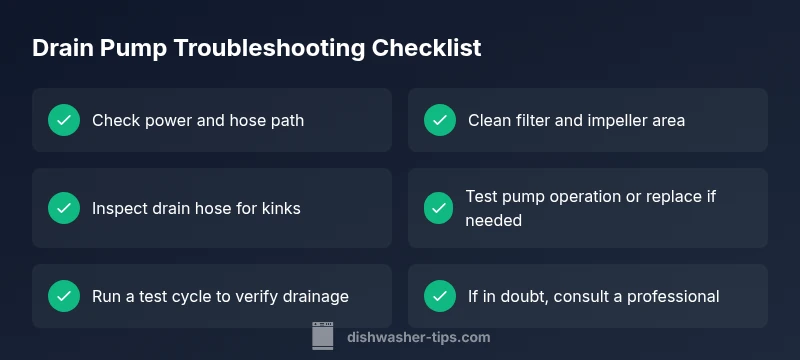
- Safety first: unplug the dishwasher and shut off the circuit at the breaker. 2) Access and inspect: remove the lower panel to reach the drain pump; unplug all connectors and note wiring. 3) Clean and test the impeller: remove debris from the impeller and housing; manually spin the impeller to confirm smooth movement. 4) Clean the drain path: clear the filter, sump, and discharge hose of any clogs. 5) Electrical check: if you have a multimeter, test pump continuity when powered; replace if readings are open/shorted. 6) Reassemble and test: secure all hoses and wiring, run a quick empty cycle to verify drainage. 7) If still slow or no drain, replace the pump assembly following your model’s service manual. Tip: keep a spare clip or clamp handy for a tight seal during reassembly.
TIPS & WARNINGS: Safety notes and common mistakes
- Always unplug and, if possible, switch off the circuit breaker before accessing the pump. Water and electricity are a dangerous combination. - Do not force hoses or clamps; applying excessive force can damage fittings and create leaks. - Use the manufacturer’s service manual for model-specific steps and torque specs. - If you are uncomfortable with electrical testing or spotting motor failures, call a professional appliance technician. - Regularly cleaning the filter and impeller area helps prevent future drain failures and saves time on future repairs.
Steps
Estimated time: 30-45 minutes
- 1
Power down and access pump
Unplug the dishwasher and switch off the circuit breaker. Remove the lower access panel to reach the drain pump. Take note of wire connections before disconnecting.
Tip: Take a photo of wiring for easier reassembly. - 2
Inspect for debris
Remove the debris screen and inspect the impeller and housing for food particles or gunk. Clear any obstruction that prevents the impeller from spinning freely.
Tip: Use a flashlight to spot hidden clogs. - 3
Check the drain hose
Trace the drain hose from the pump to the sink drain. Look for kinks, sharp bends, or blockages; disconnect and flush if needed.
Tip: Do not force the hose through tight bends. - 4
Test electrical connections
Reconnect the pump wiring and, if available, test continuity with a multimeter when power is back on (careful: electrical testing can be hazardous).
Tip: If you’re unsure about testing electronics, skip to replacement. - 5
Run a test cycle
Reassemble the access panel, restore power, and run an empty cycle to observe drainage. Watch for water evacuation and listen for abnormal noises.
Tip: Record any codes or times for reference. - 6
Decide on replacement
If the pump does not operate properly or continues to leak air/water, replacing the drain pump assembly is usually the most reliable fix.
Tip: Ensure you buy a model-specific pump for compatibility.
Diagnosis: Dishwasher won't drain or drains slowly
Possible Causes
- highClogged pump housing or filter from debris
- highWorn or seized drain pump impeller
- mediumBlocked or kinked drain hose or air gap
- lowFaulty pump motor or control board
Fixes
- easyUnplug the unit and locate the drain pump; remove debris from the impeller and filter to restore free movement
- easyInspect and clean the drain hose and check for kinks or clogs in the hose or air gap
- mediumTest electrical continuity of the pump with a multimeter; replace if readings are open/short
- hardReplace the drain pump assembly if the motor runs but doesn’t drain properly
People Also Ask
What are the first signs that the drain pump is failing?
Initial signs include standing water in the tub after a cycle, a humming noise near the bottom, or an unusually long drain period. If you see these symptoms, the drain pump is a likely culprit and should be inspected. Always rule out clogs in the hose or filter first.
Look for standing water after a cycle or a humming noise near the base. If you notice this, the drain pump is likely involved, but check hoses and filters before replacing anything.
Can a clogged drain hose mimic a bad pump?
Yes, a blocked drain hose or air gap can prevent drainage and feel like a pump failure. Always inspect and clear the entire drainage path before concluding the pump is bad.
A clogged hose can masquerade as a pump problem, so clear the path first before deciding the pump is at fault.
Is it safe to test the pump with a multimeter?
Testing with a multimeter is safe if you know how to disconnect power and follow the device’s manual. Improper testing can cause shocks. If unsure, consult a professional.
You can test with a multimeter if you follow safety steps, but if you're not sure, call a pro.
Should I replace the pump or the whole dishwasher?
In most cases, replacing the drain pump assembly is quicker and cost-effective after confirming the pump is faulty. Replacing the entire dishwasher is rarely necessary unless other major components fail.
Most times, replacing the drain pump is enough; full replacement is rarely needed.
Can a professional fix a dishwasher drain issue quickly?
Yes. A professional can diagnose quickly, check electrical safety, and replace the pump if needed. They also assess for underlying issues like a failing control board.
A pro can diagnose fast, ensure safety, and replace the pump if needed.
How can I prevent drain pump problems in the future?
Regularly clean the filters and inspect hoses for debris. Avoid overloading the dishwasher and use appropriate detergents to reduce residue that can clog the pump.
Keep filters clean, don’t overload, and use the right detergent to prevent clogs.
Watch Video
What to Remember
- Identify symptoms early to avoid water damage.
- Clean filters and impellers to restore drainage.
- Use a multimeter to assess pump health before replacement.
- Replace the pump if electrical tests show fault or the unit still won't drain.
- Regular maintenance prevents future drain pump failures.