How to Tell If Your Dishwasher Drain Pump Is Bad
Learn how to tell if your dishwasher drain pump is bad with a practical diagnostic flow, common symptoms, and safe fixes. This clear guide from Dishwasher Tips helps homeowners troubleshoot quickly.


The most likely issue is a clogged inlet or a failed impeller pump. Start by unplugging the unit, inspecting the pump housing, clearing debris from the filter, and testing for power to the pump. If the issue persists, replace the pump. This quick check helps you decide whether DIY checks are worth pursuing or if you should call a technician.
Why the dishwasher drain pump matters
The drain pump is a small but critical component that moves used water out of the tub at the end of every cycle. If it fails, you’ll see standing water, poor draining, or even overflow. Knowing how to tell if dishwasher drain pump is bad helps you act quickly and avoid unnecessary repairs. According to Dishwasher Tips, diagnosing drain problems starts with the pump and then moves outward to filters, hoses, and seals. The Dishwasher Tips team found that many drain issues begin with a clogged inlet screen or a jammed impeller, which can mimic a bad pump. By understanding the pump's role, you can decide whether to DIY or call a pro and minimize downtime in your kitchen.
Symptoms you might notice and where to start
A dishwasher that won’t drain or finishes with water still in the tub is a classic sign of a drain path problem or a pump that isn’t moving water. You might hear a humming or buzzing when the pump should run, or you could notice a faint burning smell if the motor is overheating. Leaking around the base or a damp floor can come from a worn pump seal. Start by inspecting obvious upstream parts: the filter, the sump screen, and the drain hose for clogs. If those look clear but water still fails to drain, the pump may be the culprit or it might not be receiving power. Follow a diagnostic flow rather than guessing.
How the drain pump actually works (a quick refresher)
In most dishwashers, the drain pump sits at the bottom of the tub and drives water out through a discharge hose. It uses a small motor to spin an impeller, pulling water from the sump and pushing it out of the unit. When the impeller becomes clogged, worn, or jammed by debris, flow decreases or stops entirely. If the impeller or seal is damaged, the pump may overheat, make unusual noises, or fail to start. Understanding this helps you tell if the pump’s function is compromised rather than a separate clog upstream.
Common failure modes and how they present
Several failure modes can mimic one another, so a careful check matters. A clogged pump inlet or debris in the impeller housing can prevent water from reaching the impeller. A burned or shorted motor, damaged windings, or loose wiring can stop the pump from running even when it’s not physically blocked. A cracked pump housing or torn seals can allow leaks and reduced suction. Indicators include persistent buzzing, poor drainage, or water remaining after the cycle. Keep in mind that a blocked filter or kinked drain hose can masquerade as pump failure, so verify upstream components first before replacing the pump.
Safety first: what not to do when diagnosing
Electrical safety is non-negotiable. Always unplug the appliance and, if possible, switch off the circuit breaker before opening the cabinet. Do not run the unit with water exposed or while you’re checking live wiring. Use the correct replacement pump model and follow the manufacturer’s instructions. Avoid applying glue or caulk to seals; it can contaminate the system. If you smell burning insulation or see signs of arcing, stop immediately and call a professional. This approach keeps you safe and reduces the risk of injury or damage.
How to diagnose like a pro (step-by-step approach)
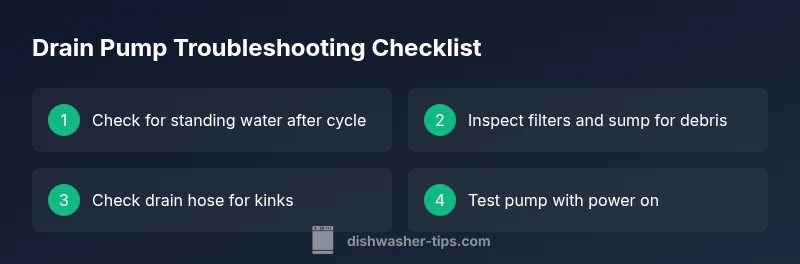
Diagnosing a drain problem follows a simple flow: confirm the symptom, rule out upstream clogs, test the pump, and then decide on repair vs replacement. Start with water not draining at the end of the cycle, then check for clogs in filters and hoses. If clear, inspect the pump for power and continuity. If power is present but the pump doesn’t respond, the motor or impeller is likely bad and needs replacement. If there’s no power, inspect wiring, control board, and fuses. This flow helps you isolate the issue without guessing.
Quick maintenance tips to prevent future drain problems
Regular maintenance goes a long way. Keep filters clean, run a hot-water wash periodically, and avoid pouring hard debris down the drain. Inspect hoses for kinks and ensure hose routing isn’t crushed. Use only compatible replacement pumps and keep spare gaskets on hand. These small habits reduce the chance of unexpected drain failures and extend the life of your dishwasher.
Steps
Estimated time: 30-60 minutes
- 1
Power off and access the pump
Unplug the dishwasher or switch off the circuit. Remove the lower panel to reach the drain pump. Use a flashlight to inspect the area and identify hoses, clamps, and the pump housing.
Tip: Take a quick photo of the wiring and hose routing before disconnecting anything. - 2
Inspect and clean the filters
Remove the filter and sump screen. Rinse away debris and check for any obstructions in the drain hose. Reassemble temporarily to test drainage.
Tip: A clean filter often resolves many draining issues without further repairs. - 3
Check electrical connections
Visually inspect the pump wiring for loose connectors or signs of wear. Re-seat connections firmly and look for damaged insulation.
Tip: Only handle electrical components with the power off to avoid shocks. - 4
Test pump continuity
If you have a multimeter, test the pump terminals for continuity. A reading that’s open or very high indicates a failed pump.
Tip: Consult the service manual for expected resistance values if available. - 5
Inspect the impeller and pump housing
Manually spin the impeller; it should rotate freely with minimal resistance. Look for cracks in the housing or a jammed impeller caused by debris.
Tip: Do not force the impeller—apply gentle pressure and stop if it binds. - 6
Decide on repair vs replacement
If the pump fails continuity tests or shows obvious wear, replacement is usually the right choice. If power is present but it doesn’t run, inspect the control circuit for faults.
Tip: Keep a parts list ready and consider warranty coverage before purchasing a replacement. - 7
Reassemble and run a test cycle
Install the pump and panels, restore power, and run a short cycle to observe draining. Look for leaks and listen for normal pump operation.
Tip: If you hear grinding or see leaking, power down immediately and re-evaluate.
Diagnosis: Dishwasher won't drain or leaves water in the tub after a cycle
Possible Causes
- highClogged filter or drain hose
- highBlocked or worn drain pump impeller
- mediumElectrical issue or failed pump motor connection
- lowDamaged pump seals or leaks
Fixes
- easyClear debris from the filter, sump, and drain hose
- hardReplace the drain pump assembly
- mediumCheck wiring and control board; test for voltage at pump terminals
- mediumReplace seals or pump housing if leaks are found
People Also Ask
What are the telltale signs that the drain pump is bad?
Common signs include standing water after a cycle, a buzzing or humming noise when the pump should run, and occasional leaks around the pump. If the motor won’t start despite power, the pump or its electrical path is likely failing.
If your dishwasher leaves water behind after a cycle or makes a buzzing sound without draining, the drain pump is likely failing.
How can I test a dishwasher drain pump with a multimeter?
Disconnect power and reach the pump terminals. Check for continuity across the pump windings. An open circuit or very high resistance suggests a failed pump.
Using a multimeter to check continuity at the pump terminals can confirm if the pump is bad.
Can a clogged filter cause the same symptoms as a bad pump?
Yes. A clogged filter or kinked hose can mimic pump failure by preventing water flow. Clear upstream obstructions first before replacing the pump.
A clog can look like a bad pump, so clear filters and hoses before assuming the pump is at fault.
Is it safe to run the dishwasher with a suspected pump problem?
No. Running with a suspected pump fault can cause overflow or electrical hazards. Stop the cycle and inspect the drain path and pump area.
Don’t run it if you suspect the pump is bad; turn it off and inspect for safety.
When should I call a professional?
If you’re unsure about electrical work or if testing indicates pump failure, contact a trained technician. A pro can confirm the diagnosis and ensure safe replacement.
If you’re not comfortable with electrical testing or the pump seems faulty, call a pro for a safe repair.
Watch Video
What to Remember
- Start with obvious clogs before swapping parts.
- Listen for pump noises to diagnose operation.
- Test electrical connections if the pump won’t run.
- Call a pro for electrical or warranty-related issues.