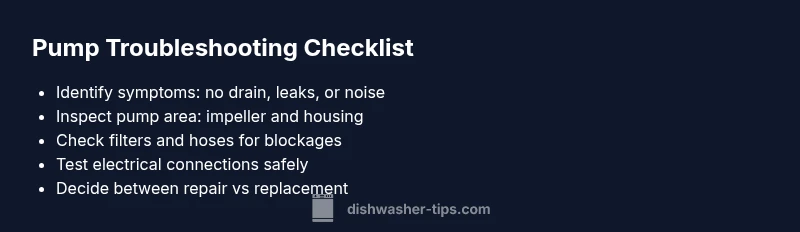
How to Tell If Dishwasher Pump Is Bad: A Practical Troubleshooting Guide
Discover how to tell if dishwasher pump is bad with a practical diagnostic flow, safety steps, and a clear repair plan for homeowners and renters.


Most dishwasher pump failures show as no draining, grinding, or a buzzing motor during cycles. Start by inspecting for clogs in the sump and drain hose, then confirm power at the pump with a tester, and check the impeller for obstructions. If the motor runs but cuts out or leaks, the pump is likely bad and needs replacement.
Why the Pump Matters in Dishwasher Performance
The dishwasher pump is the heart of the unit’s drainage and circulation. It pushes dirty water out of the tub and draws clean water in for the next wash. If the pump fails, you’ll likely experience standing water after a cycle, dirty dishes, or recurring leak symptoms. A bad pump can also cause the motor to hum without delivering any drain action, which wastes electricity and can lead to food debris redepositing on dishes. In this section we explore how the pump works, common failure modes, and how to verify pump health without guessing. Understanding the pump’s role helps you diagnose faster and avoid unnecessary parts replacement.
Common Symptoms That Point to a Bad Pump
- No draining or prolonged draining time after a wash.
- Loud grinding, buzzing, or rattling noises during operation.
- Water leakage around the pump housing or beneath the dishwasher.
- Impeller or pump screen clogs visible when you access the sump.
- The dishwasher stops mid-cycle or repeats cycles without finishing.
- Heat issues or odor indicating motor overheating.
We’ll explain which signs are most diagnostic and how to differentiate pump issues from issues with hoses, filters, or the float switch. If multiple symptoms appear together, the pump is a strong candidate for replacement.
Quick Home Checks Before Replacement
- Unplug the dishwasher and shut off the water supply before touching any components.
- Inspect the soap and drain filters; a clogged filter can mimic pump problems.
- Check the drain hose for kinks or blockages that trap water near the sump.
- Look for visible signs of oil-like contamination or burnt smell around the motor—these indicate internal damage.
- If you own a model with a service hatch, remove the lower access panel and locate the pump to inspect for cracks or loose fittings.
- Test the pump by running a short cycle with the access panel open (caution: avoid contact with moving parts).
Diagnostic Mindset: Is it the Pump or Another Part?
Diagnosing a bad pump requires ruling out other common culprits that mimic pump failures. Start with accessible parts like filters, the float switch, and the spray arms, then verify power to the pump motor. A simple power check can save you from swapping a pump that’s perfectly fine. If power is present but the motor doesn’t operate, you likely have an electrical or internal pump issue that warrants replacement. Always verify model-specific wiring diagrams before touching connectors.
Replacing vs. Repairing: Practical Advice
In most residential setups, wear to the impeller or a cracked housing means the pump should be replaced rather than repaired. Pumps are sealed assemblies, and a failed impeller often indicates internal wear that is not practical to repair. When replacing, match the exact model and consider upgrading to a pump with improved efficiency. If you’re unsure, consult a service professional to avoid water damage or electrical hazards. Regular maintenance reduces the likelihood of sudden pump failure.
Safety, Maintenance, and Prevention
Safety first: unplug the machine, remove the power cord, and shut off water supply before any inspection. Regularly clean filters and inspect the pump area for debris. Use the right detergent and avoid overloading the dishwasher, which can stress the pump. If you notice persistent leaking or unusual noises after maintenance, schedule a professional check to prevent water damage and ensure your warranty remains valid.
Steps
Estimated time: 60-90 minutes
- 1
Power down and prep
Unplug the dishwasher, turn off the household circuit, and pull the unit away from the wall. Gather basic tools (screwdrivers, pliers, flashlight) and a catch pan for any residual water. This protects you from shock and keeps the workspace dry.
Tip: Label screws by location to ease reassembly. - 2
Access the pump area
Remove the lower front panel or toe kick if required by your model. Identify the drain hose, pump, and any removable filters near the sump. Take photos as you go to track each connection.
Tip: A magnetic tray helps keep small parts organized. - 3
Disconnect power and hoses
Carefully detach electrical connectors from the pump and detach the discharge and inlet hoses. Place hoses into a bucket to control any water drainage. Remember which hose goes where for reassembly.
Tip: Work slowly to avoid stripping connectors. - 4
Inspect the pump and impeller
Look for cracks in the housing and signs of wear on the impeller. Rotate the impeller by hand to feel for resistance or obstruction. Remove debris that might prevent smooth rotation.
Tip: If the impeller is jammed, a light wiggle can free it without damage. - 5
Clear debris and test flow
After clearing any obstruction, reattach a hose temporarily and run a short cycle to observe drainage. If water still pools, you’ve likely isolated the issue to the pump.
Tip: Do not run the pump dry for extended periods; some models require a splash of water to operate. - 6
Reassemble and run a test cycle
Reconnect all hoses and electrical connectors. Reinstall the access panel and toe kick. Run a full wash cycle with a drain test to confirm proper operation and ensure there are no leaks.
Tip: Watch for leaks at every seam during the first test run. - 7
Evaluate results
If drainage improves but still performs poorly, the pump may still be faulty or there could be an internal blockage. If leakage or no power persists, a full pump replacement is likely necessary.
Tip: If in doubt, consult a pro to avoid warranty issues. - 8
Prevention and future checks
Schedule regular filter cleanings and inspect hoses for kinks. Periodic checks reduce the probability of sudden pump failure and keep cycles efficient.
Tip: Create a maintenance reminder every 6–12 months.
Diagnosis: Dishwasher won't drain, leaks, or makes abnormal grinding noises
Possible Causes
- highClogged pump screen or impeller
- mediumElectrical failure to pump motor or wiring issue
- lowDamaged pump housing or cracked impeller
Fixes
- easyClear clogs from sump, pump screen, and impeller using a flashlight and small tool; remove debris
- mediumTest pump power with a multimeter and inspect wiring; repair or replace if voltage is incorrect
- hardReplace the pump assembly if damage is found; consult model-specific guides or a pro
People Also Ask
What are the telltale signs that indicate a dishwasher pump is failing?
Common signs include no draining, loud grinding or buzzing, and water leaks near the pump. If multiple signs appear, the pump is a likely fault. Always verify other parts like filters and hoses first.
Look for no drainage, loud noises, or leaks around the pump. If several signs show up, the pump is likely faulty, but check filters and hoses first.
Can I test the pump without fully disassembling the dishwasher?
Some tests can be done by inspecting visible areas and listening for motor operation during a cycle. However, many reliable checks require accessing the pump housing or service panel, which involves removing panels safely.
You may hear the motor running during a cycle, but accessing the pump often needs panel removal for a proper check.
Is it safe to replace a dishwasher pump myself?
DIY replacement is possible for experienced homeowners with proper tools and safety caution. If you lack electrical or appliance repair experience, consider hiring a professional to avoid shock or water damage.
It's doable if you’re comfortable with electrical work and following safety steps; otherwise, a pro is best.
How much does a pump replacement typically cost?
Costs vary by model and region; replacing a pump can be more cost-effective than a full dishwasher replacement in many cases. Check with a local pro for an estimate based on your model.
Prices vary by model and labor, so check with a local technician for a precise estimate.
Could other components mimic a pump failure?
Yes. A clogged filter, faulty float switch, or blocked drain hose can mimic pump problems. Confirm each part before concluding the pump is at fault.
Filters, float switches, or hoses can mimic pump issues; verify those first.
Watch Video
What to Remember
- Identify pump symptoms early to avoid broader damage.
- Rule out filters and hoses before assuming pump failure.
- A full pump replacement is often more reliable than a repair.
- Safety and documentation reduce errors during DIY fixes.