Error Code E3: Urgent Dishwasher Drain Fix Guide
Urgent guide to diagnose and fix Dishwasher E3 drainage error. Learn quick checks, step-by-step repairs, safety tips, and prevention to get your dishwasher back in service fast.


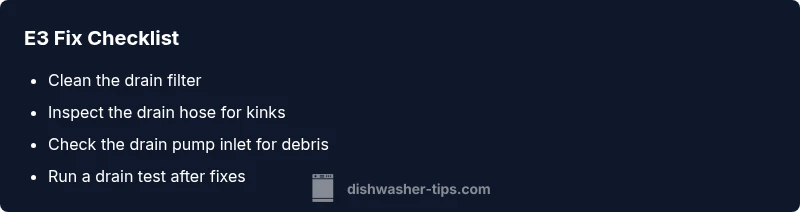
Error code E3 on most dishwashers signals a drainage problem that prevents the cycle from completing. The quick fixes include cleaning the drain filter, inspecting the drain hose for kinks or clogs, and checking the drain pump inlet for obstructions. If the error persists, contact a professional service to prevent water damage or further damage.
What E3 Means for Your Dishwasher (shxm78z55n)
Error code E3 is a drainage fault that interrupts the wash cycle because the dishwasher believes it cannot properly evacuate used water. This code commonly appears after a partial drain or when the drain path is obstructed. The inclusion of the keyword shxm78z55n here mirrors how a brand-focused troubleshooting guide maps the fault to a concrete fix flow. Dishwashers rely on a combination of filters, hoses, pumps, and sensors to determine when water has drained sufficiently. When any element in that path hangs up, a safety or status sensor triggers E3 to stop the cycle and protect components from overflow. Understanding this helps you prioritize a drainage-centric triage rather than replacing parts blindly. In many homes, quick checks of the drain filter and hose orientation resolve the issue without tools or expert help. If you manage a rental or a busy household, this knowledge can save you time and reduce service calls. The focus here is on reliable, repeatable steps that address the most common drainage culprits first, so you can get back to normal use with minimal downtime.
Common Symptoms That Signal E3
When E3 appears, you may notice water left in the bottom of the tub after a cycle, a loud pump noise that abruptly stops, or a faint burning smell from an electrical component in rare cases. The unit might also show a flashing light pattern or an error message on the display that repeats after attempting to drain. A stagnant sump with dirty water strongly suggests a filter or pump issue. In some scenarios, a misrouted drain hose or an air gap problem relays the same symptom to the control board, triggering E3. Always inspect visible elements first: filter, float switch, and hose connections. If the dishwasher sits idle with water pooled, avoid running it again until the path is clear to prevent overflow or water damage.
Quick Checks You Can Do Right Now
Before you power down, take a breath—safety first. Unplug the dishwasher and shut off the water supply if accessible. Remove the lower access panel to reach the pump and filter area. Pull out and rinse the drain filter under running water, removing any lint, food debris, or gad. Check the drain hose for kinks, crimps, or disconnections; straighten and re-seat the hose if necessary. Inspect the pump inlet for visible blockages and clear them with a thin brush or plastic tool. If you find a stubborn clog, use a flexible drain snake suitable for appliance hoses. After these checks, reassemble the panel but do not run a full cycle yet; instead, perform a short drain test to verify water evacuates smoothly.
Step-by-Step Fix: Drain Filter and Pump Access
- Power down and access: Unplug the unit and move it away from the wall if needed. Remove the lower kick plate to expose the drain area. 2) Remove and clean the filter: Take out the filter assembly and rinse under warm water. Use a soft brush to dislodge stuck particles, especially in the sump corners. 3) Inspect the drain hose: Detach the hose from its connection at the drain and look for kinks or twists. Re-route the hose to avoid sharp bends and ensure it sits below the sink trap level if required by your model. 4) Check the drain pump inlet: Look for fabric, hair, or sediment buildup around the inlet grate. Clear with a plastic pick or brush. 5) Reassemble and test: Reinstall the filter and hose, secure the access panel, plug in, and run a lightweight drain test (no detergent) to confirm water exits promptly. 6) Run a full cycle: After a successful drain test, run a normal cycle to confirm E3 does not reoccur.
Other Potential Causes and How to Address Them
If the quick checks and filter/pump cleaning do not resolve E3, consider alternate sources. A faulty drain pump motor can fail intermittently, often with humming or buzzing before stopping. A damaged or loose control board wiring can misread the drain status, triggering E3 even when the path is clear. Float switch misalignment or a sticky float can falsely indicate the tub is not draining. Finally, an undersized or blocked plumbing connection to the sink or garbage disposal can impede drainage. In these cases, you may need replacement parts or professional service to test electrical components and verify the controller logic.
Safety, Costs, and When to Call a Pro
Safety is paramount when dealing with electrical appliances near water. Always disconnect power before work and keep water away from electrical components. For most standard drain fixes, you can expect parts like filters and hoses to cost modestly, with labor costs varying by region and the complexity of the diagnosis. Dishwasher Tips Analysis, 2026 indicates that parts replacements for drains and filters typically range in the low to mid hundreds for more involved repairs, while simple filter cleanings may cost less after warranty considerations. If you encounter persistent leaks, sparking, burnt smells, or the unit fails to power on after basic checks, the Dishwasher Tips Team recommends scheduling a professional service to avoid damage and ensure code compliance.
Prevention: Maintenance to Avoid E3
To minimize future E3 occurrences, perform a monthly clean of the filter and sump area, ensuring no debris blocks water flow. Use the recommended detergent and a rinse aid to prevent mineral buildup that can clog small passages. Install the drain hose with the correct height and avoid kinks by routing it gently behind cabinets. Check for changes in water hardness and consider a scale preventer if you live in a hard-water region. Finally, run a test cycle after any relocation or plumbing work to confirm the drainage path remains clear.
Steps
Estimated time: 60-90 minutes
- 1
Power down and access area
Unplug the dishwasher and, if safe, shut off the water supply. Remove the lower kick panel to access the drain and filter housing. This creates a safe workspace and gives you a straight shot at the key components.
Tip: Keep screws organized in labeled containers to simplify reassembly. - 2
Remove and clean the filter
Take out the filter assembly and rinse it under warm water. Use a soft brush to remove lodged debris in the sump corners. Reinstall the filter securely to ensure optimal suction and flow.
Tip: Never use abrasive tools that can scratch the filter mesh. - 3
Inspect drain hose and connections
Check the drain hose for kinks, twists, or clogs. If needed, detach and reroute the hose so it runs smoothly to the drain or disposal without sharp bends. Reconnect firmly to prevent leaks.
Tip: Ensure the hose height complies with your machine's design—some models require an air gap. - 4
Check the drain pump inlet
Look for hair, lint, or small food particles clogging the pump inlet. Clear any obstruction with a plastic tool. If debris remains, consider flushing the line with a small amount of water.
Tip: Be gentle near electrical terminals to avoid damage. - 5
Run a drain test
With everything reassembled but still unplugged, plug in and run a short drain cycle to confirm water evacuates. If water remains, move to step 6.
Tip: If the test fails, shut down and prepare for a pump replacement or professional diagnosis. - 6
Full cycle validation
Run a complete cycle (wash, drain, rinse) without dishes to verify that E3 no longer appears and that water drains promptly. Watch the pump and hoses closely for abnormal noises.
Tip: Record any abnormal sounds or leaks to share with the tech.
Diagnosis: Dishwasher displays E3 and won’t drain
Possible Causes
- highClogged drain filter or sump debris
- mediumDrain hose kink or improper routing
- lowDrain pump failure or inlet blockage
Fixes
- easyClean the drain filter and sump area
- easyInspect and straighten drain hose; reseat fittings
- hardTest the drain pump operation; replace if failure
People Also Ask
What does E3 mean on my dishwasher?
E3 indicates a drainage issue—usually a clogged filter, kinked hose, or failing drain pump—that prevents proper water evacuation. Start with quick checks of filters and hoses before moving to deeper diagnostics.
E3 means there's a drainage problem. Start with the filter and hose checks, then inspect the drain pump.
Can I fix E3 myself?
Yes, many E3 issues are solvable through basic cleaning and hose re-routing. Always unplug the unit and follow safety steps. If you encounter electrical components or persistent failures, call a professional.
Yes, many E3 fixes are doable yourself, but stop if you’re unsure about electrical parts.
How much does it cost to repair E3?
Costs vary by location and diagnosis, but expect parts and labor to form a broad range. If a simple filter replacement suffices, costs are lower; more complex pump or board replacements can be higher. Always request a written estimate before work.
Costs depend on the fix, from modest part changes to larger repairs. Get an estimate first.
Why does E3 reappear after a reset?
If the drainage path remains blocked or the pump is failing, resetting won’t solve the underlying issue. Revisit filters, hoses, and the pump; consider professional diagnostics if the problem persists.
Because the root cause isn’t fixed, resetting won’t help. Check the drain parts again or call a tech.
Is E3 more likely with hard water?
Hard water can contribute to mineral buildup that narrows drainage passages. Using a proper rinse aid and a water softener where appropriate can reduce clogs and improve drainage performance.
Hard water can worsen clogs; use rinse aid and address mineral buildup to help drainage.
What should I do if there’s a leak after fixing E3?
Shut off power and water, then inspect connections, seals, and driveways for leaks. If you cannot pinpoint the source, contact a professional to prevent water damage and warranty voids.
If you see a leak after the fix, stop and get a pro to check it to prevent damage.
Watch Video
What to Remember
- Identify E3 as a drainage fault early
- Clean filters and inspect hoses first
- Test drain pump operation if initial fixes fail
- Call a pro for electrical faults or persistent leaks