W10518394 Dishwasher Error: Urgent Troubleshooting Guide
Urgent guide to diagnose and fix the w10518394 dishwasher error with quick fixes, a diagnostic flow, step-by-step repairs, safety tips, and FAQs from Dishwasher Tips.


The w10518394 error means the dishwasher has detected a fault in water intake or a sensor reading, signaling a potential leak or incomplete cycle. This is an urgent safety and performance alert, so start with basic checks and unplug the unit before any inspection. According to Dishwasher Tips, addressing water inlet and sensor faults quickly minimizes waste and damage. See our detailed guide for immediate fixes and a clear diagnostic flow.
What w10518394 Means
The w10518394 code is a fault indicator used by many brands to signal a problem with water intake, sensor feedback, or an internal communication error. Although the exact interpretation can vary by model, the common thread is that the control board has detected an abnormal condition during fill or sensing phases. According to Dishwasher Tips, this code should be treated as urgent because it can lead to overflow, poor cleaning, or electrical hazards if ignored. The presence of w10518394 indicates the system is trying to protect itself, which means you should proceed with caution and follow a structured troubleshooting flow rather than random fixes. This is not a generic glitch; it points to a definite fault path that, if left unrepaired, may worsen.
Urgency and Immediate Safety Steps
When you see w10518394, the first priority is safety. Immediately unplug the dishwasher and turn off the water supply under the sink. Do not operate the unit again until you have completed a basic inspection for leaks, pooling water, or a flooded base. If you notice steam, smoke, a burning smell, or loud arcing noises, stop and call a professional. Keep the door slightly ajar to vent moisture if you suspect a leak, but only if safe to do so. Dishwasher Tips emphasizes that water-related and electrical faults can cascade, so slow, careful steps protect you and your home from damage.
Common Symptoms Associated with w10518394
- Incomplete fills or overfills during the wash cycle
- Error appears early in cycle or mid-cycle with abrupt stop
- Visible leaks around the base or door seal
- Unusual noises or abnormal vibration during operation
- Dishes remain dirty or runny residue remains after a cycle
- The control panel displays w10518394 without clear user input
This symptom cluster often points to water inlet problems, clogged filters, or sensor misreads. If multiple symptoms appear together, expect a combined fault in the water supply path or control logic. Dishwashers across brands share this pattern: water flow anomalies trigger the code as a protective measure. Keep in mind the exact symptom set may vary by model and firmware.
Diagnostic Flow Overview
To approach w10518394 systematically, begin with simple checks and escalate to component testing. Start with basic water supply and filter checks, then inspect the inlet valve, sensor wiring, and control board harness. The diagnostic flow prioritizes causes by likelihood: water inlet/clogged filter (high), inlet valve failure or sensor misreadings (medium), control board fault or wiring issue (low). The goal is to confirm a fix at the lowest level of complexity first before replacing parts. Always document each step so you can reference it if the code reappears after a repair. This reduces unnecessary parts purchases and speeds up resolution.
Quick Checks Before Disassembly
- Unplug the machine and shut off the water supply.
- Remove the lower spray arm and access panel to inspect for standing water or obvious leaks.
- Check the drain filter and food chute for clogs; a blocked path can cause improper pressure readings.
- Inspect the inlet hose for kinks or crimps and ensure connections are tight.
- Look at the door gasket for wear or gaps that could cause leaks and pressure changes.
If these checks reveal no obvious issues, the fault is more likely in the inlet valve, pressure sensor, or control wiring. At this stage, you should have a clearer idea of whether a field service visit is needed. This pre-check minimizes unnecessary disassembly and reduces risk during diagnosis.
In-Depth Troubleshooting Scenarios
- Scenario A: Water inlet is partially blocked by mineral buildup or debris. Clean the screen on the inlet valve and the base screen, then re-test. If the code persists, move to the inlet valve and wiring.
- Scenario B: Inlet valve stuck or valve coil resistance out of spec. A multimeter check on the valve coil can confirm. Replace if readings are out of range or the valve does not seat.
- Scenario C: Sensor or pressure switch fault. Inspect the pressure hose for kinks and the sensor connector for corrosion or loose pins.
- Scenario D: Control board or wiring harness fault. Look for obvious signs of damage, loose connectors, or burnt traces. Re-seat connectors and inspect for corrosion.
For each scenario, perform the recommended checks in order and test after each fix. If the code recurs after a single change, revert and try the next likely cause. This approach minimizes wasted effort and ensures you address the root cause.
Do This First: Quick Fix Preview
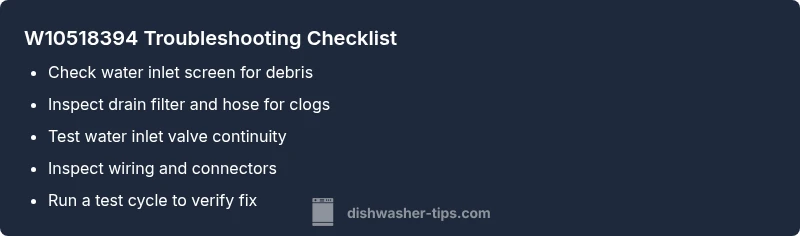
- Clean and reseat water inlet screen and filter; this often resolves false sensor readings.
- Clear the drain path and verify there are no kinks in the hose.
- Reset the control board by a safe power cycle if your model supports it (unplug, wait 60 seconds, plug back in).
- If the fault remains, test or replace the water inlet valve. This is the most common next step after surface cleaning.
- For persistent faults, consult a professional to avoid incorrect wiring or component damage.
This section emphasizes quick wins before deeper repairs, aligning with the urgency of resolving w10518394. The goal is to restore normal operation or identify a component that clearly requires professional service, minimizing downtime and potential water damage.
Safety, Costs, and When to Call a Pro
Electrical and water-related faults demand caution. Do not operate the dishwasher if you observe water pooling near the base or a burnt odor. According to Dishwasher Tips Analysis, 2026, common w10518394 fixes include cleaning screens, reseating connections, and, when necessary, replacing the inlet valve. Cost estimates for basic cleaning and reseating typically fall in the range of $60–$150, while valve replacement or control-board work can range from $150–$350 depending on model and labor. If you are unsure about electrical testing or if the unit is under warranty, contact a licensed technician. A professional visit may be warranted for damaged wiring, a failed valve, or a faulty control board, which are not reliably repairable by DIY in most cases.
Prevention and Long-Term Care
Preventive actions can reduce the likelihood of w10518394 returning:
- Run regular maintenance, including cleaning filters and screens every 1–2 months.
- Use the recommended rinse aids and detergents to avoid mineral buildup in the inlet pathway.
- Inspect doors, seals, and gaskets for wear and replace as needed to prevent leaks that trigger sensor faults.
- Keep the unit level to prevent abnormal pressure readings.
- If your model supports a firmware update, apply it to reduce false error reporting.
By staying proactive, you minimize the risk of recurrence and extend the life of your dishwasher. This approach aligns with best practices from Dishwasher Tips and helps you maintain reliable performance.
Steps
Estimated time: 60-90 minutes
- 1
Power down and prep
Unplug the dishwasher and switch off the water supply. Remove any stored dishes and ensure the area is dry. Gather a flashlight, a multimeter (if available), and the compatible replacement valve if you suspect the inlet valve fault.
Tip: Label disconnected wires to simplify reassembly later. - 2
Inspect water supply and inlet screen
Disconnect the water inlet hose from the valve. Inspect the screen for debris and mineral buildup, then clean with a soft brush. Reinstall the screen and hose securely.
Tip: Run a quick water test to confirm adequate flow after cleaning. - 3
Check the drain path and filters
Remove the lower access panel and take out the drain filter. Clean any clogs and ensure the drain hose is free of kinks. Reassemble before testing.
Tip: Ensure the drain path is completely clear to avoid pressure problems. - 4
Test the inlet valve and wiring
With power still off, access the valve and examine for loose connections. If you have a multimeter, test coil resistance against the manufacturer spec. Replace if out of spec or if the valve won’t seat.
Tip: Only perform electrical tests if you are comfortable and the unit is disconnected. - 5
Consider valve replacement
If the valve is faulty or coil resistance is abnormal, replace the inlet valve. Be sure to depressurize lines and use appropriate fittings.
Tip: Work slowly to avoid striping threads or damaging hoses. - 6
Run a test cycle and verify
Reconnect power, reset the computer (if supported), and run a short cycle with a small load. Check for the code reappearing and confirm there are no leaks.
Tip: Document the results for future reference.
Diagnosis: Error code w10518394 appears and the machine stops mid-cycle
Possible Causes
- highClogged water inlet screen or filter
- mediumWater inlet valve failure or coil issue
- lowSensor misreadings or wiring harness fault
Fixes
- easyClean the water inlet screen and filter
- mediumTest and replace the water inlet valve if needed
- mediumCheck sensor wiring and replace damaged harness or sensor
People Also Ask
What does w10518394 mean on my dishwasher?
W10518394 indicates a fault in water intake, sensor feedback, or related control logic. It’s a safety-focused error that usually points to water supply or sensor issues rather than a simple cycle fault. Start with water screen and hose checks before more involved parts testing.
W10518394 signals a water intake or sensor fault; begin with simple checks of water supply and screens before moving to valve testing.
How can I reset the w10518394 error on most models?
Many models support a soft reset by cycling power: unplug for 30–60 seconds, then plug back in and run a quick test. If the code reappears, the issue is not a one-time glitch and requires investigating water inlet or sensor components.
Try a power cycle: unplug, wait, plug back in, then test. If it shows again, it’s not a one-time glitch.
Should I call a professional for w10518394, and when?
If you observe leaks, burning smells, or cannot safely access electrical connections, contact a licensed technician. Complex valve or control-board faults are typically better handled by a pro, especially if the unit is under warranty.
Call a professional if there’s leaking, heat or burning smells, or if you’re not comfortable testing electrical components.
What is the typical cost range to fix w10518394?
Costs vary by part and labor. Basic cleaning and reseating may cost around $60–$150, while valve or control-board repairs can range from $150–$350, depending on your model and local rates.
Typical repairs range from about $60 to $350, depending on the part and service.
Is w10518394 different from other water-related error codes?
W10518394 shares common causes with other water-related codes, mainly water supply, clogging, or sensor issues. The best approach is a systematic check of water flow, filters, hoses, and connectors, then escalate to valve or board testing if needed.
It’s similar to other water-related codes; run through checks for water flow, filters, hoses, and then valve or board if needed.
Watch Video
What to Remember
- Resolve w10518394 quickly with surface cleaning first
- Check water inlet and valve before replacing control boards
- Electrical safety comes before any repair
- Budget for parts and labor; typical ranges vary by model
- A pro is recommended for complex valve or board faults