Dishwasher E1 F9: Urgent Troubleshooting Guide
Urgent guide to fix the dishwasher e1 f9 error with quick checks, diagnostics, step-by-step repairs, safety tips, and prevention insights from Dishwasher Tips.


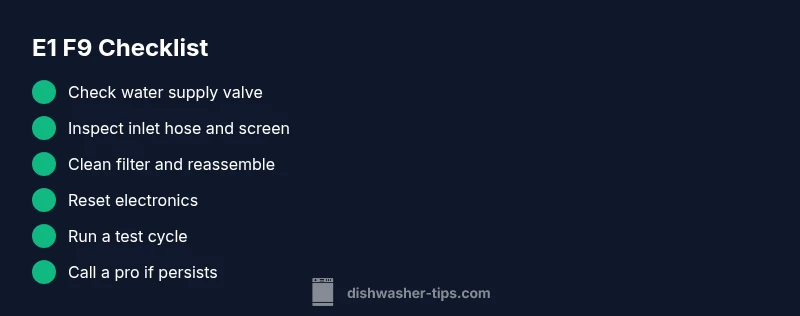
The E1 F9 error typically signals a water inlet or control fault. Quick fixes: verify the water supply is fully open, inspect the inlet hose and screen for debris, reset the dishwasher by powering it off and on, and confirm the door latch engages properly. If the code persists, follow the detailed steps below or contact Dishwasher Tips for deeper troubleshooting.
What E1 F9 Means
The code dishwasher e1 f9 appears across several brands with variations in exact meaning, but the common thread is an obstruction or fault in the water intake or control system. For homeowners in urgent repair mode, treat this as a high-priority issue that can lead to incomplete cycles, leaks, or overflow if ignored. The Dishwasher Tips team emphasizes starting with basic power, water, and sensor checks before proceeding to deeper diagnostics. While some models display E1 and F9 separately, the combined code typically points to a fill fault or a misread of water level. Understanding that this is not a random glitch helps you organize an efficient troubleshooting path and reduces downtime.
Quick Checks You Can Do Right Now
- Confirm the water valve is fully open and the supply line is not kinked or blocked. A partially closed valve is the most common reason for a fill fault.
- Inspect the inlet screen (strainer) for sediment, mineral buildup, or debris. A clogged screen restricts flow and triggers fill errors.
- Check the water inlet hose for leaks or damage. A damaged hose can cause air to enter the system, triggering sensors to misread water level.
- Reset the dishwasher by unplugging for 60 seconds or turning off at the breaker, then plug back in and power up. Some models require a specific button sequence to reset; consult your user manual if available.
- Ensure the door latch seals properly and that the door is fully closed before starting a cycle; a sensor fault can display an E1 F9 code when the door isn’t detected as shut.
Diagnostic Flow for E1 F9: Symptom → Causes → Solutions
- Symptom: Dishwasher shows E1 F9 and won’t fill or complete the cycle.
- Causes (prioritized):
- high: Clogged water inlet filter or screen.
- medium: Restricted water supply or kinked hose.
- low: Control board fault or sensor misread.
- Solutions:
- Clean the inlet filter and screen; ensure no mineral buildup remains.
- Verify water valve operation and straighten or replace the supply hose if damaged.
- Reset electronics; if the problem persists, a professional inspection may be needed to assess the control board or sensor circuitry.
Step-by-Step Fix: The Most Likely Cause (Water Inlet Issue)
- Power down and isolate: Unplug the unit or switch off at the breaker to avoid any electrical shock during inspection.
- Tip: Use a flashlight to inspect the area around the inlet valve for moisture or corrosion before touching components.
- Check the water valve: Locate the inlet valve and verify it moves freely when you toggle the water supply on and off.
- Tip: If the valve feels stiff or you hear a buzzing sound when energizing, the valve may require replacement.
- Remove and clean the inlet filter: Detach the filter screen from the inlet and rinse under warm water; use a soft brush to remove mineral deposits.
- Tip: Do not use aggressive cleaners that could damage the screen; reinsert firmly to avoid leaks.
- Inspect the supply hose: Look for kinks, twists, or visible cracks; replace if there are any signs of wear.
- Tip: When routing the hose, avoid sharp bends that can constrict flow during fills.
- Reset the electronics: Reconnect power and run a diagnostic or test cycle according to your model's instructions.
- Tip: If your machine has a dedicated reset button or combo, follow the manual’s sequence to ensure a clean reset.
- Run a test wash: Load a small normal cycle with a simple load to observe fill behavior and confirm the code does not reappear.
- Tip: Use fresh detergent and avoid overloading to prevent sensor confusion in the test.
Other Possible Causes and Their Fixes
- Door latch/sensor fault: Ensure the door latch engages fully; a faulty sensor can trigger a misread and display E1 F9. Adjust the latch or replace the sensor if needed.
- Sensor calibration issue: Some models require sensor recalibration after a power outage. Check the manual for a calibration procedure.
- Control board fault: If the above steps don’t resolve the code, the control board or firmware could be at fault. A professional diagnosis may be needed, with typical repair ranges including replacement of the control module.
Safety Notes, Warnings, and When to Call a Professional
- Always unplug the unit before any internal inspection to eliminate the risk of shock.
- If you detect burnt smells, exposed wiring, or leaking water around electrical components, stop and call a pro immediately.
- A professional may be required to diagnose control board faults or sensor misreads; attempting advanced electronics repair without proper training can cause further damage and void warranties.
Prevention: How to Avoid E1 F9 in the Future
- Schedule regular filter and screen cleanings; mineral deposits build up over time and affect fill performance.
- Use proper detergent quantities and high-quality water filters if you live in hard-water areas.
- Periodically inspect hoses and connections for wear and replace as needed to prevent leaks and air intrusion.
- Keep the spray arms and pump area free of obstructions; restricted flow can cause sensors to misread water levels.
Brand Insights: How Dishwasher Tips Approaches E1 F9
Dishwasher Tips prioritizes hands-on, safety-first guidance for error codes like E1 F9. Our approach blends immediate on-site fixes with clear escalation paths, emphasizing the basic checks that most homeowners can perform in under an hour, followed by professional evaluation when necessary. By focusing on practical steps and cost-conscious repairs, we help you minimize downtime and protect your appliance investment.
Steps
Estimated time: 45-60 minutes
- 1
Power down and isolate the unit
Unplug the dishwasher or switch off the breaker. Ensure the area around the inlet and electrical components is dry before touching anything.
Tip: Take a photo of wiring before disconnecting to aid reassembly. - 2
Inspect water valve and faucet
Turn the water supply on and off, listen for valve operation, and verify it opens fully. If you hear grinding or it sticks, the valve may be failing.
Tip: A blocked valve may require replacement rather than cleaning. - 3
Clean the inlet screen
Remove the screen or filter at the inlet, rinse under warm water, and scrub away mineral buildup with a soft brush. Rinse thoroughly and reinstall.
Tip: Avoid using metal tools that can tear the screen. - 4
Check hose routing
Inspect the inlet hose for kinks, twists, or damage. Straighten any turns and replace if there are cracks or bulges.
Tip: Elevate the hose slightly to prevent backflow. - 5
Reset electronics
Reconnect power and perform a model-specific reset if available. A full reset can clear lingering fault codes.
Tip: Some models require a hold of a combination of buttons to reset. - 6
Run a test cycle
Select a short cycle with a small load and observe the fill process. If the code reappears, document the behavior for service.
Tip: Keep towels handy in case of minor leaks.
Diagnosis: Dishwasher shows E1 F9 and won’t fill or complete a cycle
Possible Causes
- highClogged water inlet screen or filter
- mediumWater supply restricted or inlet hose kinked
- lowControl board fault or faulty sensor
Fixes
- easyClean the water inlet screen and filter
- easyCheck water valve operation and straighten/replace hose
- easyReset the control electronics or update firmware if available
- hardReplace control board or sensor if fault persists
People Also Ask
What does the E1 F9 error mean on a dishwasher?
E1 F9 usually points to a fill fault or sensor/readout issue in the water inlet circuitry. The exact meaning can vary by brand, so consult your model’s manual for the official interpretation, but the general approach is to inspect the water supply and inlet components first.
E1 F9 typically means a fill or water inlet fault. Start with the water supply and inlet components, then check the sensors or control board if needed.
Can I fix E1 F9 without a technician?
Yes, many homeowners can resolve E1 F9 by inspecting the water valve, cleaning the inlet screen, and performing a system reset. If the error reappears after these steps, a professional diagnosis is recommended, especially for potential control-board issues.
You can often fix E1 F9 by checking the valve, cleaning the inlet, and resetting the unit. If it persists, call a pro.
What are typical costs if I need professional repair?
Repair costs vary by region and part; expect a range that covers valve replacement, sensor or board diagnostics, and potential module replacement. Typical ranges might be higher for parts and labor when a board is involved, but a professional estimate is necessary for accuracy.
Cost depends on the fault; expect part costs plus labor, and a board replacement can raise the total. Get a written estimate first.
Should I run the dishwasher after I repair it?
Yes. After any fix, run a short cycle with a small load to verify the issue is resolved and the error code does not reappear. Monitor the inlet flow and leaks closely during the test.
Run a small test cycle to confirm the fix and watch for leaks.
When should I call a professional for E1 F9?
If the code persists after all basic checks, if you notice signs of electrical damage, or if a control-board fault is suspected, contact a qualified technician. Persisting codes can indicate wiring or module problems beyond DIY scope.
If it keeps happening after basic checks, call a tech for a proper diagnosis.
Watch Video
What to Remember
- Check water supply and inlet components first
- A clogged inlet screen is the most common fix
- Reset electronics before deeper diagnostics
- Call a pro for control board faults or repeated codes
- Regular maintenance reduces recurrence