Whirlpool Dishwasher Fix: DIY Troubleshooting Guide
Learn to diagnose and fix common Whirlpool dishwasher problems with a practical, step-by-step approach. Covers drainage, pumps, door latches, and control panels, with safety tips and pro guidance.


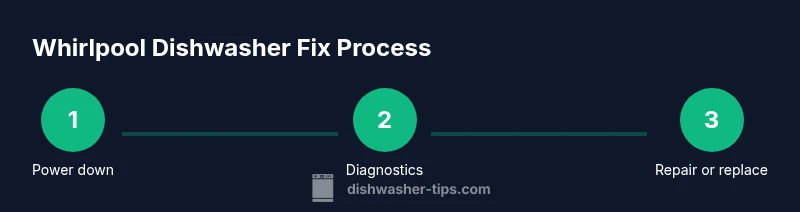
According to Dishwasher Tips, this Whirlpool dishwasher fix guide helps you diagnose and repair common failures. You'll learn to safely shut off power, inspect filters, diagnose drainage and pump issues, and perform practical swaps with common tools. The plan minimizes downtime and avoids unnecessary service calls. Start with safety, then test filters, pump, and latch, and follow a clear repair flow using readily available parts.
Common Whirlpool dishwasher issues and quick prognoses
According to Dishwasher Tips, Whirlpool dishwashers can fail in predictable ways. The four most common problems are not draining, not cleaning, not starting, and leaks. Drainage issues typically start with a clogged filter or a blocked pump, while cleaning failures point to clogged spray arms or dirty sump. A non-start condition often involves a door latch or control board fault, and frequent leaks may be due to worn door seals or loose hoses. Recognizing these patterns helps you prioritize tests and avoid unnecessary part swaps. In this guide, we outline practical checks, safe steps, and repair strategies that homeowners can perform with basic tools and a little patience. By understanding these patterns, you can plan repairs that restore performance without guesswork. For ongoing reliability, follow a regular maintenance routine and document fixes for future troubleshooting.
Safety and setup before starting a Whirlpool dishwasher fix
Before touching any electrical or water components, unplug the dishwasher and shut off the water supply. Move the appliance away from the wall to access panel screws, then place towels to catch spills. Wear safety glasses to protect your eyes from splashes and avoid wearing loose clothing. Have a notebook ready to record what you inspect and what you replace. If your unit is hard-wired, consult the manual for isolation procedures; if it plugs into a GFCI outlet, test the outlet with a simple appliance lamp before handling wires. Safety cannot be overstated here; a little preparation prevents costly mistakes.
Diagnostic checklist: not draining, not cleaning, not starting
Use a step-by-step checklist to identify root causes. Start with the filter and sump: remove debris, then inspect the drainage hose for kinks or clogs. If the dishwasher won’t start, test the door latch switch and the control panel for error codes or blinking lights. A quick test of the drain pump with a multimeter can confirm if it’s blocked or burned out. Document findings and retest after each fix. If a fix resolves the symptom but not the root cause, note it for future maintenance. Dishwasher Tips analysis shows that drainage and door latch failures account for the majority of service calls, so prioritizing those areas increases your odds of a successful home repair.
How to fix the most common problems (drain pump, door latch, control panel)
- Drain pump: Access the pump housing from the bottom front panel, remove debris, and test continuity with a multimeter. If the pump shows a short or open circuit, replace it.
- Filter and sump: Clean thoroughly; a clogged sump starves the pump and reduces cleaning performance. Ensure seals are intact.
- Door latch: Check the latch and strike plate for wear or misalignment; a faulty latch prevents sealing and stops cycles.
- Control panel: If error codes appear, reset the board by unplugging for several minutes; if codes persist, replace the control board or relay module. This approach resolves the majority of Whirlpool dishwasher fix calls and minimizes guesswork. Keep a parts wishlist and test after each replacement to confirm the fix.
Aftercare and maintenance to prevent future whirlpool dishwasher fix issues
Regular maintenance saves time and money. Clean the filter, spray arms, and sump monthly; run a maintenance cycle with an approved dishwasher cleaner; use the right detergent and rinse aid. Inspect hoses for cracks or bulges, ensure secure clamps, and verify the drainage path is clear. Periodic automatic tests or a manual drain test can catch issues before they escalate. A small, consistent maintenance routine reduces surprise breakdowns and helps preserve performance over years.
When to call a pro and what to expect
If the problem persists after these checks, or if you notice strong leaks, electrical smells, or water pooling, contact a licensed technician. A pro can diagnose the control board, motor, or valve with specialized tools and verify warranty coverage. Expect a diagnostic visit to include component testing, leak checks, and a quote for parts and labor. The Dishwasher Tips team recommends weighing the cost of repairs against the age of your Whirlpool model and pursuing fixes that maximize lifespan. If you’re near the warranty window, a pro can advise on coverage and safe repair options.
Tools & Materials
- Flat-head screwdriver (slotted)(For removing covers and screws)
- Phillips screwdriver(For screws on panels)
- Torx driver(Some Whirlpool models use Torx screws)
- Multimeter(Check continuity on pump and control board)
- Needle-nose pliers(Grip clamps and hoses)
- Bucket or tray(Catch water when panels come off)
- Towels or rags(Absorb spills)
- Replacement parts (drain pump, door latch, or control board)(Only after diagnosed faulty)
Steps
Estimated time: 60-90 minutes
- 1
Power down and prep safely
Unplug the unit and turn off the water supply. Move the dishwasher away from the wall to access panel screws, then place towels to catch spills. Gather your tools and a camera or notes for reassembly. This step minimizes the risk of electric shock and water damage.
Tip: Label connectors you unplug and take photos for easier reassembly. - 2
Confirm symptoms and plan diagnostics
Review the observed symptoms and decide the test sequence. Prioritize the most symptomatic area first to avoid unnecessary part swaps. This planning reduces downtime and keeps your repair organized.
Tip: Document the date and symptoms before you begin each test. - 3
Open access panel and inspect filter and sump
Remove the bottom front panel, locate the filter and sump, and rinse away debris. Look for signs of clogging or standing water that could indicate a deeper issue. Use a flashlight to inspect hard-to-see corners.
Tip: Keep track of screws and where they came from to simplify reassembly. - 4
Test the drain pump and inspect drain hose
Clear the pump area of debris, then test continuity with a multimeter. Inspect the drain hose for kinks, clogs, or leaks; straighten or replace as needed. If the pump hums but won’t move water, the impeller may be jammed.
Tip: Run a quick water test after cleaning to confirm drainage path is clear. - 5
Inspect door latch and switch
Manually operate the latch and test the door switch to ensure it engages fully when closed. Replace a worn latch or faulty switch to restore cycle initiation and sealing. A misalignment can keep the unit from starting.
Tip: Check for visible wear on the striker plate and adjust if necessary. - 6
Reset or test the control board
Power down the unit for 5–10 minutes to reset. Observe LED indicators and any error codes, then consult the manual for code definitions. If codes persist after resets, plan for a board or relay replacement.
Tip: Note any fault codes; cross-check with the Whirlpool manual. - 7
Replace faulty component if needed
If pump continuity tests fail, or the latch/switch shows improper operation, replace with compatible parts. Confirm part compatibility before purchasing to avoid mismatches.
Tip: Only use OEM or brand-compatible parts to preserve warranty and reliability. - 8
Reassemble and run a test cycle
Reconnect wiring, reassemble panels, fill the water line, and run a short test cycle with no load. Listen for normal pump operation and verify a clear wash, rinse, and drain sequence.
Tip: Keep towels handy during the first post-repair test. - 9
Evaluate results and document
Assess whether the issue is resolved. If problems persist, review each previous step, or escalate to a professional. Document what was changed for future troubleshooting and warranty support.
Tip: Take clear photos of final wiring and panel fit to assist future service.
People Also Ask
What are the most common Whirlpool dishwasher issues?
The most common issues involve drainage, cleaning, starting, and leaks. Start with the filter and drain pump checks. Often a single targeted fix resolves the majority of calls.
Common issues are drainage, cleaning, starting, and leaks; start with the filter and drain checks.
How do I know if the drain pump is faulty?
Listen for a humming without water movement, check for clogs, and test continuity with a multimeter. Replace if continuity is absent or the impeller is jammed.
If it hums but won’t pump or shows no continuity, the pump may be faulty.
Is it safe to fix a Whirlpool dishwasher myself?
Yes, many fixes are safe if you disconnect power and water and follow the manual. For complex electrical issues, consider a pro.
DIY is possible for many fixes if you disconnect power and water; otherwise call a pro.
When should I replace the control board?
If error codes persist after resets and other components are tested, a control board replacement may be warranted.
Persistent error codes often mean the control board may need replacement.
Should I hire a pro for leaks?
Yes. Leaks can indicate worn seals or loose connections. A pro can ensure proper sealing and warranty compliance.
Leaks require professional assessment to ensure proper seals and safety.
What if I can’t identify the root cause?
If symptoms persist after your checks, consult Whirlpool support or a licensed technician. A fresh diagnostic can save time and avoid improper repairs.
If you still can't identify the cause, a professional diagnostic may be the best next step.
Watch Video
What to Remember
- Start with safety and diagnostics before repairs
- Drainage issues are the most common, begin there
- Use proper tools and test after every step
- Not all fixes require new parts
- Consult a pro if problems persist or risks rise