Why Your Dishwasher Has No Power
Urgent guide to diagnose and fix a dishwasher that won't power on. Check breakers, outlets, door latches, and control boards with step-by-step safety tips from Dishwasher Tips.


Most power-loss issues start with the basics: a tripped circuit breaker or blown fuse, a faulty door latch interrupting the control circuit, or a loose power cord. Start by turning off the dishwasher’s circuit at the panel, then inspect the outlet and plug. If you don’t find an obvious issue, work through the steps below for a safe, thorough diagnosis.
Quick Power Checks You Can Perform Safely
Dealing with a dishwasher that has no power can be stressful. Before diving into wiring, start with the simplest checks. Ensure your home is supplying power to the outlet by testing another device on the same circuit. Inspect the dishwasher’s plug and cord for damage, and confirm the power cord is fully inserted into the wall outlet. Then locate the circuit breaker panel and look for a tripped breaker or a blown fuse on the dishwasher circuit. If you find one, reset or replace it according to safety guidelines. If the breaker trips again, discontinue further testing and seek professional help. According to Dishwasher Tips, most power-loss incidents are resolved by basic resets and safe inspections.
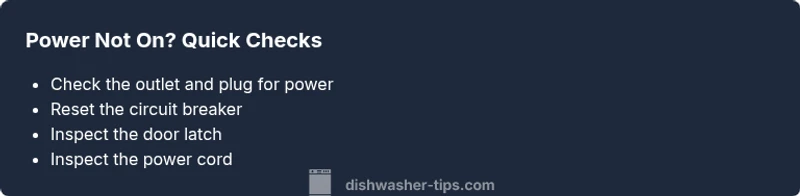
Key quick checks include: 1) power on the wall outlet, 2) tight plug connections, 3) no visible scorch marks, 4) the circuit breaker status. These steps won’t repair internal wiring or a failed control board, but they can confirm whether the problem is external or internal.
Understanding Why Power Fails to Reach the Dishwasher
Power reaching a dishwasher is a chain of events: the home electrical system must provide steady voltage, the circuit must be correctly wired, the breaker must stay closed, and the appliance must receive a clean, uninterrupted feed. When one link fails, the dishwasher may not power on or respond to the controls. Common external culprits include a tripped breaker, a blown fuse on the same circuit, a GFCI outlet that has tripped, or a damaged power cord. Internal factors—though less common—include a faulty door latch interrupting the control circuit or a failed control board. In most cases, basic safety checks and resets resolve the issue. Dishwasher Tips notes that many no-power cases are resolved without specialized tools, but if the problem persists, professional help is wise.
Step-by-Step Diagnostic Flow: From Symptom to Solution
Follow this logical flow to identify the root cause without unnecessary detours:
- Symptom confirmation: Dishwasher won’t power on or respond to controls.
- Check external power: Outlet power, plug integrity, and any visible damage.
- Test the panel circuit: Breaker and GFCI status on the home panel.
- Inspect the door latch: A stuck or faulty latch can prevent power from reaching the control board.
- Inspect wiring: Look for loose connections at the terminal block inside the dishwasher.
- Rule out the control board: Signs include intermittent control responses or LEDs behaving oddly.
- Decide on next steps: if tests point to external power, fix those first; if internal components fail, consider professional service for wiring or control-board replacement.
As Dishwasher Tips explains, a disciplined, stepwise approach reduces risk and speeds resolution. Always prioritize safety and avoid live-wiring tests.
Step-by-Step Fix for the Most Common Cause: Tripped Breaker or Faulty Outlet
- Locate the home’s circuit breaker panel and identify the breaker servicing the dishwasher. Turn it fully Off, then back On to reset. If it trips again, there may be an overload or a short in the circuit. 2) Inspect the kitchen outlet used by the dishwasher for discoloration, a loose receptacle, or a burnt smell. If you see damage, stop and call a qualified electrician. 3) Test the outlet with a known-good appliance or use a portable tester to confirm supply. 4) If the breaker stays closed and the outlet is powered, re-test the dishwasher. If it still won’t power on, move to the next potential cause. 5) Avoid touching internal wiring; contact a professional for wiring or control-board issues. 6) After resolving the issue, reset the dishwasher’s electronics by unplugging for a minute and plugging back in before testing.
Checking the Door Latch and Control Panel
A faulty door latch can interrupt the control circuit and prevent power from reaching the display or motor. Look for a loose or damaged latch mechanism, a bent door strike, or any residue on the latch that prevents proper closure. If the latch does not fully engage when the door is closed, the dishwasher may not power on. Next, check the control panel for obvious signs of damage, stuck buttons, or poor contact in the keypad. Clean any corrosion and ensure the interface responds when pressed. If the latch or panel shows wear, replacement may be necessary and should be performed by a technician.
Inspecting the Power Cord and Terminal Block
Inspect the dishwasher’s power cord for cuts, kinks, or scorch marks. If the cord is damaged, replace it with a manufacturer-approved cord. Detach the cord from the terminal block only after ensuring the circuit is de-energized at the panel. Inside the unit, check the terminal block for loose screws or burnt insulation. Tighten any loose connections to restore a solid power path. If you’re uncomfortable accessing internal components, schedule professional service. Do not bypass safety features or force connections.
Safety Precautions and When to Call a Professional
Safety is the top priority when troubleshooting electrical issues. Always shut off power at the breaker before inspecting outlets, cords, or internal components. Do not use damaged cords or outlets, and never work on live circuits. If the breaker repeatedly trips, if you smell burning insulation, or if you notice sparking or buzzing, discontinue testing and call a licensed electrician. For control-board or internal wiring problems, professional diagnostics protect you and your appliance and prevent further damage.
Prevention Tips to Keep the Dishwasher Powered Up
To minimize future power problems, keep the area around the dishwasher dry and free of clutter. Use a dedicated circuit for heavy appliances to avoid overloading shared outlets. Regularly inspect the power cord and plug for wear and replace promptly. Ensure the door latch is clean and aligned, and avoid slamming the door. Schedule periodic professional checkups if your home has older wiring or frequent electrical trips. Proactive maintenance helps ensure reliable operation and reduces downtime.
Steps
Estimated time: 45-60 minutes
- 1
Power down and verify outlet power
Turn off the breaker servicing the dishwasher, unplug the unit, and use a tester on the outlet to confirm voltage. If no power is present, restore power or call an electrician.
Tip: Lock the panel if you have child safety devices to avoid accidental re-energizing. - 2
Inspect the power cord and plug
Check for visible damage, loose connections, or scorching. Replace if damaged; ensure a snug fit in the outlet.
Tip: Use manufacturer-approved cords to avoid compatibility issues. - 3
Check the door latch and door switch
With the door open, gently operate the latch. Ensure it catches firmly when closed. A faulty latch can prevent power from reaching the control board.
Tip: Clean any debris around the latch to ensure proper engagement. - 4
Inspect the terminal block and internal wiring
If you’re comfortable, remove access panels to inspect for loose or burnt wires. Tighten screws to secure connections and look for signs of damage.
Tip: Do this only after the power is fully disconnected. - 5
Reset the control electronics
After addressing the above, plug in the dishwasher, restore power, and perform a test cycle to see if the unit responds.
Tip: If LEDs behave erratically, a professional diagnosis may be needed. - 6
Decide on professional help
If the breaker trips or issues persist, arrange service. Electrical work beyond your comfort level can be dangerous.
Tip: Keep a record of what you tested for better diagnosis.
Diagnosis: Dishwasher won't power on
Possible Causes
- highPower supply issue (outlet, breaker, or fuse)
- highFaulty door latch interrupting the control circuit
- mediumDamaged power cord or loose plug connection
- lowInternal control board or wiring fault
Fixes
- easyReset the circuit breaker and confirm outlet power with a test device
- easyInspect and replace a damaged power cord or loose outlets
- mediumTest and replace a faulty door latch or control panel if indicated by symptoms
- hardIf internal wiring or control board appears damaged, contact a licensed electrician or appliance technician
People Also Ask
Why won't my dishwasher turn on even though the outlet has power?
If the outlet is powered, the issue may lie with the dishwasher’s door latch, control panel, or internal wiring. Start by testing the door latch and then the control panel for appropriate responses. If problems persist, a professional should assess the wiring and control board.
If the outlet has power, the problem is likely the latch or control panel. Test the latch, then the panel; if unresolved, call a technician.
How do I know if the door latch is the culprit?
A faulty door latch can prevent the machine from powering up. If the door doesn’t latch securely or the latch feels loose, replace it and retest. You may also hear a latched-click sound when closing.
A loose or faulty latch often stops power from reaching the control board. Check for secure closure and replace if needed.
Can I reset the dishwasher's control board myself?
Some models support a soft reset by unplugging for a minute and plugging back in. If LEDs flicker or no response remains after reset, the control board or wiring may be damaged and require professional service.
You can try a soft reset by unplugging for a minute, then plugging back in. If issues persist, seek pro help.
Is it safe to open the dishwasher cabinet to check wiring?
Only if you have cut power at the breaker and are comfortable with basic electrical checks. If you notice exposed conductors or burning smells, stop and call a pro.
Only open the cabinet if the power is off and you’re comfortable with basic checks. If in doubt, call a professional.
Should I replace the power cord myself?
If you’re confident with appliance wiring and use a manufacturer-approved cord, you can replace it. Otherwise, have a technician handle it to avoid hazards.
Replacing the cord is possible if you’re careful and use the correct part; otherwise, hire a pro.
When should I call a professional?
If the breaker trips repeatedly, you smell burning, see visible damage, or the issue remains after basic checks, contact a licensed electrician or appliance technician.
Call a professional if breakers trip, you smell burning, or unresolved power issues persist.
Watch Video
What to Remember
- Power issues often start at the breaker or outlet
- Door latch can block power to the control board
- Inspect the power cord for visible damage
- Never bypass safety features or panels
- Call a professional if testing reveals internal wiring or control-board fault