Why Has Dishwasher Stopped Working: A Practical Troubleshooting Guide
Facing a dishwasher that won't start or finish a cycle? This practical guide from Dishwasher Tips offers quick diagnostics, safe fixes, and prevention tips to get it running again.


The most likely causes are power or water-supply issues. Check the outlet and plug, the door latch, and the circuit breaker, then verify the water supply and clean the filter. If it still won’t run, follow the step-by-step guide below.
Why the Dishwasher Stopped Working: Understanding the Most Common Triggers
If you’re asking "why has dishwasher stopped working", you’re not alone. In many homes, the problem isn’t a blown fuse or a broken motor but a simple, solvable issue that prevents the machine from starting or completing a cycle. According to Dishwasher Tips, the vast majority of startup failures boil down to power or water-supply issues, worn door latches, or clogged filters. A quick visual check can save you time and a needless service call. Start by confirming the basics: the unit is plugged in, the outlet is live, the door is fully closed and latched, and the circuit breaker is not tripped. If the display is dark or a cycle won’t start, the issue is likely in the power path, not the fancy features of the dishwasher. The goal is to isolate the symptom to a subsystem so you can act with confidence.
Next, inspect the water supply valve and the water inlet screen for obstructions. A clogged filter or spray arm can prevent proper washing and, in some models, cause the dishwasher to halt mid-cycle. Nutrient-rich or hard water buildup can also affect performance over time, so plan for periodic cleaning as part of routine maintenance. By tackling these simple checks first, you’ll usually identify the root cause without calling a technician.
-bold text is supported for emphasis
Quick Checks You Can Do Right Now
In this section we cover fast, safe checks that don’t require tools. These checks are designed to be performed in under 15 minutes and can stop a problem from escalating. If you’ve just started a cycle and the dishwasher stops mid-run, begin with the basics before diving into more complex diagnostics.
Steps
Estimated time: 20-45 minutes
- 1
Power and Outlet Check
Unplug the dishwasher, wait 30 seconds, and plug it back in. If the outlet is controlled by a GFCI, reset it. Listen for the startup hum when you press the cycle button. If there’s no response, inspect the circuit breaker panel for a tripped breaker and reset if safe.
Tip: Always starts with power; this prevents chasing non-existent issues in the control system. - 2
Door Latch and Seal Inspection
Open and close the door firmly to ensure the latch engages fully. Look for cracked hatch or worn seals that may prevent the machine from sensing a closed door. If the latch is faulty, replace it before continuing.
Tip: A faulty latch often mimics a power problem because the control won’t initialize without a secure door. - 3
Water Supply Verification
Make sure the shutoff valve under the sink is fully open and that the supply hose is not kinked. Check the inlet screen at the hose connection for debris and clean or replace as needed.
Tip: Even a slight obstruction can halt a cycle mid-run or cause poor cleaning results. - 4
Filter and Spray Arm Cleaning
Remove and rinse filters and spray arms under running water. Use a soft brush to remove buildup. Reassemble and run a test cycle to see if performance improves.
Tip: Clogs reduce water flow and cause incomplete cycles; routine cleaning helps prevent this. - 5
Test Run and Recalibration
Run a short cycle with an empty load to verify the unit operates normally. If you still experience issues, perform a factory reset if your model supports it, then test again.
Tip: Keep a log of what you test and the results to guide professional help if needed.
Diagnosis: Dishwasher won't start or completes cycle abnormally
Possible Causes
- highPower issue (outlet, cord, or circuit breaker)
- highDoor latch or safety switch fault
- mediumWater supply or inlet valve blockage
Fixes
- easyTest the outlet with a small appliance on a known-good plug to confirm power is live
- easyInspect the door latch and door switch for debris or misalignment and replace if needed
- easyCheck the water supply valve and clean the inlet screen; ensure hoses are kink-free
People Also Ask
What should I check first when my dishwasher won't start?
Begin with power and door checks. Ensure the outlet is live, the plug is firmly connected, the door latch engages, and the circuit breaker is not tripped. If the display is blank, power path issues are likely. If the door won’t latch, inspect the latch and seal.
Start by checking power and the door. If the display is blank, power is the likely culprit; if the door won’t latch, inspect the latch.
Why is my dishwasher not draining after a cycle?
Not draining is usually caused by a clog in the filter or drain hose, a faulty drain pump, or an air-gap issue. Check the drain hose for kinks and the filter for debris. Clear any blockages and run a short test cycle.
Common drain issues come from clogs or a faulty pump; clear blockages and test again.
Is it safe to pause a dishwasher mid-cycle?
Pausing mid-cycle is generally safe, but avoid opening the door while hot water is circulating. Wait for the cycle to pause before checking filters or removing items. Always follow manufacturer guidance for your model.
You can pause, but wait until it safely halts before checking components.
How do I reset the dishwasher controller?
Most models offer a reset or factory-default option in the control panel. If your unit has a reset sequence, follow the manual. If unsure, unplug for a full minute and plug back in to trigger a fresh start.
Try a simple reset by power cycling the unit.
When should I call a technician for dishwasher issues?
If you’ve performed basic checks and the dishwasher still won’t start, won’t drain, or leaks, it’s wise to consult a technician. Complex components like the water inlet valve or control board typically require professional service.
If basic checks fail or you’re unsure about parts, call a professional.
Can hard water damage a dishwasher and cause failures?
Yes, hard water can cause mineral buildup that reduces water flow and clogs filters. Descale periodically and use rinse aid as recommended. If buildup is severe, professional cleaning or part replacement may be necessary.
Mineral buildup from hard water can cause clogs and poor performance.
Watch Video
What to Remember
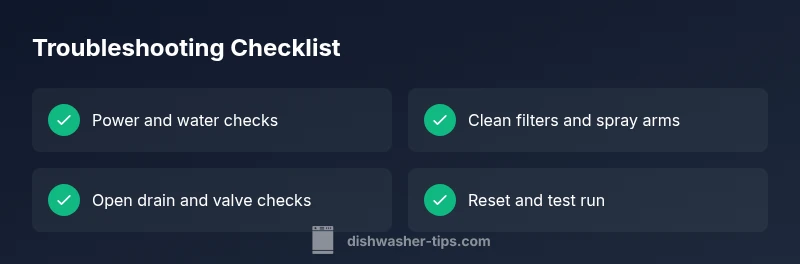
- Start with power and water checks
- Inspect the door latch and switch
- Clean filters and spray arms regularly
- If unresolved, escalate with professional help when needed