Why Is My Dishwasher So Loud? Quick Troubleshooting Guide
Discover why your dishwasher is loud and how to fix common noises fast. This expert guide covers rattling, grinding, buzzing, and pump issues with safe, home-friendly steps.


Most often a loud dishwasher is caused by loose components or a restricted pump. Common culprits include a loose rack, worn bearings, a clogged filter or spray arms, and debris near the pump. To fix quickly, stop the cycle, unplug or switch off power, inspect the interior, tighten any loose screws, clean the filter, and run a short test cycle to verify the noise changes.
why is dishwasher so loud
If you’ve ever wondered why is dishwasher so loud, you’re not alone. A surprising amount of noise comes from simple, fixable problems rather than a full breakdown. According to Dishwasher Tips, most interference comes from loose parts, blockages, or worn components. This guide is written for homeowners and renters who need fast, practical steps to quiet a noisy dishwasher without immediately calling a repair technician. Safety comes first: always unplug the unit or switch off the circuit at the breaker before poking around the interior. Start with the easiest checks—like inspecting the door seal and the bottom of the tub for stray items—and progress to tightening fasteners or cleaning critical components if needed. With a careful, methodical approach, many noises disappear after a few simple adjustments.
Common Noise Profiles: What Each Sound Means
Dishwashers can emit several distinct sounds, each pointing to a different root cause. A rattling noise often signals loose racks, misaligned spray arms, or debris under the lower rack. A grinding sound usually indicates worn bearings or a jammed impeller inside the pump. A buzzing or humming noise can come from an electrical motor or a blocked pump pathway. A thud or banging sound may be caused by a loose mounting screw or a heavy dish clattering during the wash cycle. By listening closely and noting when the sound starts (on fill, agitation, drain, or spin), you can narrow down the culprit more quickly. The Dishwasher Tips team emphasizes that recording a short video or audio clip can help when you consult a professional later.
Quick At-Hand Checks You Can Do Now
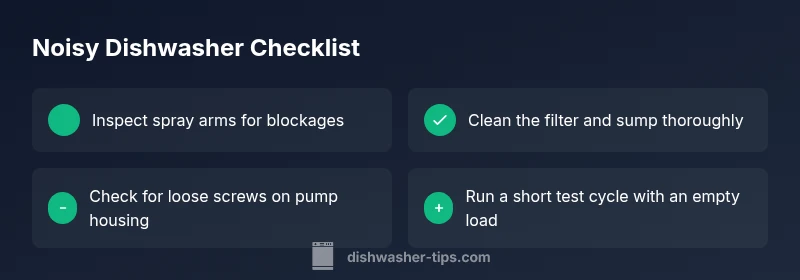
Before diving into disassembly, run through these checks. First, switch off power to the unit. Then, remove the bottom rack and check the spray arms for obstructions or a bent arm. Next, inspect the filter and sump for trapped food particles; rinse with warm water. Make sure the rack is properly seated and that nothing is poking against the tub walls. Tighten any loose screws around the pump housing, motor, and mounting brackets. Finally, run a brief cycle with no dishes to listen for whether the noise persists and whether it changes after you clean the filter. If the noise remains after these steps, move to more detailed diagnostics or call a pro.
Diagnostic Flow: Symptom to Diagnosis
A structured approach helps you get to a diagnosis quickly. Start with the most common, easiest fixes and move toward the more involved issues. If you notice grinding when the motor starts, suspect worn bearings or a failing impeller. If you hear rattling mid-cycle, inspect spray arms and the interior for loose items. If buzzing continues after cleaning, the motor or pump may be failing. For any electrical concerns or leaks, stop and seek professional help. This diagnostic mindset aligns with best practices described in Dishwasher Tips analyses and keeps you safe while you troubleshoot.
Step-by-Step Fixes for the Most Common Cause
In most cases, the top culprit is a blocked spray arm or clogged filter. The following steps address that, plus a quick check for loose components. 1) Power down and unplug the unit. 2) Remove the spray arms and clean any debris, and verify they spin freely. 3) Clean the filter and sump; rinse until clear. 4) Inspect the pump area for debris and tighten mounting screws. 5) Reinstall racks and run a test cycle with empty load to confirm reduced noise. 6) If the noise persists, escalate to the next level of inspection or contact a professional. This sequence minimizes risk while focusing on high-impact fixes.
Safety, Warnings, and When to Call a Pro
Safety is non-negotiable with appliances. Never operate the dishwasher with exposed wiring or a damaged door seal. If you smell burning insulation or notice moisture near electrical components, turn off power and seek professional help immediately. If you can’t identify the noise source after basic checks, or if you hear grinding that doesn’t subside after cleaning, don’t push your luck—call a technician. Regular maintenance reduces risk, and small, proactive fixes save money over time.
Maintenance Habits to Reduce Noise Long-Term
Preventing future noise starts with a simple maintenance routine. Clean the filter weekly, inspect spray arms for wear, and verify that racks sit correctly. Run an empty cycle monthly to test for unusual sounds and clean the tub interior to prevent debris buildup. Use the right detergent and avoid overloading, which can cause strain on the motor. If your dishwasher is relatively new, keep an eye on warranty coverage and consider scheduling professional cleanings as part of your seasonal maintenance. Consistency is the best defense against unexpected noise.
Common Myths About Dishwasher Noise
Myth: Higher heat always reduces noise. Fact: It can increase wear and isn’t a remedy for noise. Myth: All loud sounds mean a broken motor. Fact: Many noises come from simple blockages or loose parts. Myth: You can ignore grinding sounds and continue to run cycles. Fact: Grinding often signals worn bearings and should be checked promptly to prevent more damage. Understanding these nuances helps you avoid unnecessary repairs and focus on safe, effective fixes.
Quick Recap: What to Do Today
Take a few minutes to unplug the machine, inspect for visible debris, clean the filter, and reseat any loose racks. If the noise persists after these checks, consult the diagnostic flow and consider a professional repair. Taking proactive steps now can prevent bigger problems and save you money in the long run.
Steps
Estimated time: 60-90 minutes
- 1
Power down and access area
Unplug the dishwasher or switch off the circuit at the breaker. Remove the bottom rack to access the pump and spray arms. This prevents shock and makes inspection safe.
Tip: Always confirm power is off with a tester before touching components. - 2
Inspect spray arms and racks
Turn the spray arms by hand to check for smooth rotation. Look for cracks, bent arms, or obstructions. Ensure racks are seated correctly and not contacting tub walls.
Tip: If you see any bent arms, replacement is usually more reliable than repair. - 3
Clean filter and sump
Remove the filter and rinse under warm water. Clear any trapped food particles and rinse the sump area. A clean flow path often eliminates buzzing and grinding.
Tip: Use a soft brush to dislodge stubborn debris without scratching surfaces. - 4
Check pump area and mounting screws
Visualize the pump housing and mountings. Tighten any loose screws and ensure the pump is firmly attached. A loose mounting can create rattling or banging sounds.
Tip: Avoid overtightening; snug is typically sufficient. - 5
Run a test cycle (empty load)
Replace racks, power the unit back on, and run a short cycle with no dishes. Listen for the noise pattern and confirm a quieter operation.
Tip: Take notes on the remaining noises and when they occur to guide a pro if needed. - 6
Decide on next steps
If grinding, buzzing, or persistent rattling remains after these fixes, plan for a professional inspection or pump/motor replacement.
Tip: Document symptoms and steps you’ve taken to save time with a technician.
Diagnosis: Dishwasher is unusually loud during operation
Possible Causes
- highLoose rack or misaligned spray arm
- highClogged filter or debris near the pump
- mediumWorn bearings or failing motor
- lowLoose mounting screws or improper installation
Fixes
- easyTighten loose screws around the pump housing and mountings
- easyClean the filter and spray arms; remove debris
- mediumInspect spray arms for obstruction; replace if bent or worn
- hardIf noise persists, inspect or replace motor/pump assembly (professional)
People Also Ask
Why does my dishwasher make a grinding noise when starting a cycle?
A grinding sound often indicates worn bearings or a jammed impeller inside the pump. Stop the cycle, inspect the pump area, and consider professional service if the noise continues after basic cleaning.
Grinding at start usually means worn bearings or a jammed pump impeller; stop the cycle and check the pump area. If it persists, call a technician.
Is it safe to keep using a loud dishwasher while I figure it out?
No. Prolonged loud operation can cause further damage. Switch off power and avoid daily heavy cycles until you identify and fix the cause.
No, don’t keep using it loudly. Turn it off and check the basics, then decide on the next steps.
Can a clogged filter cause noise even if cleaning after each use?
Yes. A clogged filter can create backpressure and unusual noises. Clean the filter and verify a clear path for water and debris.
A clogged filter can cause noise due to backpressure; clean it and test again.
When should I call a professional for a loud dishwasher?
If basic cleaning and checks don’t reduce noise, or you hear grinding, leaking, or unusual smells, a professional inspection is warranted.
If cleaning doesn’t fix it or you hear grinding or leaks, call a pro.
Can hard water contribute to louder operation?
Hard water can accelerate mineral buildup that affects bearings and seals, contributing to noise. Use appropriate descaling and water-softening strategies.
Hard water can contribute to noise through mineral buildup; consider descaling.
What maintenance helps prevent loud dishwasher noises?
Regularly clean filters, inspect spray arms, tighten mounting screws, and run periodic empty cycles to detect issues early.
Keep up with maintenance like cleaning filters and checking arms to prevent noises.
Watch Video
What to Remember
- Tackle loose parts first to quiet most noises
- Clean filters and spray arms to restore proper flow
- Use the diagnostic flow to avoid unnecessary disassembly
- Call a professional if you hear grinding or suspect motor issues