What Is Wrong With Dishwasher? A Troubleshooting Guide
Urgent troubleshooting guide to diagnose and fix common dishwasher problems fast. Learn drainage, leaks, startup faults, clogged filters, and when to call a pro.


Most dishwasher problems start with simple causes you can verify in minutes. In many homes, drainage clogs, dirty filters, or a blocked spray arm prevent proper cleaning or draining. A faulty door latch or power issue is often the reason a dishwasher won't start. Start with the easiest checks before diving into complex repairs.
what is wrong with dishwasher: Common symptoms and why they happen
If you are asking what is wrong with dishwasher, you are not alone. Most issues fall into a handful of categories that you can test in minutes. Drainage problems, dirty filters, and blocked spray arms prevent proper cleaning and complete draining. A faulty door latch or a power issue is another frequent cause. Understanding these categories helps you triage quickly and avoid unnecessary parts replacement. According to Dishwasher Tips, many issues start with routine maintenance that is easy to perform but often neglected. Start by confirming basic conditions: is the unit powered, is the door latch sealing properly, and are you using the right detergent and cycle for your soil level? You can often fix many problems with simple steps like cleaning a filter or running a reminder cycle. If the dishwasher still acts up after these checks, you have a clearer path to diagnosis and a good sense of whether a service call is warranted.
Top fixes you can try before calling for service
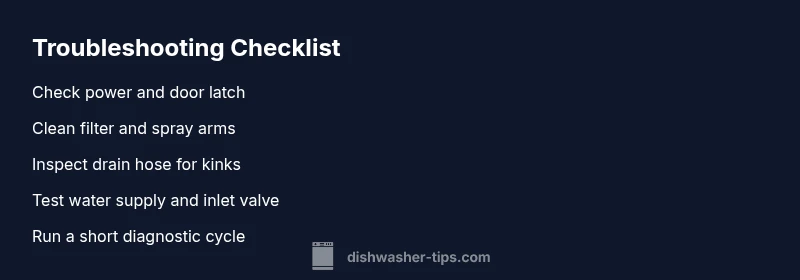
Many dishwasher problems resolve with a few quick checks you can do in the kitchen. Start with the easiest fixes: clean the filter and spray arms, ensure the door latches shut firmly, and verify the dishwasher is plugged in and receiving power. Check the circuit breaker and the outlet for signs of a surge or overload. Run a short empty cycle with a vinegar rinse to clear minor mineral buildup. If the unit still misbehaves, proceed to the more methodical checks described in the next sections. This approach aligns with Dishwasher Tips guidance and keeps you in control rather than guessing. What is wrong with dishwasher often narrows to a few repeatable steps.
Drainage and filtration: How clogs derail performance
Drainage problems are among the most common what is wrong with dishwasher scenarios. A clogged filter, blocked drain pump, or kinked drain hose can seal off water flow and prevent proper draining. In many cases the solution is simple: remove and clean the filter housing, clear the spray arm ports, and inspect the drain hose for kinks or obstructions. Dishwasher Tips notes that mineral buildup from hard water can compound these issues, so a periodic cleanOUT helps. After cleaning, run a test cycle with no dishes to verify drainage and spin action. If the problem persists, you may have a worn seal or failing pump that requires replacement.
Electrical and control issues: When the dishwasher behaves oddly
Electrical faults can masquerade as nonstart conditions or inconsistent performance. If the dishwasher appears unresponsive or the control panel behaves erratically, check for a tripped breaker, a blown fuse, or a loose power connection. Inspect the door latch and obvious wiring connections behind the lower access panel. Faulty sensors or a failing control board are less common but possible causes of what is wrong with dishwasher. In many cases, resetting the power by unplugging for a minute or performing a soft reset resolves minor control glitches. If not, professional diagnostics may be needed.
Water temperature, detergent, and rinse performance
Low water temperature or the wrong detergent can mimic or exacerbate what is wrong with dishwasher symptoms. Ensure the hot water supply is on and the dishwasher is filled correctly according to manual recommendations. Use the detergent type and amount appropriate for your cycle and soil level, and verify the rinse aid level for consistent drying. Hard water can leave films on dishes and scale on components, which reduces cleaning efficacy and can confuse diagnosis. Regular descaling and using a descaler-compatible cycle can help maintain performance.
Safety and safe troubleshooting practices
Always unplug the unit before inspecting internal components or reaching behind covers. Avoid touching electrical parts with wet hands, and never work on powered circuitry with the dishwasher plugged in. Use only manufacturer-approved parts and follow the service manual for access panels and fasteners. If you smell burning insulation, see melted wiring, or notice arcing, stop immediately and call a professional. Safety first helps prevent injury and further damage when diagnosing what is wrong with dishwasher.
When to call a professional: Guiding thresholds
If you have completed the basic checks and the dishwasher still fails to perform, it is time to escalate. Seek professional service when you hear unusual noises, see leaks that persist, or the unit refuses to start after power and door checks. Also call a pro if you suspect a failed control board, motor, or pump, or if disassembly requires special tools. The goal is to avoid further damage and ensure safe operation. Remember that timely intervention can prevent bigger repair bills later.
Steps
Estimated time: 45-60 minutes
- 1
Verify power and door
Confirm the dishwasher is plugged in and the circuit is live. Check the door latch and gasket for damage and ensure the door shuts firmly. If the unit still does not respond, move to the next step.
Tip: Reset the circuit breaker and try a different outlet if available. - 2
Inspect and clean the filter
Open the sump and remove the filter. Rinse under warm water to remove food debris and rinse the filter housing. Reassemble and run a short cycle unfilled to check drainage.
Tip: Clean filters every 1-2 months to prevent buildup. - 3
Check spray arms and drain hose
Remove spray arms and rinse ports clear of blockages. Inspect drain hose for kinks or clogs and secure connections. Run a test cycle with dishes to observe spray coverage and drainage.
Tip: A blocked spray arm can drastically reduce cleaning performance. - 4
Test water supply and float
Run hot water at the faucet to ensure hot water reaches the unit. Verify the float assembly moves freely and is not stuck. If stuck, gently free it or replace the float valve.
Tip: Never run hot water into a cold unit with the valve closed; ensure supply line is not blocked. - 5
Run a diagnostic or empty cycle
Use the manufacturer diagnostic mode if your model supports it, or run an empty cycle with a little dishwasher-safe vinegar to dissolve mineral buildup. Check for noises and drainage behavior.
Tip: Avoid using vinegar with metallic parts on a frequent basis. - 6
Assess detergent and rinse aid
Ensure the detergent is fresh and proper for your water hardness. Add rinse aid if dry dishes appear spotty or wet. Re-run a standard cycle to compare results.
Tip: Do not mix detergent types mid-cycle; use recommended detergent for your model. - 7
Decide if a pro is needed
If you observe water damage, persistent leaks, burning smells, or error codes after checks, contact a professional. Provide model number and a summary of steps you've taken.
Tip: Document any error codes before calling for service. - 8
Prevent future issues
Schedule regular cleaning of filters, run periodic cleaning cycles, and address mineral buildup from hard water with appropriate descaling products.
Tip: Set a quarterly maintenance reminder to keep the unit running smoothly.
Diagnosis: No power/start failures or poor cleaning and drainage
Possible Causes
- highPower supply or outlet issue
- highDoor latch switch or seal problem
- mediumTripped breaker or blown fuse
- mediumWater inlet valve or float switch stuck
- highClogged filters, spray arms, or pump impeller
- lowControl board or sensor failure
Fixes
- easyTest outlet with another device; reset circuit breaker or replace fuse if needed
- easyInspect and replace door latch or seal if worn
- easyClean filters, spray arms, and check for clogs in hoses
- mediumCheck water supply, inlet valve, and float switch; replace if defective
- hardIf control board or sensor failing, consult a professional for diagnosis and replacement
People Also Ask
Why won't my dishwasher start even though the door is closed?
Common reasons include a tripped breaker, faulty door latch, or a control panel fault. Start by checking power, then inspect the latch and reset the cycle.
If your dishwasher won't start, first check the power and door latch, then reset the cycle to rule out a control issue.
Why is my dishwasher not draining properly?
Drainage problems usually come from clogged filters, a blocked pump, or a kinked hose. Clean the filter and inspect the drain line first.
Not draining usually means clogs or a blocked hose; clean the filter and check the drain line.
How can hard water affect dishwasher performance?
Hard water can leave mineral buildup that reduces cleaning efficiency. Use a descaler and ensure proper detergent and rinse aid usage.
Hard water can cause mineral buildup that reduces cleaning; use a descaler and proper detergent.
When should I replace the dishwasher parts vs repair?
If a critical part like the control board or pump fails, repair may be costlier over time. Consider age, repair costs, and availability of parts when deciding.
If key parts fail and repair costs are high, consider replacement after evaluating age and part availability.
Is it safe to use DIY fixes on leaks?
Minor leaks from gaskets can often be resealed, but ongoing leaks may indicate a larger issue. If in doubt, call a professional.
Tiny gasket leaks can be resealed; ongoing leaks should be handled by a pro.
What does an error code mean on my dishwasher?
Error codes vary by model; consult the manual or manufacturer site for specific meanings. Note codes when calling support.
Error codes differ by model; check the manual for what the code means and steps to take.
Watch Video
What to Remember
- Start with power and door checks before diving deeper
- Clean filters and spray arms to restore cleaning power
- Identify whether drainage or electrical issues drive symptoms
- Call a pro when leaks, unusual noises, or error codes persist