Dishwasher Leaking from the Bottom: Quick Troubleshooting Guide
Discover how to diagnose and fix a dishwasher leaking from the bottom with practical checks, common culprits, and when to call a pro to prevent flooding.


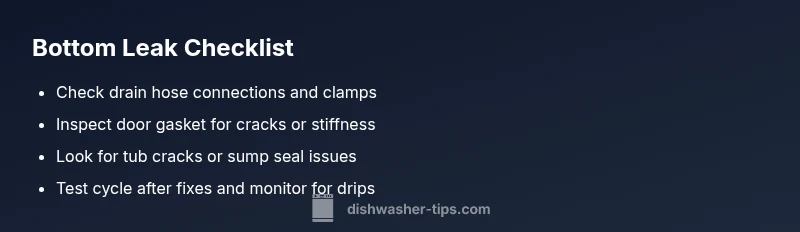
Bottom leaks are most often caused by a loose drain hose, a worn door seal, a cracked tub, or a failing sump gasket. Quick checks: unplug the dishwasher, shut off the water, and inspect the base for pooling or drips. If you identify water after these checks, stop using the unit and arrange diagnostic service.
Why the dishwasher is leaking from the bottom
When you notice the dishwasher is leaking from the bottom, you’re facing a symptom that points to a few specific failure points. According to Dishwasher Tips, bottom-leak scenarios are most often tied to exterior connections or wear on internal seals. The key is to move from obvious, easy-to-check items to more involved components without delaying action. A leak at the base can rapidly lead to kitchen flooding if left unaddressed, so start with safe, non-invasive checks and document what you observe. This approach helps homeowners and renters troubleshoot quickly, while avoiding unnecessary appliance replacement. The phrase dishwasher is leaking from the bottom is a red flag that you should inspect drain hoses, door seals, and the lower tub area first, as these are the most common culprits. By keeping a calm, methodical approach, you’ll determine whether the leak is a simple fix (hose or gasket) or something that requires professional intervention. Dishwasher Tips emphasizes safety and a structured diagnostic approach to prevent further damage and protect your home.
Common bottom-leak culprits and how to spot them
Dishwasher leaks from the bottom typically originate near the base where hoses connect, seals live, and the tub meets the frame. Dishwasher Tips analysis shows that the drain hose, pump seal, and door gasket account for the majority of bottom leaks. Start by checking the drain hose connections under the appliance for looseness or kinks. Inspect the door seal for cracks or deformations—these will often leak water when the door is closed and the unit runs. If the tub itself has a visible crack or you detect water pooling behind the kickplate, that’s a sign the tub or sump seal may be compromised. Use a flashlight and a tissue to trace moisture back to its source, which helps distinguish a minor hose issue from a serious tub crack. Remember, a leak at the bottom can also indicate a clogged or partially blocked drain path, which forces water to seep through seals rather than draining cleanly. The takeaway is to identify the source precisely before attempting repairs, and don’t ignore pooling water near the base. Identify whether the water is clear (condensation), soapy (detergent residue), or oily (pump lubricant) to guide your diagnosis.
Safety first: what to do now
Before you touch anything, ensure your safety. Unplug the dishwasher and switch off the water supply to prevent any live electrical risk or additional flooding. If water is actively leaking, avoid using the unit until you’ve confirmed the source and implemented a temporary stopgap, such as collecting runoff with towels or a shallow tray. It’s also wise to move any nearby items away from the splash zone and keep kids and pets clear. If you must access the underside, lay a towel, use a flashlight, and keep a container handy for drips. Do not attempt repairs unless you’re comfortable with basic tool handling and you’re confident the power is off. If you’re unsure about electrical safety or the leak is substantial, professional service is the safest route. In cases where electricity and water are present together, the risk of shock is real—do not proceed without confirming power is fully disconnected and the area is dry.
Diagnostic flow: symptom to diagnosis to solutions
A clear, repeatable process helps you pinpoint the cause of a bottom leak. Start with the simplest checks (drain hose, door seal, and visible tub cracks) and move toward more involved inspections (sump gasket, pump seal, and tub integrity). Keep a log of symptoms, where water appears, and how much leaks during a cycle. If the symptom is water pooling beneath the toe-kick after a wash, but not during fill, the drain path is a likely suspect. If leakage occurs only while the pump runs, the pump seal or sump gasket may be failing. If you observe water behind the kickplate or under the front of the machine, the tub or sump is a prime candidate. With each potential cause, confirm by a simple test: re-seat or replace a hose clamp to test for improvement, then run a short cycle to verify. Document all findings to communicate clearly with a technician if professional help is needed.
Step-by-step fixes for the most common bottom-leak causes
- Tighten and inspect drain hose connections: Access the drain hose under the dishwasher and verify the hose is firmly connected and not kinked. Tighten clamps as needed using the appropriate screwdriver. Pro tip: run a short cycle with a towel underneath to catch any residual drips. 2) Replace worn door seal: If the door gasket shows cracks or deformation, replace it following the manufacturer’s instructions. This is often a straightforward project with common household tools. Pro tip: measure the seal before buying to ensure you purchase the correct size. 3) Inspect the tub for cracks: Look for visible cracks in the tub via the front access panel or any cracks around the sump. If you find a crack, a professional replacement may be required; avoid running the unit with a cracked tub. Pro tip: capture photos for the repair technician. 4) Check the sump and pump seal: If you notice water around the sump area, the pump seal or gasket may be failing. Replacing the sump gasket often requires removing the motor assembly and may be best left to a professional if you lack mechanical experience. Pro tip: disconnect power and drain any standing water. 5) Inspect the tub mounting and brackets: A loose tub mounting can create a gap where water escapes. Tighten mounting bolts or replace damaged brackets as needed. Pro tip: keep a repair log and note any looseness you observe. 6) Clean and test after repair: Once you have addressed the suspected cause, run a test cycle with a full load to confirm the leak is resolved. Pro tip: place a dry towel under the toe-kick during the test.
Prevention tips to avoid future leaks
Routine maintenance reduces the risk of bottom leaks. Use a drain filter and clean it monthly to prevent clogs that push water to seals. Inspect the door seal for wear every six months; replace seals showing cracks or stiffness. Ensure hoses are properly clamped and free of kinks. Use the correct detergent and avoid overfilling to prevent excessive foam that can travel to seals. Finally, schedule a professional check every few years to catch wear before it becomes a leak. By keeping these practices, you can minimize future breaks and extend the appliance’s life while protecting your home from water damage.
When to call a professional and what to expect
If you identify a crack in the tub, a leaking sump, or you cannot confirm the exact source after a thorough inspection, it’s time to call a professional. A trained technician can pressure-test the system, inspect internal components behind the access panels, replace seals or gaskets, and advise on whether a repair is cost-effective compared to replacement. Have your observations ready: cycle type, what you saw, and where the water was pooling. A technician visit usually includes a diagnostic assessment, part replacement, and a test run to verify the leak is fixed. The Dishwasher Tips team recommends starting with simple fixes and escalating to professional service only when necessary to avoid unnecessary expenses.
Steps
Estimated time: 30-60 minutes
- 1
Power down and unplug
Unplug the dishwasher from the wall outlet and shut off the water supply. This prevents electrical shock and further water damage. Inspect the area calmly to identify where the leak originates before removing panels.
Tip: Take a photo of the setup before disassembly for reference. - 2
Access the base and drain hose
Remove the lower kick panel or toe kick to access the drain hose and clamps. Look for signs of looseness, cracks, or kinks in the hose.
Tip: Check both ends of the hose, including the connection to the drain line and the pump. - 3
Check the door seal
Open and close the door with the gasket visible. Look for cracks, stiffness, or deformation that would allow water past the seal during cycles.
Tip: Clean the gasket gently with a mild soap solution to reveal cracks. - 4
Inspect the tub and sump area
Wipe the base area and look for any signs of tub cracks or a leaking sump seal. Use a flashlight to illuminate seams and edges.
Tip: Mark damp areas with a washable marker to track changes after testing. - 5
Test after fixes
Reconnect power, run a short cycle with a light load, and observe closely for any new leaks. If water continues to pool, stop the test and reassess the likely source.
Tip: Keep towels ready and a bucket on standby during tests. - 6
Decide on next steps
If a simple hose or gasket fixes the leak, your job is done. If the leak persists or you see tub damage, call a professional for a definitive repair or replacement options.
Tip: Document findings and share them with the technician.
Diagnosis: Dishwasher is leaking from the bottom
Possible Causes
- highLoose or damaged drain hose connections
- highWorn or damaged door seal (gasket)
- mediumCracked tub or warped tub sidewall
- mediumFaulty sump gasket or pump seal
Fixes
- easyTighten and reseal drain hose connections; replace clamps if needed
- mediumReplace worn door gasket with the manufacturer-recommended part
- hardInspect tub for cracks and replace tub if structurally compromised
- hardReplace sump gasket or pump seal; consider professional service if unfamiliar with motor assembly
People Also Ask
What causes a dishwasher to leak from the bottom?
Bottom leaks typically originate from the drain hose, door gasket, tub cracks, or sump/pump seals. Inspect these parts in order, starting with the easiest to access items. If you identify a damaged component, replacement is often straightforward but may require professional service for tub or sump issues.
Leaks from the bottom usually come from the drain hose, door gasket, or tub and sump seals. Start with the hose and gasket, and seek professional help if the tub is cracked.
Can I fix a bottom-leak myself?
Simple fixes like tightening a hose clamp or replacing a door seal can be DIY for many homeowners. More complex problems, such as a cracked tub or sump gasket, typically require a pro to avoid further damage or electrical risk.
Some fixes are DIY, but complex leaks should be handled by a professional.
Is it safe to use a leaking dishwasher?
No. A leaking dishwasher can cause water damage and electrical hazards. Stop using it until you identify and fix the leak source, and only resume testing after addressing safety concerns.
No, stop using it until you fix the leak.
How do I know if the sump is cracked?
A sump crack may show as water pooling under the machine, a wet area around the pump, or visible cracks in the sump housing. A professional will confirm with a pressure test and may replace the gasket or housing as needed.
Look for pooling near the base and visible cracks; a professional can confirm with tests.
When should I replace my dishwasher instead of repairing it?
If leaks are frequent, multiple seals fail, or the tub is cracked, replacement is often more cost-effective than ongoing repairs. A professional can help assess whether a repair or a new unit makes more financial sense.
If leaks recur or major components fail, replacement might be best.
What maintenance reduces future leaks?
Regularly clean the filter and door seal, inspect hoses for wear, and run a test cycle after any repair. Use the correct detergent and avoid overfilling to prevent foam-induced leaks.
Keep filters clean and inspect seals and hoses regularly.
Watch Video
What to Remember
- Unplug and shut off water before inspecting.
- Most bottom leaks come from drain hoses or door seals.
- Test fixes with a short cycle and monitor for drips.
- Call a pro if the tub or sump is damaged or the leak persists.