Leaking Dishwasher From Bottom: Quick Troubleshooting Guide
Facing a leaking dishwasher from bottom? Learn common causes, safe inspection steps, diagnostic flow, and proven fixes to stop leaks fast and prevent future water damage.


Unplug the dishwasher, shut off the water supply, and inspect the bottom area for obvious drips. The most common culprits are a worn door gasket, a damaged tub or sump seal, or a loose/cracked drain hose. If you see water pooling near the base, start by tightening hose clamps, replacing worn gaskets, and inspecting the drain hose for cracks. If the leak persists, schedule a professional inspection.
Why bottom leaks happen in dishwashers
According to Dishwasher Tips, bottom leaks are often caused by degraded door gaskets, torn tub seals, or failing drain connections. When seals wear or hoses crack, water can seep through joints and collect at the base, especially after cycles that use high-pressure spray arms or hot water. This type of leak isn’t always dramatic; it can appear as a slow seeping that leaves a damp floor or a small puddle under the appliance. The key is to recognize patterns—leaks after long runs, leaks that occur only during drying, or water appearing after you load heavily with dishes. Early detection helps prevent mold, warping, and water damage to cabinets.
Brand-wise, the Dishwasher Tips team emphasizes that most bottom leaks share a common pathway: components that flex, seal, or drain water. Understanding this helps homeowners test and replace parts systematically rather than guesswork.
Common causes of bottom leaks
- Worn door gasket or mis-seated door: Over time, constant opening, high heat, and detergent exposure can crack or flatten the gasket, allowing water to leak along the door frame.
- Damaged or degraded tub/sump seal: The seal around the tub or sump can crack, tear, or dry out, especially in older models with plastic tubs.
- Loose or cracked drain hose or clamps: A loose clamp or a cracked hose lets wash water escape at the base rather than traveling to the drain.
- Faulty pump or impeller seal: If the pump’s seals fail, water can escape into the bottom cavity before it reaches the drain hose.
- Clogged or kinked drain hose: A restricted drainage forces water to back up and spill at the bottom after the cycle ends.
Most leaks originate at joints, not inside the tub, so careful inspection of hoses, clamps, and seals is often enough to locate the root cause.
Safety and preparation before inspection
Before you touch anything, unplug the dishwasher or switch off the circuit breaker. Shut off the water supply to prevent additional leaks while you inspect. Pull the unit forward carefully to access the kick panel or bottom access panel. Place towels or a shallow pan to catch any residual water and use a flashlight to inspect hoses, clamps, seals, and the tub bottom. If you see standing water around electrical components or the control panel, stop and call a licensed technician—water and electricity are a dangerous mix.
For proper diagnostics, keep a simple log: note the water location, whether it happens after a cycle or during fill, and any visible drips when you press on the door seal. This information guides you to the likely component that needs service.
How to spot the source: drain vs tub vs inlet
Water that pools at the front bottom often points to the door seal or tub seal, whereas water pooling toward the back or near the motor suggests pump or drain-path issues. If the pool appears only after a wash cycle or when the spray arms activate, look closely at:
- Door gasket: look for cracks, dryness, or deformations.
- Tub or sump seal: check for discoloration, tearing, or movement when you press on the seal.
- Drain hose and clamps: examine for cracks, bulges, or loose clamps.
- Pump housing and impeller: listen for grinding or wobble and check for cracks around the housing.
Careful observation with the machine in a dry state helps prevent false positives from leaks caused by the drain hose sitting in water after a cycle.
Diagnostic steps you can perform at home
A methodical, low-risk approach helps you find the source without disassembly:
- Step 1: Unplug and drain any remaining water from the sump with a towel.
- Step 2: Inspect the door gasket for cracks or flattening; press along the gasket and door edge to feel for gaps.
- Step 3: Check all accessible hoses (drain, inlet) for cracks or looseness; tighten clamps or replace damaged hoses.
- Step 4: Look at the tub seal and sump lip from the outside; if you can see a gap or brittle material, plan a seal replacement or professional service.
- Step 5: Run a short cycle with the front kick panel off to observe where water emerges during operation.
- Step 6: If you detect water near the pump area, the pump seal or impeller may be failing and require replacement by a technician.
Document what you observe for your technician and ensure all power and water supplies are reconnected only after you’re done.
Step-by-step: fix the most common cause (worn door gasket or damaged tub seal)
- Turn off power and water, and remove any items from the bottom shelf to access the base.
- Remove the lower access panel to expose the door gasket and tub seal. Inspect for cracks, tears, or hardening.
- If the door gasket is damaged, purchase the correct replacement part for your model and carefully remove the old gasket, then fit the new gasket ensuring a snug seal around the entire door edge.
- If the tub seal shows wear, remove the old seal, clean the channel, apply the new seal evenly, and re-seat it; ensure no twists or gaps.
- Reassemble, reconnect water and power, and run a test cycle with a few towels around the base to catch any interim leaks.
- If leakage occurs after replacement, re-check all clamps and seals; sometimes a second tightening or reseating is needed.
Tip: Use OEM or manufacturer-approved parts to guarantee fit and reliability. If you’re unsure about seal orientation, consult the model-specific service manual.
Tips & warnings for safe troubleshooting
- Safety is paramount: never work on live electrical components or when water is present on the floor around outlets.
- Always unplug the unit before inspecting seals or hoses; use a GFCI outlet if possible.
- Avoid over-tightening hose clamps; this can damage hoses and create new leaks.
- Replace worn seals promptly; a degraded seal is a major leakage source and can worsen over time.
- If you smell burning plastic or hear buzzing from the control panel, stop and call a professional immediately.
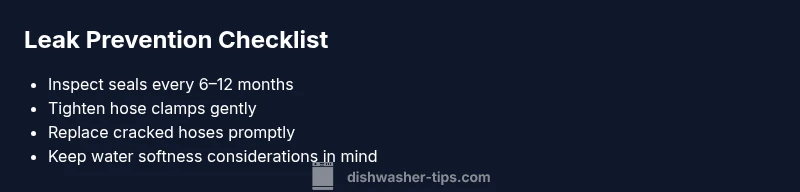
- Maintain a regular maintenance routine: inspect door gaskets and drain lines every 6-12 months, especially in homes with hard water or high detergent use.
Professional help is recommended for tub or pump seal replacements, as those require precise alignment and torque specifications to prevent future leaks.
Prevention and maintenance tips to avoid future leaks
- Schedule a semi-annual inspection of gaskets, seals, hoses, and clamps.
- Use the manufacturer-recommended rinse aid and detergent, which helps reduce mineral buildup that can corrode seals.
- Consider a water-softening system if you have hard water to minimize mineral deposits around seals.
- Keep the underside tidy: wipe away standing water after cycles and keep the area dry to detect new leaks early.
- Check the drain hose routing to ensure it is not kinked or pressed against the floor, which can cause slow leaks that worsen with use.
What to expect after repair and how to test longevity
After completing a repair, monitor the base area over the next 2-3 cycles for any sign of dampness. A successful seal change should show no water pooling near the base, and the dishwasher should drain normally without lingering moisture. If a new leak appears within a week, re-evaluate the part orientation and consider replacing adjacent seals or checking the tub for hairline cracks that may not be visible at first glance. Routine maintenance reduces the likelihood of recurring leaks and helps extend the life of your appliance.
Steps
Estimated time: 60-90 minutes
- 1
Power down and prepare area
Unplug the unit and turn off the water supply. Move the dishwasher forward enough to access the bottom panel. Place towels to catch any residual water and ensure the area is safe to work.
Tip: Keep the circuit breaker off until you’re finished inspecting. - 2
Open bottom panel and inspect gaskets
Remove the kick plate or access panel to reach the door gasket and tub seal. Look for cracks, stiffness, or gaps where water could escape.
Tip: Gently press the gasket to feel for soft spots or brittleness. - 3
Check drain hose and clamps
Follow the drain hose from the tub to the connection at the back. Inspect for cracks and ensure clamps are tight without over-tightening.
Tip: If you can wiggle the hose, replace the hose clamp with a new one. - 4
Inspect tub and pump seals
From the access panel, inspect seals around the tub and pump area for signs of wear or leakage. Replace damaged seals as needed.
Tip: Take photos before disassembly to aid reassembly. - 5
Reassemble and test
Reconnect all panels, restore power and water, and run a short cycle with a tray to monitor for leaks.
Tip: Place towels first to capture any residual drips. - 6
Evaluate result and plan next steps
If water reappears, recheck all connections or consider professional service for tub or pump replacement.
Tip: Document what you replaced and the date for maintenance records.
Diagnosis: Water pooling on the floor near the base after a cycle
Possible Causes
- highWorn door gasket or mis-seated door
- mediumCracked tub or sump seal
- highLeaky drain hose or loose clamps
Fixes
- easyReplace worn door gasket and reseal door
- hardReplace tub/sump seal if cracked or degraded
- easyTighten or replace drain hose and clamps; replace cracked hoses
People Also Ask
What does a bottom leak on a dishwasher usually indicate?
Bottom leaks typically point to a worn door gasket, a damaged tub seal, or a loose drain hose. Inspect these components first before considering more complex parts.
A bottom leak usually means a worn door gasket, a torn tub seal, or a loose drain hose. Start there.
Can I fix a leak myself without tools?
Yes for simple parts like door gaskets and drain hoses. You’ll need basic hand tools and replacement parts that match your model. For tub or pump seal replacements, professional service is often the safer option.
Yes, you can fix simple parts like gaskets and hoses yourself, but complex seals may require a pro.
Is it safe to operate a dishwasher with a leak?
No. Running a dishwasher with a leak can cause electrical hazards and water damage. Address leaks promptly and only run cycles once seals are checked.
No, operating a leaking dishwasher isn’t safe. Fix the leak before using it again.
How long do seals typically last in a dishwasher?
Seal life varies with use, detergent, and water quality. Regular inspection every 6–12 months helps catch wear before leaks appear.
Seal life varies, but check them every 6 to 12 months to catch wear early.
What parts commonly fail first in leaks?
Doors seals, tub seals, and drain hoses are the most frequent leak sources. Inspect these parts first during diagnostics.
Door seals, tub seals, and drain hoses are usually the culprits.
When should I call a professional?
If the leak persists after checking gaskets and hoses, or if you suspect tub or pump seal failure, contact a licensed technician for safe, precise repairs.
Call a professional if leaks persist after checks or you suspect tub or pump seals.
Watch Video
What to Remember
- Identify bottom leaks early to prevent mold and water damage
- Most leaks originate at seals or hoses, not the motor
- Safety first: unplug power and shut off water before inspection
- DIY fixes suffice for gaskets and hoses; tub/pump seals may need pros
- Regular maintenance reduces future leak risk