Dishwasher Leaking at Bottom of Door: Troubleshooting Guide
Urgent guide to diagnose and fix leaks at the bottom of the dishwasher door with practical checks, safe fixes, and prevention tips for homeowners every day.


Leaking at the bottom of the door is most often caused by a worn or misaligned door gasket. Start by inspecting the seal for cracks or debris, reseating or cleaning it, and ensuring the door sits level. If the gasket is damaged, replace it and retest.
Why the issue of dishwasher leaking at bottom of door happens
If you’ve noticed water pooling near the bottom edge of the dishwasher door, you’re not alone. The problem is commonly misinterpreted as a random spill, but it usually stems from a failing seal or misalignment that directs water toward the door frame instead of the drain. According to Dishwasher Tips, bottom-door leaks are frequently tied to a degraded door gasket or an out-of-level machine. In real-world kitchens, a quick inspection often reveals debris buildup in the gasket groove, small cracks in the rubber, or a door that isn’t firmly closed. Addressing these factors early can prevent larger damage, reduce standing water on the floor, and extend the life of the appliance.
The bottom-line reality is that most leaks at the door occur during or just after a cycle when the pump is actively spraying water. If the leak is persistent, new cracks in the gasket or a mis-seated door can let water bypass the drain path and seep through the gap. This section walks you through fast checks you can perform without special tools, so you can decide whether you can fix it yourself or should call a pro.
Common causes of a bottom-door leak and how to spot them
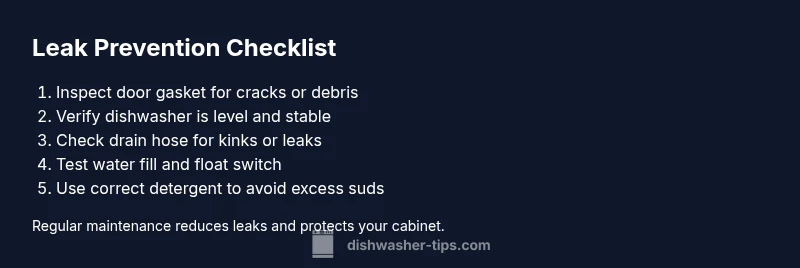
There are several frequent culprits behind leaks at the bottom edge of the door. The most common is a worn or damaged door gasket that cannot seal the tub properly. A second frequent issue is dishwasher leveling; if the machine is sitting unevenly, water is more likely to pool near the door. A third possibility is overfilling or a clogged float assembly that causes overflows toward the door area. Finally, kinks or cracks in the drain hose or an internal tub seal can direct water toward the door when the pump runs. Start by inspecting the gasket, then check level, and finally verify the hoses and seals. Remember that even small gaps can allow significant moisture to escape over the course of a cycle.
If you share your symptoms with your local appliance store or service, a tech will typically check all four of these areas, but you can dramatically narrow the scope by starting with the simplest checks first. Caring for your dishwasher with regular, light maintenance reduces the chance of a leak evolving into a bigger problem.
Quick checks you can perform before you call a pro
- Inspect the door gasket for visible cracks, tears, or sticky residue. Clean it with warm water and mild soap to remove soap scum that can prevent a good seal.
- Close the door and observe the gap around the gasket. If you see an obvious misalignment, the door latch or hinge might need adjustment.
- Make sure the dishwasher is level by checking the front feet and adjusting as needed. A tilting machine tends to leak along the bottom edge.
- Run a short cycle with minimal load to see where the water escapes most; note whether the leak occurs only during spray or also during fill.
- Check for kinks or damage in the drain hose and inspect the tub seal for cracks. Replace or repair as required.
If this doesn’t reveal a clear fix, proceed with the diagnostic flow below or contact a service technician. Always unplug the unit and shut off water before handling components.
How to prepare for gasket replacement and re-seating
Replacing a gasket is usually straightforward and can be done with basic tools. Gather a new gasket compatible with your model, a soft cloth, a small screwdriver, and a putty knife to lift the door seal gently. Protect the door with a towel to avoid bending the metal lip. When you reseat the gasket, align it evenly in the channel and snap it or press it firmly into place. Reassemble the door and test with a small amount of water to verify there are no leaks. If you feel uncertain, this is a good moment to call a professional to avoid damaging the door or cabinet. If you follow the steps carefully, a gasket replacement often resolves the leak at the bottom of the door and restores a reliable seal.
The importance of proper leveling and door alignment
Leveling is critical for preventing leaks around the door, especially at the bottom. If the dishwasher is not level, water can pool on one side and seep under the gasket. To check level, use a small spirit level on the door edge or inside the tub. Adjust the front feet clockwise to raise or counterclockwise to lower as needed until the machine sits evenly on the floor. After leveling, re-test the door with a light load. If the door still leaks, the hinge mounting may be worn or the door may be misaligned.
Common mistakes to avoid during troubleshooting
- Don’t hammer the gasket into place or force-fit it, which can cause cracking or distortion.
- Avoid using harsh chemicals near the gasket, as they can degrade rubber over time.
- Never run a leak test with an electrical cord damaged or exposed wiring.
- Don’t ignore a recurring leak; small amounts of water can cause mold, warped cabinetry, and electrical hazards over time.
- If you are unsure about the alignment or the gasket’s compatibility with your model, consult the manufacturer’s manual or a technician.
When to call a professional and what to expect
If there is extensive damage to the tub seal, a cracked plastic tub, or persistent leaks after gasket replacement and leveling, a professional should assess the appliance. Technicians can also identify less obvious causes like a warped tub or a failing drain pump that may require replacement. A pro can ensure proper calibration and test cycles without risking electrical shock or further damage to the cabinet. In most cases, a professional visit costs less than potential water damage repair in your kitchen and provides lasting peace of mind.
Prevention tips to keep leaks from returning
- Do a quick gasket inspection every six months and clean seals during routine cleaning.
- Use the correct detergent amount to avoid excessive suds that can travel toward the door.
- Ensure your dishwasher is placed on a level surface and protected from heavy traffic near the cabinet.
- Schedule regular professional maintenance to extend the life of the gasket and seals.
- Keep frequent watch on water supply hoses and clamps for signs of wear or leaks.
Steps
Estimated time: 45-75 minutes
- 1
Power down and prepare
Unplug the dishwasher and shut off the water supply. Move the appliance away from the wall to access the back and bottom panel safely. This prevents accidental shocks and makes it easier to inspect hoses and clamps.
Tip: Have a bucket ready for any residual water that may spill when you access the components. - 2
Access the gasket area
Open the door and inspect the seal along the entire circumference. Look for cracks, hardening, or dislodged sections. If you see debris, wipe the gasket clean with a damp cloth.
Tip: Don’t use sharp tools that could nick the gasket or door frame. - 3
Test door closure
Close the door firmly and observe the seal as you gently press around the edges. If you notice gaps or the door doesn’t press evenly, the hinge or door latch may be misaligned.
Tip: Mark misaligned areas to guide future adjustments. - 4
Replace the gasket if damaged
Remove the old gasket by lifting it from the groove. Clean the groove, insert the new gasket evenly, and press it into place until it seats firmly.
Tip: Ensure the gasket is the correct model for your unit. - 5
Level the appliance
Check the level from front to back and side to side. Adjust the feet until the bubble sits centered. Recheck after replacing parts to confirm no tilt remains.
Tip: A small tilt can cause leaks even with a perfect gasket. - 6
Run a test cycle
Reconnect power and water, run a short cycle with a small load, and observe the door edge for leaks. If water still escapes, re-check gaskets, hinges, and level.
Tip: Watch closely during the first minute of operation for any fresh leaks.
Diagnosis: Dishwasher leaking at bottom of door
Possible Causes
- highDoor gasket wear or damage
- mediumDishwasher not level or misaligned door
- lowOverfill or float switch malfunction causing overflow
- lowDrain hose or tub seal leakage directing water toward door
Fixes
- easyInspect door gasket for cracks, tears, or debris; clean or replace as needed
- easyLevel the dishwasher and adjust feet to ensure a flat install
- mediumCheck door alignment and latch operation; reseat hinge if necessary
- easyInspect drain hose and tub seal for cracks; replace if damaged
People Also Ask
What is the most common cause of a leak at the bottom of the dishwasher door?
The most common cause is a worn or damaged door gasket that fails to seal properly. Other frequent causes include an out-of-level machine, overfilling, or a damaged drain hose.
The most common cause is a worn door gasket that doesn’t seal, with leveling and hose checks as other frequent factors.
Can I fix a leak myself, or should I call a pro?
Many door-leak issues can be fixed by replacing the gasket and leveling the unit. If you notice tub damage, electrical components, or persistent leaks after basic fixes, contact a professional.
You can often fix it yourself with gasket replacement and leveling, but call a pro for complex issues.
How long does gasket replacement take?
Gasket replacement typically takes 30-60 minutes for a DIY repair, depending on model complexity and access to fasteners.
It usually takes about half an hour to an hour, depending on your model.
Will using the dishwasher cause more leaks if I keep using it?
If leaks are present, continuing to run the dishwasher can worsen water exposure and potential damage. Stop using it until you identify and fix the leak.
If there’s a leak, avoid using it until you fix the seal to prevent more damage.
When should I replace the entire dishwasher instead of fixing the gasket?
If the tub is warped, the door area is severely damaged, or leaks persist despite gasket work, replacing the unit may be more cost-effective in the long term.
If major damage or repeated leaks persist after fixes, consider replacement.
Watch Video
What to Remember
- Inspect the door gasket first; it’s the most common leak source
- Level the dishwasher to prevent edge leaks
- Replace damaged gaskets and verify proper sealing
- Check the drain hose and tub seal for additional leaks
- Regular maintenance reduces future leak risk