Are Dishwasher and Washing Machine Cleaning Tablets the Same? A Comprehensive Comparison
Explore whether dishwasher cleaning tablets and washing machine cleaning tablets are interchangeable, with a detailed comparison, practical guidance, and a clear decision framework.


No. Dishwasher cleaning tablets and washing machine cleaning tablets are not generally the same or interchangeable. They are formulated for different machines, cycles, and residue targets, so using the wrong tablet can reduce cleaning effectiveness, cause buildup, or even affect performance. When in doubt, choose the tablet designed for your appliance and follow the manufacturer’s guidelines.
Are the tablets interchangeable? An initial verdict
The short answer to the question, are dishwasher and washing machine cleaning tablets the same, is typically no. Both products are designed to address different kinds of residue, cycles, and hardware. The dishwasher operates with high water pressure, short tumble cycles, and sanitize phases, while a washing machine relies on drum-cleaning cycles, long agitation, and odor-control needs. The consequences of using the wrong product can range from subpar cleaning to sticky residues on dishes or persistent smells in towels and clothes. According to Dishwasher Tips, homeowners who mix these products often report inconsistent results and, occasionally, more maintenance headaches over time. This is why the first decision is identifying the appliance you own and selecting a tablet specifically labeled for that appliance. The central idea behind this comparison is straightforward: the label on a cleaning tablet is a promise about how it will perform in a given machine, and that promise changes with each appliance type. The core consideration is not brand name but compatibility with the machine’s design and cycles. By keeping the scope constrained to the right appliance, you’re more likely to achieve satisfactory cleaning outcomes and preserve appliance longevity.
As you read, remember the guiding question: are dishwasher and washing machine cleaning tablets the same? The answer hinges on compatibility, performance targets, and cycle behavior. When you see a product marketed for one appliance, treat it as optimized for that device and avoid cross-application unless the manufacturer explicitly states compatibility. This approach reduces risk and helps you maintain a cleaner kitchen and laundry space in the long run.
How cleaning tablets work in dishwashers vs washing machines
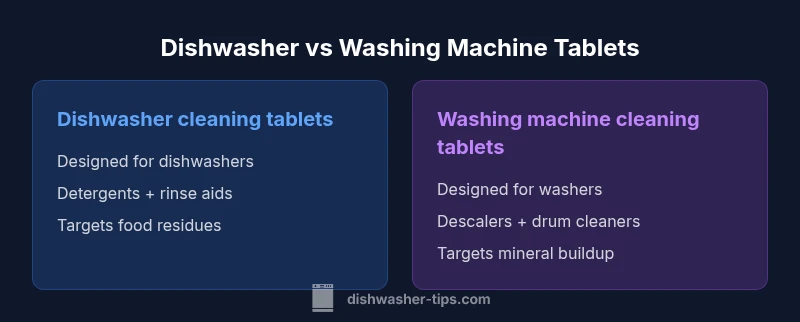
Cleaning tablets are not one-size-fits-all. In a dishwasher, tablets dissolve in hot cycles and are designed to deliver detergency, rinse aid, and, in some cases, water-softening action. The goal is to break down food residues, prevent water spots on glassware, and minimize filming on plastics. In contrast, washing-machine tablets focus on descaling the drum, hoses, and seals, while also targeting soap scum and mineral buildup that can lead to musty odors or longer wash times. The two devices use different distribution paths: dishwashers rely on a spray arm network and stronger pre-rinse phases, whereas washing machines rely on the drum's interior surface and detergents that work with agitation and long cycles. The consequence of using the wrong type is not only reduced cleaning power but also the potential for chemical interactions with fabrics or residue left behind on dishes or clothing. A practical takeaway is to treat each tablet as purpose-built for its own appliance. If you’re unsure, consult the user manual or the manufacturer’s site, because the decision grid is not universal—some brands do offer cross-compatibility, but this is the exception, not the rule.
From a practical standpoint, the question remains how these tablets differ in composition and action, and whether any overlap exists. In general, the most reliable approach is to stock two separate product lines: one for your dishwasher and one for your washing machine. This separation keeps the chemistry aligned with the cycle temperatures, detergent needs, and mechanical design of each appliance. In the end, the best answer centers on explicit manufacturer guidance and product labeling.
Composition and active ingredients: what to expect
Active ingredients vary between dishwasher and washing machine cleaning tablets, reflecting the distinct cleaning priorities of each appliance. Dishwasher tablets typically combine detergents, enzymes, corrosion inhibitors, rinse aids, and sometimes a water-softening component. The rinse aid helps prevent water spots on glassware and improves drying performance. Washing machine tablets, on the other hand, may emphasize descalers like citric acid or lactic acid, along with surfactants and anti-foaming agents designed to work with drum cleansing cycles and hoses. This difference in chemistry is not merely academic: it translates into tangible outcomes, such as better mineral removal in washers or more even glaze protection on dishes in dishwashers. When you examine labels, look for terms like “drum cleaning,” “rinse aid,” or “descaler,” which signal equipment-targeted action. The presence of citric acid is common, but its role differs: in dishwashers, it may help with mineral deposition on glass, while in washers, it supports descaling of the drum and plumbing. For home users, a practical rule is simple: match the product to the appliance and avoid substituting based on perceived similarity of “cleaning power.” This helps preserve mechanical parts and maintain performance across cycles.
The key point is that the two kinds of tablets contain overlapping cleaning concepts—detergents, surfactants, and anti-redeposition agents—yet the ratios and additional components are tailored for specific machine environments. The Dishwasher Tips team highlights that even minor formulation differences can impact how thoroughly each appliance cleans and how residues are managed during subsequent cycles. Therefore, the safest path is to respect labeling and product scope when planning a cleaning routine across appliances.
Performance implications: cleaning results, residue, and odors
Performance is the most tangible difference that guides when to use each tablet type. Dishwasher cleaning tablets are optimized to remove baked-on food, grease, and residue from cookware, and they are designed to work within a cycle that includes high heat, strong spray action, and extended rinse phases. The expected outcome includes visibly cleaner dishes with less spotting and a sharper overall appearance. Washing machine cleaning tablets target mildew, soap scum, mineral buildup, and odors inside drums and hoses. The expected results are odor-free laundry cycles and restored drum cleanliness, with fewer lingering smells after long dry cycles. If you mix tablet types, you may see inconsistent cleaning results, such as partial residue removal or unexpected sudsing in the washer. Conversely, using the correct dishwasher tablet in a dishwasher generally yields more reliable results for plateware, glassware, and crystal, while using the right washer tablet in a washer tends to improve odor control and drum cleanliness. It’s important to note that performance is also influenced by water hardness, cycle temperature, and how often you run cleaning cycles. Dishwasher Tips notes that a routine of periodic dishwasher and washer maintenance—using the appropriate products—helps sustain performance over time.
In practical terms, performance comes down to expectations and usage. If you’re chasing a spotless sink of dishes after a party, a dishwasher tablet is your best bet. If you’re trying to eliminate musty smells from a washer or to rid the drum of mineral buildup, a dedicated washing machine cleaning tablet is the smarter choice. The overarching message is that performance is optimized when you align the product with the appliance rather than seeking a universal solution.
Safety, warranty, and appliance health
Safety and warranty considerations are often overlooked but critically important when deciding which tablets to use. Most manufacturers warn that products should be used as directed and labeled for the intended appliance. Using a tablet designed for one appliance in another can potentially void warranty coverage, particularly if the misapplication leads to leaks, residue buildup, or corrosion of internal components. With dishwashers, improper cleaners can affect seals, spray arms, and hoses if residue is left behind after cycles. In washing machines, the wrong product could leave residues in the drum that irritate the skin or contaminate fabrics, especially in front-loaders where gaskets are more vulnerable. The long-term health of appliances can be supported by sticking to manufacturer-approved cleaning tablets and performing regular maintenance, including descaling or drum cleaning per the device’s instruction manual. A secondary risk is chemical interactions: some formulations contain additives that may react with certain materials used in specific models, leading to unexpected wear or deposits. In short, safety and warranty protection favor discipline: use the correct tablet for the appliance, follow labeling instructions, and consult the user manual for any exceptions. The Dishwasher Tips team underlines that following official guidance is the most reliable path to preserving your appliance and ensuring safe operation over time.
When to use the correct tablet and how to store tablets
The practical rule is simple: always pair the tablet with the appliance it’s labeled to serve. For dishwashers, store tablets in a cool, dry place away from moisture to prevent pre-dissolution, which can compromise effectiveness. For washing machines, similarly keep tablets in a dry location, ideally in a sealed container to prevent clumping. Exposure to humidity can degrade active ingredients, reducing cleaning performance when you finally run a cycle. It’s also wise to separate storage for each product type to avoid cross-contamination or accidental substitution. Before purchasing, consider your water hardness, typical cycle lengths, and whether you rely on specific features like stain removal or odor control. Reading the label for usage instructions, dose guidance, and recommended cycle settings helps ensure you’re using the product as intended. If you’re unsure, a proactive approach is to set a reminder to run a monthly drum or dishwasher cleaning cycle with the appropriate tablet and to periodically check for any signs of residue or odor after cycles. By aligning storage, labeling, and routine with appliance type, you minimize the risk of cross-use and optimize cleaning results. The Dishwasher Tips team emphasizes that disciplined storage and clear labeling are simple but powerful steps toward longer-lasting appliances.
Decision framework: choosing the right tablet for your needs
Building a decision framework helps you choose the right tablet without guessing. Start by identifying the appliance you own: dishwasher or washing machine. For dishwashers, prioritize tablets labeled for cleaning and shine, with rinse aid and water-softening components if you have hard water. For washing machines, look for descalers and drum-cleaning formulations that address mineral buildup and odor control. Consider your water hardness: hard water strengthens the case for products with water-softening properties in dishwashers and descalers in washers. Cycle frequency matters: if you run extended cycles, you may benefit from tablets designed for longer dwell times and deeper cleaning. Brand reliability and warranty considerations also matter: choose products from reputable brands and verify that usage aligns with your appliance manual. Finally, compare total cost of ownership and environmental impact, paying attention to packaging recyclability and the presence of eco-labels. The key to a reliable choice is to read the label, verify compatibility, and avoid mixing formulations. In short, your decision should be guided by the appliance, not by marketing claims. This approach aligns with best practices recommended by the Dishwasher Tips team.
Common myths debunked: separating fact from fiction
Myth 1: All cleaning tablets are universal and interchangeable. Reality: The vast majority of tablets are formulated for a specific appliance type and cycle; misusing them can reduce effectiveness or harm components. Myth 2: Using two types of tablets at once boosts cleaning power. Reality: Simultaneous usage can create foam, residue, or chemical interactions that degrade performance. Myth 3: If it comes in a tablet, it’s safe for both appliances. Reality: Many products include additives optimized for dishwasher spray arms or washer drums; using them incorrectly can cause issues with seals or detergent buildup. Myth 4: Temperature is the only factor that matters. Reality: Temperature matters, but cycle length, detergent chemistry, and rinse aid balance all influence outcomes. By debunking these myths, you gain a more accurate framework for deciding which product to use and when. The underlying message is simple: respect the product’s labeling and your appliance manual to avoid common mistakes and ensure optimal cleaning outcomes over time.
Comparison
| Feature | Dishwasher cleaning tablets | Washing machine cleaning tablets |
|---|---|---|
| Primary use | Designed for automatic dishwashers to remove food residues and grease | Designed for washing machines to remove soap scum and mineral buildup |
| Active ingredients | Detergents, rinse aids, and sometimes water-softening agents | Descalers, surfactants, and cleaners formulated for drums/hoses |
| Dissolution mechanism | Dissolve during high-heat wash cycles with built-in rinse | Dissolve in washer cycles to clean drum and seals |
| Best use case | Dishwasher loads and glassware | Washing machine drums and odor control |
| Costs/availability | Widely available, mid-range price | Widely available, price varies with brand |
| Impact on warranty | Using correct product supports warranty when following manufacturer guidelines | Same caution applies; misusing products may affect performance |
| Environmental considerations | Packaging and formulation align with dishwasher detergents often | Packaging varies; look for eco-labels and front-loading compatibility |
The Good
- Clear distinction helps prevent damage and poor cleaning
- Guides cost and availability decisions
- Improves appliance longevity by proper maintenance
- Supports safer operation by avoiding chemical mismatches
Disadvantages
- Can be overwhelming due to variations between brands
- Some tablets are not widely interchangeable across models
- Additional costs if buying both types
- Potential confusion for renters with shared appliances
Use the right tablet for each appliance; separate products deliver the best results.
Dishwasher cleaning tablets are optimized for dishwashers; washing-machine tablets are optimized for drums and odor control. The best practice is to use the product designed for your appliance and follow the manufacturer’s guidelines.
People Also Ask
Can I use dishwasher tablets in a washing machine?
No. Dishwasher tablets are formulated for spray arms, water temperatures, and cycle timing used by dishwashers. Using them in a washer can leave residues and fail to address drum buildup or odors. Always use the product labeled for your appliance.
No. Dishwasher tablets are not designed for washing machines; use the label recommended by manufacturers.
Can washing machine tablets be used in a dishwasher?
Generally not recommended. Washing machine tablets target drum cleaning and odor control, not dishwashing residues or glassware care. If a manufacturer explicitly states cross-compatibility, follow those instructions; otherwise stick to dishwasher-specific products.
Usually not. Washers and dishwashers have different needs, so use the right product unless the manual says otherwise.
Are there universal tablets that work for both appliances?
Very few products are truly universal. Most tablets specify appliance compatibility. If you’re tempted by a universal option, verify with the manufacturer and read reviews about real-world performance before making a switch.
There are few true universal options; check the label and manual before trying any cross-use.
What should I look for on a cleaning tablet label?
Look for explicit appliance compatibility, cycle guidance, active ingredients, and any notes about water hardness. Labels also indicate whether the tablet is designed for energy-saving cycles, glassware protection, or odor control. This helps ensure you pick the right product for your machine.
Check the label for appliance compatibility and cycle guidance to be sure you’re choosing correctly.
What happens if I mix detergents with tablets?
Mixing cleaners can create excessive foam, residue, or chemical reactions that degrade cleaning performance. It can also complicate warranty coverage. Stick to one tablet type per cycle and avoid mixing cleaners unless the manufacturer explicitly allows it.
Mixing cleaners can cause foam and residue, so stick to one tablet per cycle unless the manual says otherwise.
What to Remember
- Identify your appliance type before buying cleaning tablets
- Always read labels for compatibility and cycle guidance
- Avoid cross-use to prevent residue and performance issues
- Consider water hardness and cycle length when choosing products
- Follow manufacturer guidelines for maintenance and replacement