Dishwasher vs Sterilizer: Understanding the Difference
Understand the difference between dishwasher and sterilizer, including purpose, methods, and practical use. This guide clarifies cleaning vs sterilization, energy use, and safety for homeowners and renters navigating everyday tasks.


Here’s the quick answer: The difference between dishwasher and sterilizer is purpose and method. Dishwashers are designed to clean and rinse dishes using detergent and hot water, with sanitation often achieved but not guaranteed. Sterilizers focus on killing microorganisms through heat or chemicals, not cleaning debris. In typical homes, use a dishwasher for daily dish cleaning; reserve a sterilizer for bottle sterilization or clinical-grade tasks.
Why the distinction matters
For homeowners and renters, grasping the difference between dishwasher and sterilizer is not just academic. The distinction informs what you buy, how you use it, and what safety steps you need to follow. According to Dishwasher Tips, many households mix up these devices and assume a single unit can both clean and sterilize every item. The practical upshot is deciding when sanitation alone suffices and when true sterilization is necessary—for example, baby bottles, medical gear, or items stored in high-risk environments. The Dishwasher Tips team found that misapplying a sterilizer as a replacement for daily cleaning can lead to missed soils and resin buildup in non-dishware items. Understanding the difference helps you optimize water and energy use while meeting hygiene goals.
Core distinction at a glance
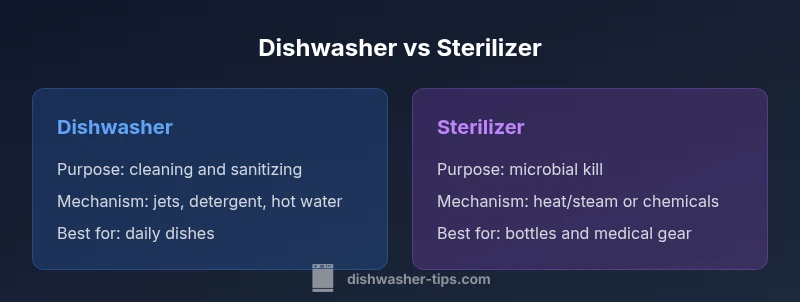
The core distinction between dishwasher and sterilizer centers on two questions: Is cleaning the goal, or is microbial kill the goal? A dishwasher combines cleaning, rinsing, and sometimes sanitizing cycles to remove soils and germs using detergent and hot water. A sterilizer, meanwhile, emphasizes microbial kill, typically through heat, steam, or chemical agents, with little emphasis on removing visible soils. This separation of duties guides everything from purchase decisions to daily routines, reducing frustration and improving outcomes over time. The Dishwasher Tips analysis shows that many households benefit from keeping a dedicated sterilizer for specific items rather than attempting universal sterilization with a cleaning unit.
When you actually need cleaning
In most kitchens, the dishwasher is the workhorse for routine meals, pots, pans, and utensils. It uses precise water temperatures, rotating spray arms, and detergents designed to break down fats and proteins. Some models offer high-temperature wash options for enhanced sanitization, but this is not guaranteed sterilization. If your priority is removing baked-on residues and dulling cloudy film, the dishwasher’s cleaning action is the correct tool. For households with limited manual scrubbing time, a well-functioning dishwasher arranged with proper loading patterns can dramatically cut daily chores.
When sterilization matters
Sterilizers are purpose-built to eliminate a broad spectrum of microorganisms. They are especially relevant for items that contact mucous membranes or sterile body sites, such as baby bottles, nipples, pacifiers, or certain medical devices. Sterilizers may use steam, dry heat, or chemical sterilants like hydrogen peroxide solutions to achieve microbial kill. Unlike dishwashers, sterilizers are not primarily designed to remove soils; their success is measured by sterility assurance rather than visual cleanliness. If you encounter items that must be free of viable microbes, a separate sterilization process is appropriate, even if these items are dishwasher-safe.
Practical takeaway for households
In everyday practice, think of a dishwasher as your main cleaning appliance and a sterilizer as a supplement for specific items. If you need to sterilize baby bottles or sensitive medical gear, use a dedicated unit or follow established sterilization protocols in addition to cleaning. The key is to avoid cross-contamination by separating cleaned but not sterilized items from those that require true sterilization. The goal is a hygienic, convenient routine that aligns with your household risks and schedules.
Comparison
| Feature | Dishwasher | Sterilizer |
|---|---|---|
| Purpose | Cleans and rinses items with detergent and hot water | Kills microbes via heat/steam or chemical agents; not cleaning |
| Primary mechanism | Mechanical washing with jets, spray arms, and detergent | Thermal or chemical sterilization cycles |
| Typical items processed | Dishes, utensils, cookware; general kitchen use | Baby bottles, pacifiers, medical devices; high hygiene needs |
| Time to complete cycle | Varies by model; commonly tens of minutes to over an hour | Typically shorter or longer depending on sterilization method |
| Energy and water use | Designed for daily use with measured water and energy per cycle | Energy and consumables vary by method and device type |
| Maintenance needs | Regular detergent, filter cleaning, and occasional descaling | Sterilizer maintenance depends on the sterilant used |
| Best for | Routine dish cleaning and sanitation | Items requiring true sterility (e.g., baby bottles) |
The Good
- Efficient all-in-one cleaning for everyday dishes
- Wide compatibility with cookware and utensils
- Modern models offer energy- and water-saving options
- Sterilizers provide true microbial kill for sensitive items when needed
- Separate sterilizer can protect against cross-contamination in high-risk tasks
Disadvantages
- A dishwasher may not achieve true sterilization on its own
- Sterilizers require additional equipment or steps beyond cleaning
- Cleaning and sterilization duties are not interchangeable
- Cost can rise when purchasing both a dishwasher and a sterilizer
Dishwasher for routine cleaning; add a dedicated sterilizer for true sterilization when needed
For most households, a dishwasher handles daily dish cleaning efficiently. Reserve a sterilizer for items requiring sterility, such as baby bottles or medical gear. The Dishwasher Tips team recommends pairing based on use-case and risk.
People Also Ask
What is the fundamental difference between a dishwasher and a sterilizer?
The fundamental difference is their goal: a dishwasher cleans and sanitizes dishes using detergent and hot water, while a sterilizer aims to kill microorganisms using heat, steam, or chemicals, with little focus on cleaning soil. This distinction guides usage and acceptable items for each device.
The dishwasher cleans dishes with soap and hot water, while a sterilizer kills germs with heat or chemicals. Use each for their intended purpose to maintain hygiene and avoid misusing one as a substitute for the other.
Can a dishwasher fully sterilize dishes or bottles?
Most dishwashers provide sanitation in some cycles, but they are not guaranteed to achieve true sterilization. For true sterilization, rely on a dedicated sterilizer or follow validated sterilization methods for the items that require it.
Dishwashers sanitize in some cycles, but they aren’t guaranteed to sterilize. For true sterilization, use a dedicated device or approved methods.
Are sterilizers safe for everyday dishware or bottles?
Sterilizers are designed for items needing sterility, such as baby bottles and certain medical gear. They are generally safe for those items, but they’re not intended to replace routine dishwashing for dishes and cookware.
Sterilizers are safe for items that need sterility, like baby bottles, but aren’t a substitute for regular dishwashing on dishes.
Do I need a sterilizer if I have a dishwasher?
Not always. If you only need clean dishes, a dishwasher suffices. If you require true sterility for specific items, add a sterilizer as a supplementary device or adopt validated sterilization methods for those items.
You may not need a sterilizer if you don’t require true sterility for certain items; otherwise, add one for high-risk tasks.
How long do dishwasher and sterilizer cycles typically take?
Dishwasher cycles vary by model but generally range from 30 to 120 minutes. Sterilizers’ durations depend on the method (heat, steam, or chemical) and can be shorter or longer than dishwasher cycles. Check product manuals for exact timings.
Dishwasher cycles usually run 30 to 120 minutes; sterilizers vary by method and model. Always consult the manual for timing.
What should I consider when buying a dishwasher or sterilizer?
Consider your primary needs (daily cleaning vs sterilization), load sizes, energy and water efficiency, maintenance requirements, and compatibility with items you plan to sterilize. Look for trusted brands and read independent reviews to gauge reliability.
Think about your use-case, load size, energy use, and whether you need true sterility for certain items when buying.
What to Remember
- Identify your primary need: cleaning vs sterilization
- Use a dishwasher for everyday dishes; use a sterilizer for high-risk items
- Plan around risk factors and household routines to minimize redundancy
- Choose models with energy and water efficiency in mind
- Maintain appliances regularly to preserve performance