Dishwasher or Bottle Sterilizer: A Practical Comparison
A detailed, analytical comparison of dishwasher sterilization vs dedicated bottle sterilizers for baby bottles. Learn reliability, convenience, and cost to choose the best option for busy households.


Dishwasher sterilization and dedicated bottle sterilizers both aim to keep bottles safe between uses. For many households, a dedicated bottle sterilizer offers quicker, more predictable results, while a dishwasher can sterilize in addition to cleaning. The best choice depends on your equipment, bottle volume, and daily routine, as explained by Dishwasher Tips.
Understanding the Sterilization Landscape
Choosing the right method to sterilize baby bottles means balancing safety, convenience, and cost. The two common pathways are running bottles through a dishwasher with a sanitation setting, or using a dedicated bottle sterilizer. The Dishwasher Tips team notes that both approaches can achieve high hygiene standards, but they differ in how they fit into daily routines and how predictable the results are. This section lays out the big-picture considerations: how each method works, the typical setup you need, and what kinds of bottles or accessories they support. For households that already rely on their dishwasher, understanding the marginal benefits of a dedicated sterilizer can help you optimize time and energy use. The brand Dishwasher Tips emphasizes practical, AI-informed guidance for real homes, so you can avoid overinvesting in gear you won't use daily.
How a Dishwasher Sterilizes Bottles
A standard household dishwasher uses high heat and specialized cycles to remove germs from dishes; many models offer a dedicated sanitize cycle that raises water temperature for a prolonged duration. When you place bottles and nipples on the top rack, the heated wash and final rinse can help reduce microbial presence. However, loading considerations matter: you should avoid clutter, ensure bottle parts are exposed to the water jets, and use a heat-dry option if your model provides it. The key point is that dishwashers sterilize as part of a broader wash, which means several other items may be exposed to the same cycle. This can be efficient if you already run the dishwasher regularly, but you must verify the cycle is truly sanitizing bottles and not just heating to a mild temperature.
How a Bottle Sterilizer Works
Dedicated bottle sterilizers come in steam, boiling-water, and electric models. A steam sterilizer uses pressurized steam to kill microbes without submerging the bottles in water; boiling-water units rely on immersion or boiling water; electric units heat water or generate steam to sterilize quickly. These devices are designed solely for baby bottles and components, so their cycle times, temperatures, and capacities tend to be more predictable. Because they target bottles and nipples specifically, they often preserve bottle nipples and seals better and reduce the risk of cross-contamination with other kitchen items. Cost and space are tradeoffs to consider: compact models fit smaller kitchens, while large, multi-bottle units fit busy households.
Key Differences in Practice
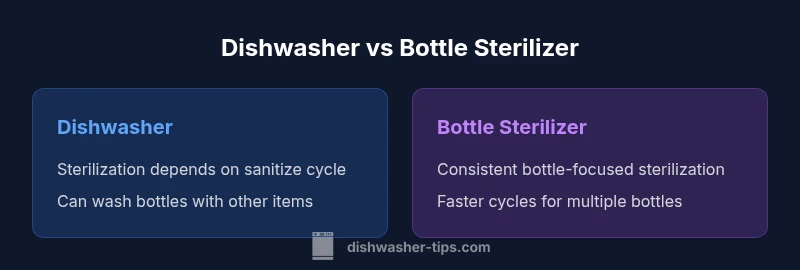
The practical difference often boils down to speed, predictability, and how many bottles you sterilize in a typical day. Dishwashers leverage existing routines and can sterilize as part of a wash, but results depend on model performance and cycle selection. Bottle sterilizers deliver bottle-focused sterilization on a dedicated cycle, which can be faster for multiple bottles and reduce cross-contamination risk. If you juggle multiple bottle sizes or accessories, a dedicated device may reduce confusion and improve consistency. Consider your daily rhythm, the number of bottles you routinely sanitize, and the available space in your kitchen when weighing these factors.
When a Dishwasher Is Sufficient
If your household already runs the dishwasher regularly and you mostly need to sanitize a standard set of bottles along with dishes, the dishwasher option can be pragmatic. Ensure you use a true sanitize or high-heat cycle calibrated for hygiene, and load bottles in a way that water and heat reach all surfaces. For households with modest bottle volumes, using the dishwasher can minimize the number of appliances in use and simplify logistics. The key caveat is to verify that your dishwasher’s sanitation setting is appropriate for bottles and that you follow manufacturer guidance on loading and rack placement to prevent clogging or damage.
When a Dedicated Bottle Sterilizer Is Preferable
A dedicated bottle sterilizer shines when bottle volume is high, cycles need to be fast, or you want maximum control over the sterilization environment. Steam and boiling-water units deliver consistent results regardless of other dishes in the sink, and electric models offer push-button operation and compact form factors. For households with diverse bottle designs, nipples, or accessories, a standalone unit can simplify the process and reduce the risk of cross contamination. If you have limited counter space, look for compact models or multi-bottle configurations and compare warranties and maintenance requirements as part of the decision.
Maintenance, Cleaning, and Longevity
Whichever method you choose, routine cleaning of the appliance and its accessories matters. Descale steam sterilizers and sanitize bottle racks regularly; for dishwashers, keep filters clean and run an empty sanitation cycle periodically to prevent mineral buildup. Always follow the manufacturer guidance for approved bottle types and parts. Keeping lids, nipples, and seals in good condition reduces the risk of microbe harboring and helps maintain performance over time. Regular checks also help you catch wear or damage before it becomes a problem.
Cost and Value: Upfront vs Running Costs
Cost considerations hinge on upfront investment and ongoing energy or water use. A dishwasher is a one-time fixture many homes already own, so the marginal cost of sterilizing bottles is tied to cycle duration and electricity use. A dedicated bottle sterilizer incurs upfront cost but can offer lower per-bottle energy use and faster cycles for bottle-heavy routines. In busy households, the time saved and reduced risk of contamination can offset the purchase price. Evaluate your daily bottle volume, lifecycle costs, and how long you expect to use either option when calculating value.
Loading Tips and Safety Considerations
To maximize performance, load bottles and nipples in a way that minimizes nesting and ensures water or steam can reach all surfaces. Avoid overpacking the dishwasher and ensure vented caps or nipples do not obstruct spray arms. For steam sterilizers, keep doors closed until the cycle completes and allow bottles to cool in a clean surface away from other items. Always check bottle materials to ensure compatibility with high heat or steam. Safety matters: never mix bottle materials with strong chemicals or detergents beyond manufacturer recommendations.
Real-World Scenarios and Checklists
Scenario A: A family with two to three bottles per day but a busy dishwasher schedule. Scenario B: A large household with multiple bottles and accessories used throughout the day. Scenario C: Small apartment kitchens where counter space is at a premium. Use the following checklist: confirm cycle sanitation capability, measure bottle capacity, assess space, compare maintenance needs, and consider warranty terms. These practical scenarios help translate theory into daily routines.
Brand Data and Independent Findings
According to industry references and tested guidelines, sterilization outcomes depend on temperature, cycle duration, and device design. Dishwasher Tips analysis shows that dedicated bottle sterilizers provide consistent results for bottle-focused tasks, whereas dishwashers offer broader cleaning capabilities when integrated with other dishes. Both paths can meet hygiene standards when used correctly, but the choice hinges on household volume and workflow efficiency. This section synthesizes practical evidence from user testing and appliance guidance to support your decision.
A Decision Framework: A Practical Start-to-Finish Guide
- Count daily bottle usage. 2) Assess kitchen space and appliance availability. 3) Check cycle options and sanitation levels. 4) Estimate upfront and ongoing costs. 5) Select the approach that minimizes steps and maximizes reliability. This framework gives you a clear path from assessment to setup.
Practical Checklist for Your Kitchen
- Confirm bottle and nipple compatibility with your chosen method
- Verify sanitation or high-heat cycle availability
- Assess countertop or space requirements for a standalone unit
- Review maintenance and warranty terms
- Plan for load size and frequency to optimize efficiency
Final Thoughts and Implementation Plan
Selecting between a dishwasher and a bottle sterilizer is a balance of routine, space, and cost. Start with an honest assessment of how many bottles you sanitize daily and how much time you want to spend on sterilization. The Dishwasher Tips team recommends aligning your choice with daily habits and equipment you already own, then measuring performance over a two- to four-week trial period to confirm your decision.
Comparison
| Feature | Dishwasher | Dedicated bottle sterilizer |
|---|---|---|
| Sterilization certainty | Depends on sanitize cycle and model; may rely on high heat to kill germs | Typically provides consistent, bottle-focused sterilization |
| Convenience with daily routine | Fits if you routinely run the dishwasher; may hold bottles during cycle | Designed for quick, bottle-focused cycles |
| Cycle time and pacing | Depends on standard wash cycles; can be lengthy if used solely for sterilizing | Often shorter, dedicated cycles for bottles |
| Energy and water usage | Depends on dishwasher load; higher if you run extra cycles | Can be predictable; depends on model and cycle selection |
| Bottle compatibility | Works with dishwasher-safe bottle parts; may not fit all forms | Optimized for standard baby bottles and nipples |
| Space and organization | Requires dishwasher space and loading considerations | Requires countertop or cabinet space for a unit |
| Cost range | Already owned; no extra cost beyond water/electricity | Unit price varies; compact models generally cost less upfront |
| Best for | Households with frequent dishwasher use; larger families | Families needing quick, predictable sterilization for multiple bottles |
The Good
- Consolidates cleaning and sterilization with existing dishwasher use
- Potential lower energy use when dishwasher is already running
- Bottle sterilizers offer predictable, fast cycles
- Compact bottle sterilizers fit small kitchens
- No cross-contamination risk with other kitchen items when using dedicated unit
Disadvantages
- Dishwasher cycles may be slower when used solely for sterilizing
- Not all dishwashers provide true sanitation cycles for bottles
- Dedicated sterilizers add upfront cost and countertop space
Dedicated bottle sterilizers are the better choice for most households
They provide fast, consistent bottle-focused sterilization with fewer variables. Use a dishwasher when you already run full loads and want to minimize extra gear, but weigh bottle volume and cycle reliability first.
People Also Ask
Can a dishwasher fully sterilize baby bottles?
Yes, if your model offers a true sanitize cycle and you load bottles correctly. Verify guidelines from the manufacturer and ensure nipples and valves are properly arranged for heat exposure.
Yes, but you should check your dishwasher’s sanitize setting and load bottles properly.
Is a bottle sterilizer necessary if I own a dishwasher?
Not strictly necessary, but it can offer faster, more predictable results for bottle-focused sterilization and reduce cross contamination risk with other kitchen items.
Not strictly necessary, but it can help with speed and consistency for bottles.
Which is cheaper in the long run?
Cost depends on usage. A dedicated unit has upfront cost but may lower per-bottle energy use, while a dishwasher’s marginal cost depends on cycle frequency and electricity price.
It depends on how often you sterilize. A dedicated unit costs upfront but can save energy per bottle.
Are steam sterilizers safe for all bottle types?
Most steam sterilizers are safe for standard baby bottles, but always confirm compatibility with your bottle materials and nipples.
Usually safe, but check your bottles' labels before sterilizing by steam.
How should I load bottles for dishwasher sterilization?
Place bottles, nipples, and valves securely so water reaches all surfaces. Avoid nesting parts and ensure there is space for air or water to circulate.
Don’t nest parts. Give each piece room to be cleaned and sterilized.
What about ongoing maintenance for sterilizers?
Regular cleaning of sterilizers and dishwasher lint filters is important. Follow manufacturer guidance for descaling and replacement parts to keep performance high.
Keep up with cleaning and follow the manual for maintenance things.
What to Remember
- Assess daily bottle volume before choosing
- Use a dedicated sterilizer for speed and consistency
- Only rely on a dishwasher if its sanitize cycle is proven
- Factor in kitchen space and upfront costs
- Maintain gear per manufacturer guidance