Is Dishwasher Better than Washing? A Comprehensive Comparison
A practical, analytical comparison of dishwashers vs hand washing, covering water use, energy, hygiene, costs, and use-case scenarios to help homeowners decide if is dishwasher better than washing.


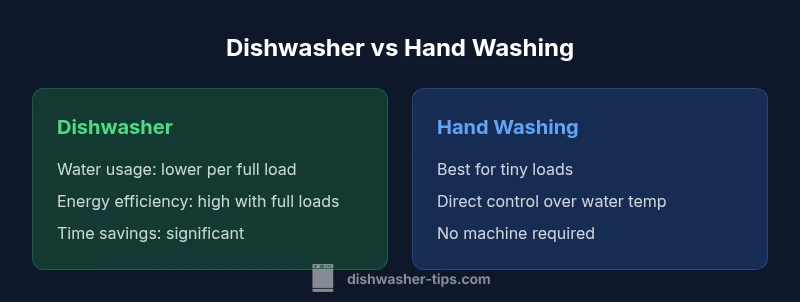
Is dishwasher better than washing? In most homes, a modern dishwasher uses less water and energy per load than hand washing, especially with full loads. It also saves time and provides consistent hygiene. The answer varies by load size and model, but generally the dishwasher option offers efficiency and convenience over hand washing.
Is Water Use Really Lower with a Dishwasher?
Water consumption is a central point in whether is dishwasher better than washing. Modern dishwashers often use a fraction of the water needed to wash the same amount by hand, especially when you fill the rack completely. Hand washing can be highly variable: you might let the faucet run longer, or you reuse water, which affects efficiency. Detergents used in dishwashers also help with soil removal and sanitization. For renters or households avoiding rinsing under running water, the dishwasher approach saves water, time, and reduces splashing, though it requires access to a working machine and a water hookup. In short, at scale, is dishwasher better than washing for water efficiency in most scenarios.
Cleaning Chemistry and Hygiene: How the Two Approaches Compare
Dishwashers rely on controlled wash cycles, heat, and detergents designed for soil and grease. Hand washing relies on manual scrubbing and variable water flow. While hand washing can achieve excellent results, it is harder to guarantee uniform sanitation without meticulous technique. Modern dishwasher detergents are formulated to remove baked-on soils and sanitize at high temperatures, reducing the risk of bacteria transfer between dishes. Rinse aids help with spotting and drying, and proper loading ensures water and spray arms reach all surfaces. For many households, the hygiene difference is notable when hand washing is inconsistent due to rushed routines or shared sinks. Dishwasher Tips's assessment suggests that consistent, appliance-based methods tend to deliver predictable cleanliness.
Energy Efficiency and Cost Implications
Energy use is a major factor for households evaluating whether is dishwasher better than washing. Full loads maximize the efficiency of a dishwasher, spreading the energy used across many dishes. In contrast, hand washing energy use is tied to water heating duration and faucet run time, which can vary widely. Modern dishwashers with Energy Star labels typically consume less energy per cycle than older models, and the cost per load drops further when you run eco modes. The long-term costs depend on model price, maintenance, and frequency of use. For many families, the energy savings, combined with time savings, offset initial purchase costs over a few years. Dishwasher Tips's research indicates energy efficiency is a key differentiator in this comparison.
Cleaning Performance: Consistency, Residuals, and Drying
Dishes cleaned in a dishwasher benefit from controlled spray patterns, heated drying, and consistent rotation, which reduces spotting and residue on glassware. Hand-washed items are highly dependent on technique, water temperature, and scrubbing vigor. Minor cookware, plastics, and abrasive surfaces can fare differently in each method. Some delicate items—like pewter or certain crystals—benefit from hand washing. Yet for most everyday dishes, a modern dishwasher delivers reliable results with less effort. The question of whether is dishwasher better than washing often hinges on the kind of soil and the types of dishes you wash regularly—that balance should guide your choice.
Initial Purchase Costs and Long-Term Value
The upfront cost of a dishwasher includes the unit price, installation, and potential cabinet space adjustments. Hand washing requires no machine, but it incurs ongoing water and energy bills and wear on sinks and towels. Long-term value is driven by how often you use the appliance, the longevity of the unit, and maintenance needs. A high-quality dishwasher can last many years with proper care, while frequent repairs can erode value. For renters or households with limited space, the cost calculus also includes the trade-off of dismantling and moving appliances. In many cases, the total cost of ownership over 5–10 years favors the dishwasher when used efficiently.
Special Scenarios: Small Kitchens, Shared Spaces, and Delicate Items
In small kitchens, a compact dishwasher may be the best path to maintaining hygiene without sacrificing counter space. Shared spaces—like apartments with communal laundry—benefit from predictable load handling and easier scheduling. For delicate items, hand washing remains a valid option if you own fragile glassware or non-dishwasher-safe plastics. The key is to optimize loading, choose appropriate cycle settings, and consider rinse aids to minimize water spots. When is dishwasher better than washing depends on your living situation, your dish volume, and your willingness to adapt cycles and detergents to protect your items.
Loading, Detergents, and Maintenance: Getting the Most from Your Choice
Detergents and rinse aids play a vital role in performance. Use the right detergent type and avoid overloading, which can hinder circulation and leave residues. Plastics should be secured to prevent floating during cycles, and sharp utensils should be placed safely. For hand washing, the choice of soap and temperature matters; hot water is more effective for grease but can cause skin irritation. Regular maintenance—like cleaning filters, checking spray arms, and descaling in hard water areas—helps both methods deliver better results. The practical takeaway: correct loading and routine cleaning maximize results, regardless of whether you wash by hand or with a machine.
Debunking Common Myths About Hand Washing vs Dishwasher
Myth: Hand washing saves water if you reuse rinse water. Reality: It often wastes more water due to running taps and inefficiencies. Myth: Dishwashers always waste energy. Reality: Modern models with eco modes and proper loading can be highly efficient. Myth: Hand washing is always more hygienic. Reality: When performed correctly, dishwashers provide consistent high sanitation due to controlled temperatures. The truth is nuanced: context, load size, cycles, and appliance efficiency all shape the outcome.
Decision Framework: Is Dishwasher Better Than Washing for You?
Start by measuring your typical weekly dish volume, available space, and willingness to adopt a machine-friendly workflow. If you regularly run full loads and prioritize time savings, a dishwasher is usually the better option. If you seldom have many dishes or must wash delicate items individually, hand washing might be more practical. A hybrid approach—hand washing only certain items while using the dishwasher for most loads—often yields the best balance of efficiency and care.
Renters vs Homeowners: Practical Considerations and Trade-offs
Renters often face constraints around plumbing, hookups, and portability. A compact or apartment-friendly unit might be the most sensible solution, with a focus on energy efficiency and ease of installation. Homeowners can optimize space and invest in higher-capacity models that support larger households, making full-load cycles more frequent and cost-effective. In both cases, consider water pressure, electrical capacity, and availability of space for a built-in or portable unit. The decisive factor remains your typical dish volume and how often you run cycles.
Practical Loading Techniques to Maximize Benefits
To maximize efficiency, learn proper loading for your model: keep saucers aligned, avoid blocking spray arms, and balance weight evenly. Place heavier plates in the back and smaller items in the front as appropriate for your model. Utilize tall items and columns to improve water flow. For hand washing, maintain a steady hot water supply and use efficient detergents to reduce the amount of time and water you consume. The core message: technique matters as much as the appliance you own.
Final Thoughts: is dishwasher better than washing? A Balanced View for 2026
In the most common scenarios, dishwashers offer clear advantages in water efficiency, energy use, and convenience, especially when cycles are utilized for full loads. Hand washing remains relevant for tiny loads, delicate items, or situations without a machine. The best choice depends on your household’s habits, space, and willingness to adapt. By choosing the right model, configuring cycles thoughtfully, and maintaining equipment, you can optimize either approach or implement a hybrid strategy that fits your lifestyle.
Key Considerations for Choosing Between Them
- Volume of dishes per week
- Availability of space and hookups
- Willingness to adapt to cycles and detergents
- Budget for upfront cost and maintenance
- Value placed on time savings and convenience
Comparison
| Feature | Dishwasher | Hand Washing |
|---|---|---|
| Water Usage | low water usage per full load | high variability and generally higher water usage per dish when washing by hand |
| Energy Efficiency | high efficiency with full loads (Energy Star) | low, highly variable depending on water heating and duration |
| Time Required | minutes per full load | variable per-dish effort and session length |
| Hygiene/Sanitation | consistent sanitation with controlled temperatures | depends on technique and vigilance |
| Upfront Cost | moderate purchase price | no purchase cost beyond faucet and soap |
| Maintenance | regular filters/sprays when used often | low maintenance but possible wear over time |
| Convenience | high convenience for busy households | hands-on process that occupies time |
| Best For | large households with frequent dish loads | small households or delicate items |
The Good
- Lower water usage with full loads
- High hygiene consistency when used properly
- Significant time savings for busy households
- Energy efficiency with modern models
- Predictable performance and less splashing
Disadvantages
- Higher upfront cost than basic hand washing
- Requires appliance and plumbing hookups
- Detergent and rinse aid handling
- Potential downtime for repairs or service
Dishwasher generally wins for efficiency and convenience in typical use; hand washing remains viable for small loads or delicate items.
If your weekly dish volume is moderate to high and you can run full loads, a dishwasher is usually the better option. For very small volumes or items you prefer to wash by hand, hand washing can stay practical. A balanced approach often yields the best balance of efficiency and care.
People Also Ask
Is hand washing ever more hygienic than using a dishwasher?
Hand washing can be more hygienic in rare cases, especially if you control temperature and cleaning method meticulously. In general, modern dishwashers sanitize effectively at high temperatures when used with appropriate detergents.
Hand washing can be clean with proper technique, but a well-used dishwasher provides consistent sanitation.
Do dishwashers always use less water than hand washing?
Not always; older or frequently opened cycles may use more water than ideal hand washing. In typical modern models, full loads still tend to use less water per dish, especially when cycles are optimized for efficiency.
Usually yes, but it depends on model and load size.
What items should I avoid putting in a dishwasher?
Some items are not dishwasher-safe, such as certain wood pieces, cast iron, nonstick pans with protective coatings, or crystal that etches easily. Always check manufacturer guidance for each item.
Check labels, and when in doubt, wash by hand.
How should I load dishes to maximize dishwasher efficiency?
Load plates and bowls facing the spray arms, place taller items in the back, and avoid blocking the spray paths. Secure plastics, and avoid overloading to ensure proper cleaning and drying.
Arrange items so water can reach all surfaces and cycles aren’t blocked.
Does environmental impact favor dishwashers?
Dishwashers can have a lower environmental footprint per dish when used efficiently, especially with modern, energy-efficient models and full loads. The impact depends on model, cycle choice, and local energy sources.
If used wisely, dishwashers can be greener than hand washing per dish.
What about renters with limited space—are dishwashers still worth it?
Yes, compact or apartment-sized models can offer substantial convenience and hygiene with moderate water and energy use. Ensure your space supports installation and hookups, or consider portable options.
If you can install a unit, it’s often a good upgrade for renters too.
What to Remember
- Run full loads to maximize efficiency
- Choose Energy Star-rated models for best value
- Use eco modes when possible to save energy
- Load items correctly to improve cleaning and drying
- Evaluate your weekly dish volume to choose wisely