Freestanding vs Built-In Dishwashers: An In-Depth Comparison
In-depth, practical comparison of freestanding vs built-in dishwashers focusing on installation, space, cost, efficiency, and long-term maintenance for homeowners and renters.


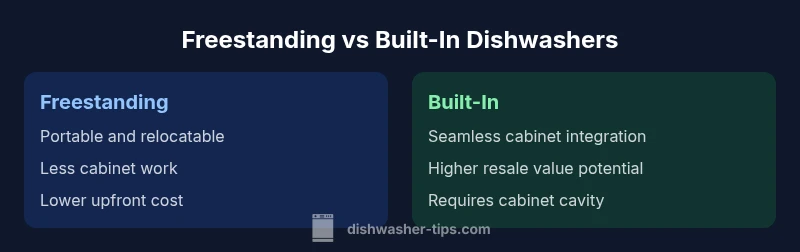
Compared to built-in units, freestanding dishwashers offer portability and easier relocation, while built-ins provide a flush, cabinet-integrated look and often better resale value. The key difference is installation compatibility: freestanding models stand alone and connect to existing plumbing, whereas built-ins are installed to fit surrounding cabinetry. For most homeowners, the choice hinges on kitchen layout, budget, and how permanent the placement should be.
What Freestanding vs Built-In Really Means
When you hear the terms freestanding dishwasher vs built in, you’re comparing two fundamentally different installation philosophies as much as two appliance models. Freestanding dishwashers are standalone units that connect to your existing plumbing and drain lines, with finished sides and front panels. Built-in models are designed to be embedded into cabinetry, typically with a front panel that matches your kitchen décor. According to Dishwasher Tips, the choice hinges on how permanent the space will be, whether you rent or own, and how much you value the seamless look versus flexibility. This section lays the groundwork by clarifying what each type offers in real-world kitchens and how that translates to daily use and long-term planning.
Installation and Cabinet Compatibility
Installation is the most obvious differentiator between freestanding and built-in dishwashers. A freestanding unit can sit in a corner, beside a counter, or under a short countertop, and it often requires minimal cabinet modification. It connects to standard under-sink water lines and drains, making relocation feasible. A built-in dishwasher, by contrast, is designed to be integrated into cabinetry. It requires a properly sized cavity, a front panel that matches your cabinets, and usually a more involved electrical and plumbing setup. This can add to project time and labor costs but results in a cohesive kitchen appearance. The Dishwasher Tips team notes that compatibility with existing cabinet configurations is a major deciding factor for most remodels.
Space, Dimensions, and Layout Planning
Space planning is critical for both options, yet the strategies differ. Freestanding units give you latitude to place the dishwasher where plumbing permits and where you have floor space. They’re helpful in smaller or irregular layouts where a full cabinet turnaround is not feasible. Built-in models demand precise cavity dimensions and clearances to ensure proper operation and door swing. Measure opening width, height, and depth, then cross-check with the product’s install guide. If you’re reconfiguring a kitchen with limited vertical space, you may need to adjust countertop overhangs or swap to shallower models. Planning now can prevent costly adjustments later.
Plumbing, Water Inlet, and Drain Connections
Both types require reliable water supply and a functioning drain, but the details differ. Freestanding dishwashers typically have flexible hoses and can reuse current plumbing without cabinet plumbing work. Built-ins usually attach to a dedicated plumbing rail in the cabinet and often require an accessible shutoff valve behind the front panel. Drain connections must slope toward the kitchen drain to avoid standing water. Ensure your supply voltage matches the appliance requirements and verify access for any future service work. The goal is to minimize relocation risk and maintenance complexity over the appliance’s lifespan.
Aesthetics, Finish, and Integration
One of the most visible differences is aesthetics. Freestanding units come with finished sides and a visible top, which may be ideal for utility spaces or open-plan kitchens. Built-ins allow a seamless look—front panels, handles, and toe kicks can be customized to match cabinets. If resale value or a stylish, integrated kitchen matters, built-ins often win. However, if you anticipate moving soon or frequently reconfiguring a space, freestanding models offer practical flexibility without committing to cabinetry changes. The choice can influence perceived kitchen value and overall satisfaction on a daily basis.
Performance, Cleaning Capabilities, and Features
Both freestanding and built-in dishwashers cover common cycles: normal, heavy-duty, quick wash, and eco-friendly options. Performance is more closely tied to the model’s quality, spray arms, filtration, and rack design than to whether it is freestanding or built-in. Look for adjustable racks, targeted spray nozzles, and soil sensors. Energy and water efficiency often track with the model line rather than its installation type. If you regularly deal with burned-on residues or heavily soiled pots, prioritize a model with robust cleaning options and a good filtration system.
Reliability, Durability, and Maintenance Considerations
Durability depends on build quality, materials (stainless steel tubs are common in higher-end builds), and maintenance habits. Freestanding units may expose more external surfaces to wear, but service access can be easier because components are more visible. Built-ins place internal components behind cabinetry; service may require cabinet removal to reach hoses or electronics. Regular descaling in hard-water areas, cleaning filters, and checking seals reduces failures in both categories. Create a routine: monthly filter checks, quarterly spray arm inspections, and annual professional servicing if your kitchen experiences heavy use.
Energy Efficiency, Operating Costs, and Longevity
Energy efficiency ratings impact operating costs regardless of installation type. Look for Energy Star certified models and examine cycles that reduce hot water use and dry times. The cost savings accumulate over years, not months, so consider your typical usage—family-sized loads will benefit more from efficiency upgrades. In addition, ensure good door seals and proper rack loading to maximize efficiency; poor loading can negate a highly efficient motor. The long-term cost balance is a function of model choice, frequency of use, and maintenance, not simply the freestanding vs built-in decision.
Price Range, Value, and Longevity Considerations
Price is a common driver in choosing between freestanding and built-in options. Freestanding dishwashers generally offer lower upfront costs and fewer installation barriers, making them attractive for renters or homeowners on a tighter budget. Built-in models command higher upfront spending due to cabinetry integration, but they often deliver higher resale value and longer service life in a kitchen that’s designed around them. When evaluating value, weigh the total cost of ownership: purchase price, installation labor, expected lifespan, energy and water usage, and potential impact on home value.
Use Cases: When Freestanding Wins
Freestanding dishwashers shine in flexible living situations. If you move frequently, live in a rental, or anticipate a temporary kitchen setup (basement kitchen, tiny house, or a kitchen renovation in progress), a freestanding model saves you from costly cabinet work and permits. They’re also ideal for awkward spaces where a built-in cavity isn’t feasible—such as kitchens with unusual angles or limited vertical clearance. Accessibility is another plus; freestanding units can be rearranged if your space changes, and some models offer portable dishwashers with wheels for absolute mobility. When you need cost-effective, non-permanent dishwashing capability, freestanding wins hands down.
Use Cases: When Built-In Wins
Built-in dishwashers excel in long-term, permanent kitchens where aesthetics matter. If you’re remodeling or building a home, the flush-to-cabinet look, panel-ready fronts, and integrated toe kicks create a cohesive design that can boost resale value. Built-ins typically pair well with a larger line of kitchen appliances in a single finish or style, which is beneficial for consistent appearance and brand alignment. They also tend to preserve cabinet space more efficiently in an integrated layout, especially in modern kitchens with tight footprints. For homes where the kitchen is a focal point, built-ins are often the superior choice.
Installation Timelines, Disruption, and Project Planning
Expect different installation timelines for freestanding versus built-in units. Freestanding installation usually requires less labor, can be completed in a few hours, and may be operable with minimal plumbing alterations. Built-ins require more planning: cavity prep, panel matching, and sometimes electrical work. If you’re coordinating a full kitchen remodel, factor in lead times for cabinetry, countertop fabricators, and appliance delivery. For renters facing a move, plan for the option that minimizes wall or cabinet modifications. Early coordination with a licensed installer helps prevent delays and unexpected costs.
Maintenance Tips To Extend Lifespan
A proactive maintenance routine extends the life of both types. Regularly clean the filter and spray arms, inspect door seals, and run a cleaning cycle monthly to prevent mineral buildup. Use the right detergent and rinse aid for your water hardness, and avoid overloading racks which can impede water flow. For freestanding units, keep the exterior clean to prevent corrosion around hoses and panels. For built-ins, check the cabinet area for signs of moisture and address leaks promptly to protect cabinetry. A tidy, well-maintained dishwasher runs more efficiently and lasts longer.
How to Decide: A Quick Checklist for Your Kitchen
Use this checklist to decide between freestanding and built-in: (1) Is your space permanent or temporary? (2) Do you value a seamless cabinet look? (3) Can you accommodate cabinetry work and potential installation delays? (4) What is your budget and how long do you plan to stay in the home? (5) How important is portability for your living situation? Cross-check with space measurements, budget constraints, and long-term goals. This structured approach helps homeowners and renters make a confident, data-informed choice.
Comparison
| Feature | Freestanding dishwasher | Built-in dishwasher |
|---|---|---|
| Installation & fit | Portable; stands alone and plugs into existing plumbing | Flush install into cabinetry with integrated front panel |
| Appearance & integration | Visible sides; flexible placement | Seamless cabinetry integration with panel-ready fronts |
| Space requirements | Requires freestanding footprint; mobile within the space | Requires a dedicated cabinet cavity; fixed footprint |
| Ventilation & clearance | Needs side/back clearance for ventilation | Typically requires proper cabinet clearance and load path |
| Rack design & capacity | Standard adjustable racks; similar capacity | Customizable panels; capacity varies by model |
| Maintenance access | Easier external access; hoses easier to reach | Internal components behind cabinet panels |
| Cost & value | Lower upfront cost; flexible budgeting | Higher upfront due to cabinetry; potential higher resale value |
| Best use case | Renters or flexible spaces; frequent moves | Permanent kitchens and high-end remodels |
The Good
- Greater flexibility and portability
- Lower upfront cost in many cases
- Easier replacement or relocation
- Quicker to install in existing spaces
- Works well in awkward or small kitchens
Disadvantages
- Less integrated appearance in many kitchens
- Potentially lower resale value in some markets
- Limited panel customization compared to built-ins
- Potential higher long-term maintenance if moving frequently
Built-in dishwashers generally offer better long-term value for permanent kitchens, while freestanding models win on flexibility and upfront cost.
If your priority is a seamless kitchen and higher potential resale value, choose built-in. If you need portability and affordability, freestanding is the smarter short- to mid-term option. Use the checklist and space measurements to guide your final decision.
People Also Ask
What is the main difference between freestanding and built-in dishwashers?
The main difference is installation: freestanding units stand alone and connect to existing plumbing, while built-ins are designed to be embedded into cabinetry for a flush, integrated look. Usage and cleaning performance are similar across well-made models.
The core difference is installation style—portable versus integrated into cabinets.
Which is easier to install in an existing kitchen?
Freestanding dishwashers are typically easier to install in an existing kitchen because they require less cabinet work and can connect to standard water lines. Built-ins may require cabinet modifications and professional installation for panel matching.
Freestanding is usually simpler to install since it needs less cabinet work.
Are freestanding models as energy efficient as built-ins?
Energy efficiency varies by model rather than by installation type. Look for Energy Star certification, efficient wash cycles, and high-quality seals to ensure comparable or better energy use in either configuration.
Energy efficiency depends on the model; check certifications and cycles.
Can you convert a freestanding dishwasher to a built-in?
Conversion is possible in some cases but not universal. It typically requires a new cabinet cavity, front panel, and professional adjustments to plumbing and electrical connections. Check with the manufacturer for compatibility.
Conversion isn’t guaranteed; it depends on the model and cabinet design.
Which type is better for small kitchens?
For very small kitchens with limited counter space, a built-in model can maximize cabinet efficiency and maintain a cohesive look, while a compact freestanding model may offer flexible placement in tight layouts. Your space layout will guide the best choice.
Small kitchens often favor built-ins for space efficiency, but freestanding can work with clever placement.
What to Remember
- Choose built-in for seamless cabinet integration and long-term value
- Opt for freestanding when you need portability and lower upfront costs
- Plan space and plumbing early to avoid costly changes
- Verify energy efficiency and proper installation to maximize savings
- Renters and temporary setups benefit most from freestanding models