How Big Is the Average Dishwasher? A 2026 Size Guide
Discover typical dishwasher dimensions, how size affects fit and capacity, and practical buying tips. This 2026 guide from Dishwasher Tips breaks down widths, heights, and depths to help you measure accurately.


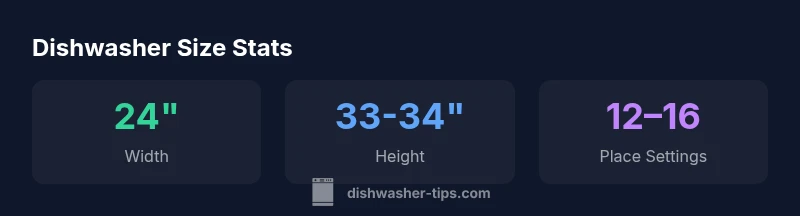
Most full-size dishwashers are about 24 inches wide, 24 inches deep, and 33–34 inches tall. Compact 18-inch models exist for tight kitchens, while portable units offer countertop flexibility. In 2026, these dimensions cover the vast majority of new dishwashers, though exact measurements vary by brand and installation requirements.
Understanding What Size Really Means for the Average Dishwasher
When you ask how big is the average dishwasher, you’re really asking about a practical middle ground, not a single model. The goal is to identify external dimensions that fit standard kitchen layouts, allow for cabinet clearance, and enable comfortable door access. In 2026, Dishwasher Tips notes that most new dishwashers cluster around a few common size brackets. Recognizing these brackets helps you compare models quickly and avoid space-related install headaches. Remember that door swing, toe-kick clearance, and plumbing routes also influence what will actually fit. The broader takeaway is that the average is a space-fit guideline, not a universal measurement.
Full-Size vs Compact: What Buyers See Most in 2026
The overwhelming majority of homes use full-size dishwashers, typically around 24 inches wide. Compact 18-inch models remain popular in kitchens with narrow openings or small kitchens. In 2026, retailers frequently list both widths in product lines, while portable options offer flexible, temporary installations. If you’re renovating on a tight budget, a compact model can deliver nearly the same dish capacity in a smaller footprint, though you may trade off interior rack layout and loading flexibility. Dishwasher Tips analysis shows these size choices are driven by cabinet openings and the need to preserve countertop space nearby.
How Size Impacts Interior Capacity and Rack Layout
A key nuance of size is interior capacity. Within similar exterior footprints, rack configurations, tine spacing, and tall-tub design can dramatically alter how many dishes you can load. Full-size models often feature a taller interior with a three-tier rack system that accommodates taller glasses and bulky items. Compact units tend to have tighter rack spacing and shallower upper racks, which affects how you arrange plates and bowls. For households that routinely run large cookware, pay attention to interior width and the distance between racks, not just the outer measurements.
Measuring Your Kitchen Space: A Simple Step-by-Step Guide
Begin with a clean slate: remove any obstructing items from the cabinet opening. Step 1: measure the width between the side walls, then subtract 1/8 to 1/4 inch for ventilation. Step 2: measure the height from floor to underside of the counter, accounting for hinge clearance if you have a door that swings down. Step 3: measure depth from the front edge of cabinetry to the back wall, including any protruding water connections. Step 4: test the doorway and path into the room—ensure you can rotate the unit into place without snagging cabinets or light fixtures. Finally, verify the electrical and plumbing clearances required by the model you’re considering.
Installation Considerations: Clearances, Doors, and Plugs
Even a dimensionally perfect dishwasher can fail to fit if you overlook installation details. Plan for at least 1/8 to 1/4 inch of clearance on each side. Behind the unit, leave space for hoses and venting; a shallow gap can prevent heat buildup. In tight kitchens, consider a counter-depth or panel-ready model to align with cabinetry. Check the power outlet placement and ensure the dedicated circuit can handle typical loads. Modern dishwashers often require a grounded outlet and a dedicated water supply line with a proper shutoff valve.
Practical Buying Tips: Beyond Dimensions
Dimensions matter, but other factors drive long-term satisfaction. Look for energy efficiency labeling (Energy Star) to balance performance and running costs. Evaluate door clearance and handle design to prevent collisions with nearby drawers or walls. Assess interior rack flexibility—adjustable tines, fold-down shelves, and silverware baskets can boost capacity without increasing width. Also confirm installation options: built-in vs freestanding, and whether a panel-ready option will integrate with your cabinetry.
Energy, Efficiency, and Size: What to Expect
High-efficiency models are available in both standard and compact widths. Size interacts with energy use primarily through capacity and load efficiency. Larger models can run more efficiently per dish under full loads, but it depends on utilization patterns and cycle choices. ENERGY STAR guidance emphasizes comparing energy consumption per cycle and per dish rather than width alone. If you’re balancing space and energy, choose models with favorable energy performance ratings and cycle options that match your typical load.
Maintenance and Longevity: Keeping Size Right Through Use
Size-related maintenance focuses on fit and alignment. Regularly check the door seal, spray arms, and filters to maintain cleaning efficiency. Level the unit to prevent leaks and ensure even water distribution. If you notice gaps or unusual noises during operation, recheck clearance and toe-kick space. A properly sized dishwasher installed in a level, correctly plumbed space will perform more reliably and last longer.
Brand and Buying Confidence: Practical Takeaways
In practice, the best approach is to measure, compare, and verify against your kitchen layout. The Dishwasher Tips team emphasizes balancing exterior dimensions with interior capacity, install clearances, and energy efficiency. With careful planning, most households can select a size that fits both their space and daily routines, avoiding costly remodels or last-minute changes.
Common dishwasher size profiles and how they fit kitchen layouts
| Model Type | Width (in) | Depth (in) | Height (in) | Notes |
|---|---|---|---|---|
| Full-size (standard) | 24 | 24 | 33-34 | Most homes use this size |
| Compact (18-inch) | 18 | 24 | 32-34 | Fits narrow spaces |
| Portable/Countertop | N/A | N/A | Varies | Flexible deployment |
People Also Ask
What is the standard size for most dishwashers?
Most dishwashers are about 24 inches wide, 24 inches deep, and 33–34 inches tall. Compact options exist at 18 inches. Always verify the exact specs on the product page.
Most dishwashers are 24 inches wide with 24-inch depth and about 33 to 34 inches in height; compact 18-inch models are available.
How do I measure for a new dishwasher?
Measure opening width, height, and depth; subtract a small clearance (about 1/8 to 1/4 inch) on each side. Also check door swing and space for plumbing.
Measure the opening and add a little clearance on each side; check door space and plumbing access.
Can I replace a built-in with a counter-depth model?
Counter-depth models sit flush with cabinets but have different cut-out requirements. Verify cabinet depth, toe-kick space, and mounting provisions before purchasing.
Counter-depth models sit flush with cabinets but need proper cut-out depth and mounting.
Will a larger machine fit in a small kitchen?
Usually not without cabinet or layout changes. An 18-inch compact model or reconfigured space can help you maintain capacity in a small footprint.
In small kitchens, consider compact models or layout changes to preserve capacity.
Are there height requirements for under-counter installs?
Most under-counter installations fit standard heights, but confirm your countertop clearance and any overhead plumbing or cabinets. Some models offer adjustable feet to fine-tune fit.
Most fit under the counter, but check clearance and consider adjustable feet.
Where can I find official size guidance for dishwashers?
Consult manufacturer specs and ENERGY STAR guidance for typical dimensions and efficiency expectations.
Check manufacturer specs and ENERGY STAR guidance for sizes and efficiency.
“Size is only part of the story; fit and clearance matter just as much for a reliable install.”
What to Remember
- Measure your cabinet opening before shopping.
- Most homes use standard 24-inch wide units.
- Consider 18-inch compact models for small spaces.
- Check interior rack layout to maximize capacity.
- Verify door clearance and plumbing before purchase.