Is Dishwasher or Hand Washing Better? A Practical Guide
This guide compares dishwasher vs hand washing to help you save water, energy, and time. Learn about efficiency, hygiene, cost, and practical tips for real homes.


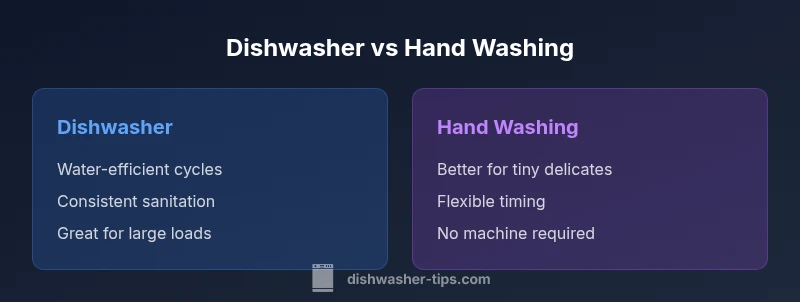
Across typical households, is dishwasher or hand washing better? In most cases, a full-load dishwasher saves water and energy compared with running a sink full of hot water for individual dishes, while delivering consistent sanitation. Hand washing may win for tiny loads, delicate items, or when your schedule makes a wash cycle impractical. Additionally, consider upfront costs, maintenance, and environmental factors when choosing for your household routines and dish volumes.
What the basic difference means for your kitchen
In everyday kitchen life, households constantly weigh practicality against efficiency. A clear, practical question that often surfaces is: is dishwasher or hand washing better for your routine? This is not a one-size-fits-all answer. According to Dishwasher Tips, the best choice depends on how much you wash, how you source water, and how important energy savings are to you. A modern approach, even for renters, emphasizes optimizing load size and choosing the right cycle. For many families, a well-used dishwasher with full loads and eco settings reduces total water and energy per dish, while freeing up time. Yet there are scenarios where hand washing wins: when you only have a few items, need delicate handling, or must wash items immediately as they come in. The following sections unpack these nuances with evidence and practical guidance, so readers can align technique with their household realities.
Comparison
| Feature | Dishwasher | Hand Washing |
|---|---|---|
| Water usage | Low water usage per load (dishwasher) | High water usage with continuous running water (hand washing) |
| Energy efficiency | High efficiency and energy-star (dishwasher) | No motorized energy use outside of your hand washing effort |
| Time investment | Shorter cycle time with machine | Longer per-dish time with manual washing |
| Hygiene outcomes | Consistent sanitation via regulated cycles | Depends on technique; risk of splashes or recontamination |
| Maintenance | Fewer parts to maintain; routine service | More surfaces to clean and dry manually |
| Best for | Efficiency-focused households and large volumes | Small loads or delicate items; flexible timing |
The Good
- Lower water usage per dish when loaded correctly
- Time savings on busy days
- Consistent cleanliness and sanitation
- Better for large households and big meals
Disadvantages
- Higher upfront cost for a dishwasher
- Requires space, plumbing, and electricity
- Performance can degrade with poor loading
Dishwasher wins for most households with full loads; hand washing remains viable for small or delicate loads.
For typical weekly dish volumes, running a full dishwasher with eco cycles saves water and energy relative to hand washing. Hand washing shines when loads are tiny, timing is tight, or delicate items require special handling. Your choice should reflect load size, space, and energy priorities.
People Also Ask
Is a dishwasher more water-efficient than hand washing?
Yes, when loaded properly, dishwashers use less water per dish on average than running tap water for manual washing. Full loads and efficient cycles maximize this advantage.
Yes. A dishwasher typically uses less water per dish if you load it fully and use an eco cycle.
Should certain dishes go in the dishwasher?
Most everyday items are dishwasher safe, but avoid delicate china, crystal, wood, and non-dishwasher-safe plastics. Always check manufacturer guidelines before loading.
Most items are fine, but check guidelines for delicate pieces.
Do dishwashers sanitize dishes?
Dishwashers sanitize by high heat cycles and detergents. Use the sanitize setting if your model offers one and ensure cycles run long enough for effective cleaning.
Dishwashers can sanitize with hot cycles; use the sanitize option if available.
Can I save energy by running fewer cycles?
Yes, but avoid partial loads. Use eco modes and full loads to minimize energy use per dish.
Eco modes and full loads save energy.
What about hand washing technique to save water?
Fill two basins for washing and rinsing; avoid letting the faucet run. Scrub efficiently to minimize water use while maintaining cleanliness.
Fill basins and wash efficiently to save water.
What are budget considerations comparing both methods?
Dishwashers have upfront costs but can reduce ongoing water/energy costs with full loads. Hand washing costs are primarily time and water expenses depending on usage.
Dishwashers cost more upfront but save resources with full loads.
What to Remember
- Aim for full loads to maximize efficiency
- Reserve hand washing for tiny loads or delicate items
- Use eco cycles and proper detergents/rinse aids
- Maintain machines and sinks for consistent performance
- Test your own kitchen to tailor the best approach