DIY Dishwasher Detergent: Safe, Simple Home Recipes
Learn how to make dishwasher detergent diy with pantry ingredients. Step-by-step recipes, safety tips, testing guidance, and storage advice to clean dishes effectively while cutting waste.


This guide shows you how to create safe, effective dishwasher detergent diy at home using common pantry ingredients. You’ll choose between powder and liquid formats, learn essential safety practices, see tested recipe options, and get tips for testing and storage to ensure clean dishes without harsh chemicals.
What dishwasher detergent diy Means and Why It Matters
Dishwasher detergent diy refers to crafting your own cleaning agent for dishwashers from everyday pantry ingredients. This approach can reduce packaging waste, tailor cleaning power to your water and loads, and lower ongoing costs over time. The Dishwasher Tips team notes that DIY detergents can be effective for everyday dishwashing when made with safe, food-grade materials and stored properly. Whether you prefer a powder or liquid format, understanding the basics helps you avoid common mistakes and maximize results. This section grounds your approach, explains the benefits, and sets expectations for what you’ll accomplish with two reliable recipe styles.
Throughout this guide you will see the phrase dishwasher detergent diy used to denote the concept of home-made dishwasher cleaners. The goal is not to replace all store-bought products, but to offer safe, affordable, and environmentally friendlier options for typical loads and household needs. Careful preparation, accurate measurement, and proper storage are key to success.
According to Dishwasher Tips, starting with a simple, well-tested formula can reduce packaging waste and exposure to synthetic cleaners while still delivering reliable cleaning power. You’ll learn to adapt your recipe to water hardness and typical load types, so your glassware remains sparkling and your aluminum stays protected.
Safety First: Handling, Storage, and Precautions
Safety is the foundation of any DIY cleaning project, especially for something that touches foodware. Wear gloves when handling powders to avoid skin drying or irritation, and wash hands after measuring ingredients. Keep all ingredients and finished products out of reach of children and pets, and store in labeled, airtight containers away from moisture. Do not mix DIY detergent with chlorine bleaches or acidic cleaners in the same cycle, as chemical reactions can release fumes or residues. While the ingredients below are widely used for home cleaning, follow your dishwasher’s manual and start with small batches to test compatibility.
Key safety notes include keeping dry ingredients dry, using food-grade or kitchen-safe materials for storage, and avoiding questionable substitutions that could corrode seals or impact spray arms. If you or someone in the household has sensitivities, consider fragrance-free formulations first and then introduce a mild scent with essential oils in very small amounts. With a careful approach, you’ll keep your dishwasher safe and your dishes clean.
Core Ingredients and Substitutions
A successful dishwasher detergent diy uses a blend of mild builders and surfactants that are safe for most homes. Common dry ingredients include baking soda (sodium bicarbonate) for gentle cleansing, washing soda (sodium carbonate) for improved grease removal, and citric acid for softening water and helping rinse away residues. For liquid formulations, a small amount of mild liquid soap or castile soap can aid emulsification, while water acts as the carrier in liquid recipes. Optional additions include a tiny amount of fragrance or essential oils for a cleaner scent, but test first to ensure no surface spotting.
Substitutions depend on what you have on hand: if you lack citric acid, you can try a small amount of tartaric acid or adjust the ratio of baking soda to washing soda to maintain strength. Do not use strong pool chemicals or highly concentrated cleaners in household mixes. Each household has unique water hardness and dishwasher model quirks, so treat these ingredients as adjustable components rather than fixed laws—start with a basic blend and refine based on results.
When in doubt, consult your dishwasher’s manual and consider consulting a local extension program or reputable home science resource for safe substitutions. The goal is a balanced blend that cleans effectively without harming surfaces or seals.
Powder vs Liquid: Pros, Cons, and Use Cases
Powder blends tend to be more storage-stable and less prone to clumping when kept dry, making them a good everyday option. They offer straightforward dosing and can be tailored for water hardness by adjusting the ratio of baking soda to washing soda. Liquid formulations can be gentler on certain dishwasher seals and can incorporate a small amount of soap to improve emulsification, but may require careful moisture control to prevent caking or microbial growth. Your choice often comes down to personal preference, how you store ingredients, and how your dishwasher responds to different formulations.
For households with hard water, powders with increased washing soda or added citric acid can improve cleaning performance. Conversely, for sensitive skin or fragrance-free needs, a simple, unscented powder or liquid without essential oils may work best. Remember that a DIY approach still requires routine dishwasher maintenance—clean filters, check spray arms, and ensure your rinse aid is appropriate for your water type. This balance helps keep glassware sparkling without residue.
Two Practical DIY Recipes: Powder and Liquid (Yields and Guidelines)
Powder Recipe (yields about 2 cups of powder):
- 1 cup baking soda
- 1 cup washing soda
- 1/2 cup citric acid
- Optional: 1–2 teaspoons optional fragrance or essential oil for scent (use sparingly)
Mix all dry ingredients thoroughly in a large bowl, breaking up any clumps. Store in a labeled, airtight container away from moisture. Use 1–2 tablespoons per standard load, adjusting for hard water or heavily soiled dishes.
Liquid Recipe (yields about 1 liter of liquid detergent):
- 1/2 cup liquid castile soap or mild dishwashing liquid (avoid harsh, highly foaming formulas)
- 2 cups washing soda dissolved in hot water (cool before mixing)
- 3 cups water
- 1 tablespoon citric acid (dissolved in water)
Combine the soap base with the cooled washing soda solution, then add the citric acid solution. Stir gently to minimize foaming. Let the mixture cool and thicken slightly before transferring to a labeled bottle. Use 1–2 tablespoons per load, depending on your dishwasher and water hardness.
Tips for both recipes: start with smaller batches, note how your dishwasher responds over several cycles, and adjust the proportions if you notice film, residue, or poor cleaning. Always label your containers with the recipe type and date. If you notice clogging or abnormal foam, rinse the container and try a smaller dosage next time.
How to Test and Tune Your DIY Detergent
Testing is essential when you’re crafting dishwasher detergent. Begin with a small test batch and run a standard cycle with a mixed load of dishes you know well, including glassware and plastic items. Inspect for any film, cloudy residue, or dulling of metal surfaces, then adjust the formula accordingly. If you see hard-water rings or mineral deposits, consider increasing washing soda or citric acid in the next batch.
Record each test iteration: note the type of load, rinse-aid choice, water hardness, and any observed outcomes. This will help you calibrate dosage and recipe type. If residues persist, try a slightly different ratio or switch to a different recipe style for a few cycles. The key is systematic testing and incremental adjustments rather than large, sudden changes.
For households with sensitive pipes or septic systems, periodic professional advice or local guidelines can be helpful. Though DIY detergents can be effective, you want to ensure you don’t introduce substances that could disrupt the septic system over time.
Storage, Shelf Life, and Safety Considerations
Store dry powder blends in airtight containers in a cool, dry place away from moisture. Liquid formulations should be kept refrigerated or stored in a cool, dark place and used within a reasonable time frame to prevent microbial growth. Label every container with the date prepared and the type of formula, so household members know what they are loading into the dishwasher. Regularly check the container for clumping or signs of moisture infiltration, re-drying if necessary.
As with any cleaning product used around food-contact surfaces, practice standard kitchen hygiene: wash hands after handling, avoid contact with eyes, and keep the products away from pets and young children. If you have issues with allergies or sensitivities, consider fragrance-free formulations and test on a small batch before scaling up. Keep a backup plan in case your dishwasher requires a tailored approach due to water hardness or load types.
Don’t assume all dishwashers are identical—different models respond to cleaners differently. A little experimentation with safe, measured changes in your recipe can yield optimal results.
Quick-Start Checklist and Next Steps
- Decide between a powder or liquid recipe based on storage and dishwasher type.
- Gather the ingredients and tools listed in the materials section.
- Create a small test batch and run a standard cycle with a mixed load.
- Observe results and adjust dosage for your water hardness and soil level.
- Store in labeled, airtight containers away from moisture and children.
- Document your successful ratios for future batches, updating as needed for seasonal water changes.
- Consider the environmental benefits of DIY detergents, including reduced packaging waste and fewer additives.
Tools & Materials
- Baking soda (sodium bicarbonate)(Base cleansing powder; store in a dry container)
- Washing soda (sodium carbonate)(Stronger cleaning booster; helps cut grease)
- Citric acid(Softens water; aids rinsing and residue control)
- Liquid Castile soap or mild dish soap(For liquid recipe; use a gentle, low-foam option)
- Essential oils (optional)(Use sparingly (1–2 drops); test for sensitivities)
- Measuring cups/spoons(Accurate dosing is crucial for effectiveness and safety)
- Mixing bowl and whisk(For thorough blending; avoid cross-contamination with food tools)
- Airtight storage containers(Label with date and recipe type; moisture-proof)
Steps
Estimated time: 25-35 minutes
- 1
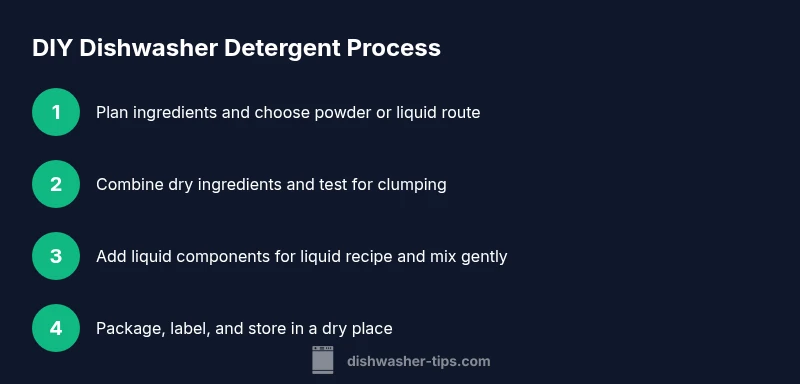
Plan and gather ingredients
Decide whether you’ll make a powder or liquid detergent and gather all dry ingredients and tools. This upfront step reduces mis-measurement and keeps the process smooth.
Tip: Double-check that all containers are dry before measuring to avoid clumping. - 2
Combine dry ingredients for powder version
Pour baking soda, washing soda, and citric acid into a large mixing bowl. Stir evenly to ensure a uniform blend and prevent clumps from forming.
Tip: Sift ingredients if you have a crusty clump to maintain smooth powder. - 3
Prepare liquid formulation components
If making liquid detergent, combine the cooled washing soda solution with the castile soap and citric acid solution. Mix slowly to minimize foam.
Tip: Pour liquids slowly and use a wide-mouth bottle for easy pouring. - 4
Add optional fragrance
If desired, add a tiny amount of fragrance or essential oil. Use sparingly to avoid residue or skin sensitivity.
Tip: Test fragrance on a small batch first to ensure compatibility. - 5
Package and label
Transfer your mixture into airtight containers and label with the recipe type and date. Proper labeling helps prevent misuse.
Tip: Include a dosage guide on the label for quick reference. - 6
Test on a small load
Run a standard dishwasher cycle with a small, representative load to gauge performance before committing to larger batches.
Tip: Look for clarity, absence of film, and clean glasses. - 7
Adjust as needed based on results
If you notice residue, tweak the ratio of baking soda to washing soda or citric acid. Repeat the test until you’re satisfied with performance.
Tip: Document changes to build a reliable at-home formula. - 8
Store and maintain
Keep the container sealed and in a dry place. Reassess periodically for clumping and replace if moisture is detected.
Tip: Keep away from children and pets; never mix with other cleaners.
People Also Ask
Is DIY dishwasher detergent safe for septic systems?
DIY detergents can be septic-friendly when you use biodegradable, food-grade ingredients and avoid harsh chemicals. Always check local guidelines and use small, well-ventilated batches to minimize impact. If in doubt, consult a professional about your system.
DIY detergents can be septic-friendly if you choose safe, biodegradable ingredients and avoid harsh chemicals.
Will DIY detergent work in hard water?
Hard water can leave mineral deposits and reduce cleaning efficiency. Increase washing soda and/or citric acid slightly and test with a small batch to tune performance for your water. Consider using a compatible rinse aid in your dishwasher cycle.
Hard water may require more washing soda and citric acid; test with a small batch to tune performance.
Are essential oils safe to use in dishwasher detergent?
Essential oils can scent your detergent but should be used sparingly to avoid residue or skin sensitivity. If you have sensitive skin or pets, start with fragrance-free formulations and monitor results before adding scent.
Use essential oils cautiously; start with tiny amounts and test for residue.
How long does a DIY detergent last in storage?
Dry powder blends stay stable longer when kept in airtight, moisture-free containers. Liquid mixtures should be stored in a cool, dark place and used within a reasonable timeframe to avoid microbial growth.
Powder lasts longer in dry conditions; liquids should be used sooner and stored properly.
Can I use DIY detergent in HE dishwashers?
Most DIY detergents can be used in HE machines if you follow proper dosage guidelines and avoid high-sudsing soap. Start with the lowest recommended amount and monitor results for overflow or residue.
Use the lowest suggested amount in HE machines and watch for suds or residue.
Will DIY detergent void my dishwasher warranty?
Most manufacturers don’t void warranties simply for using DIY detergents, but it’s wise to confirm with your model’s manual. Use tested formulas and avoid aggressive or unproven ingredients that could damage seals.
Check your model’s manual or manufacturer support to confirm warranty terms.
Watch Video
What to Remember
- Choose powder or liquid based on storage and dishwasher type
- Test loads and adjust dosage for water hardness
- Label and date all batches for safety and traceability
- DIY detergents can reduce packaging waste and environmental impact