How to Make Dishwasher Detergent at Home
Learn a practical, toxin-conscious method to make dishwasher detergent at home. This step-by-step guide covers ingredients, measurements, storage, and troubleshooting for clean, residue-free dishes.


This guide shows you how to make dishwasher detergent at home using common pantry ingredients and a few kitchen tools. You’ll need baking soda, washing soda, citric acid, and optional salt and fragrance. The process covers a simple dry mix, optional tablet formation, storage practices, and usage tips to keep dishes clean without harsh chemicals.
Why making dishwasher detergent at home can be a smart swap
According to Dishwasher Tips, DIY dishwasher detergent offers you control over ingredients, fragrance, and packaging while avoiding many synthetic additives. It can reduce plastic use by eliminating trip-to-the-store purchases and let you tailor cleaners to your water hardness and dishwasher model. This section explains the broad benefits—cost, customization, and environmental impact—so you can decide if a homemade formula fits your home. You’ll also learn how to choose safer substitutes if someone in your household has sensitive skin or chemical sensitivities. By understanding the basics, you’ll be able to create a reliable, low-suds cleaner that works with your routine and minimizes residue on glasses and silverware.
Maintain a curious, practical mindset: start with a small batch, test across multiple cycles, and adjust ratios to your water and appliance. The Dishwasher Tips team emphasizes that a well-chosen dry blend can deliver consistently clean results with less packaging waste and fewer ingredients that you might not recognize at the store.
Safe ingredients and substitutions
A safe, effective homemade detergent relies on a few simple, well-known ingredients. The core dry blend typically includes baking soda (sodium bicarbonate) as a gentle cleaning base, washing soda (sodium carbonate) for alkalinity and grease-cutting power, and citric acid to soften water and combat mineral buildup. Optional salt can help improve texture and performance in hard water, while a tiny amount of fragrance or essential oil can provide a pleasant scent if you tolerate scents in your kitchen. If someone in your household has sensitive skin or chemical sensitivities, you can omit fragrance and use pure, unscented components. Avoid adding chlorine bleach or ammonia-based cleaners to any homemade detergent, as mixing chemicals can produce harmful fumes.
If you don’t have citric acid on hand, you can substitute a small amount of lemon juice powder or rely more on citric acid in future batches. For fragrance-free homes, focus on neutral scents like citrus peel or vanilla-free options. For septic systems, stick to ingredients that are widely considered septic-safe and avoid excessive quantities of salts that can accumulate in the system over time.
How to measure and mix: a practical recipe
Starting from a dry blend makes the process predictable and safer. A widely used base recipe combines two parts washing soda, two parts baking soda, one part citric acid, and half a part kosher salt (if you choose to include it). For example, you could measure 2 cups washing soda, 2 cups baking soda, 1 cup citric acid, and 0.5 cup kosher salt for a 5.5-cup batch. Mix all dry ingredients thoroughly in a large, dry bowl to ensure even distribution. If you want a lightly scented version, add 6–12 drops of a compatible essential oil per batch and mix again until the scent is evenly dispersed. Store the blend in an airtight container to maintain dryness. Note that citric acid can react with moisture, so keep containers tightly closed and use a desiccant if your storage area is humid.
When you’re ready to use the detergent, start with a small test load to see how the formula performs with your dishwasher and water. Depending on your water hardness and dishwasher model, you may need to tweak the ratios slightly in future batches. The goal is a low-suds formula that dishes rinses clean without leaving film on glassware.
Forming tablets vs. powder: options and guidance
If you prefer tablets for convenience, you can moisten the dry mix very slightly with distilled water or a small amount of isopropyl alcohol (to prevent clumping) and press into silicone ice-cube trays or muffin tins. A light mist of moisture is enough to bind the powder; avoid soaking, which can create weak tablets or cause crumbling. Let the formed tablets air-dry for 24–48 hours in a dry, ventilated area before removing from molds. For powder detergent, simply keep the dry blend in a closed container and scoop the recommended amount per load. Tablets are handy for quick dosing, while powder offers flexibility for small or large loads.
If you run into issues with clumping, consider adding a tiny amount of cornstarch to the dry mix to absorb moisture and improve flow. Always label containers clearly to prevent accidental ingestion and keep them out of reach of children.
Testing, usage tips, and troubleshooting
Begin with a test batch to gauge performance. Run several loads with the same settings you normally use, inspecting for clean dishes and any remaining residue. If you notice spots or film on glassware, you may need to adjust the citric acid content or try a slightly larger dose for hard water. For very soft water, reduce the amount of washing soda to avoid excessive alkalinity. If your dishwasher has a pre-wash cycle, you can use slightly more detergent for heavily soiled loads, but monitor results to avoid suds or residue. In HE washers, ensure you select a low-suds formula and avoid high-suds additives. Keep the detergent dry between uses and avoid storing near sinks or steam sources, which can introduce moisture.
Keep a small log of batch numbers and observations so you can refine the ratio over time. If you notice persistent buildup on utensils, switch to a slightly milder ratio of baking soda and citric acid. The goal is a dependable, clean result across a variety of loads and water conditions.
Safety, storage, and environmental considerations
Handle all dry powders with care; avoid inhaling the dust and wash hands after handling. Use gloves if you have sensitive skin, and keep powders away from eyes and face while mixing. Store the detergent in an airtight container in a cool, dry place to prevent clumping and loss of fragrance. This approach minimizes packaging waste and reduces exposure to synthetic additives compared to some store-bought products. If you use essential oils, ensure good ventilation when mixing and avoid contact with skin if you’re sensitive to scents. For environmental impact, choose ingredients with low ecological footprints and avoid unnecessary additives. Following these practices makes your DIY detergent a more sustainable option without sacrificing cleaning power.
AUTHORITY SOURCES
- https://www.epa.gov
- https://extension.illinois.edu
- https://nap.edu
Tools & Materials
- baking soda (sodium bicarbonate)(Acts as a gentle cleaning base and deodorizer.)
- washing soda (sodium carbonate)(Increases alkalinity for grease-cutting power.)
- citric acid(Softens water and helps dissolve mineral deposits.)
- kosher salt or fine sea salt(Optional; can improve texture and performance in hard water.)
- fragrance oil or essential oil (optional)(Adds scent if tolerated; use only a few drops per batch.)
- airtight storage container(Keeps powder dry and clump-free.)
- gloves (optional)(Protect skin when handling dry powders.)
Steps
Estimated time: 15-25 minutes
- 1
Gather ingredients and safety gear
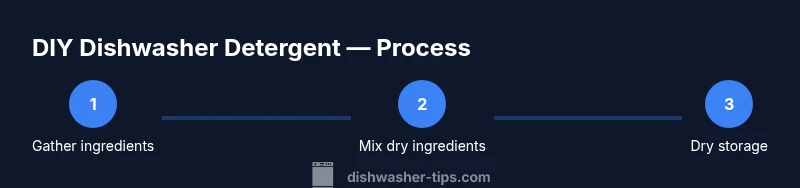
Assemble baking soda, washing soda, citric acid, optional salt, fragrance (if desired), and an airtight container. Put on gloves if you want to minimize skin contact with dry powders. This step sets up a clean, safe workspace before measuring.
Tip: Label your storage container with batch date to track freshness. - 2
Measure ingredients accurately
Measure 2 cups washing soda, 2 cups baking soda, 1 cup citric acid, and 0.5 cup kosher salt for the base batch. Use a dry kitchen scale or measuring cups to ensure consistent results across batches.
Tip: Sift powders together before mixing to minimize clumps. - 3
Whisk dry ingredients in a dry bowl
Combine all dry ingredients in a large, dry mixing bowl. Stir thoroughly for even distribution; this helps prevent one component from dominating a batch and ensures consistent cleaning action.
Tip: Mix slowly to avoid generating airborne dust. - 4
Add fragrance or keep unscented
If scent is desired, add 6–12 drops of a compatible essential oil and mix again until aroma is evenly dispersed. For fragrance-free homes, skip this step.
Tip: Test a small amount of oil first to ensure no residue is left behind. - 5
Optionally form tablets or keep powder
To make tablets, lightly moisten the powder with a minimal amount of water or alcohol and press into molds. Let dry 24–48 hours. For powder, transfer to airtight container and use as needed.
Tip: Avoid over-wetting; tablets that crumble reduce cleaning effectiveness. - 6
Test, store, and adjust
Run a test load and inspect for cleanliness and residue. If needed, tweak the ratio—more citric acid for hard water, or more washing soda if the water is soft but greasy. Keep the container dry and away from moisture sources.
Tip: Maintain a log of changes to refine the formula over time.
People Also Ask
Can I add essential oils to homemade dishwasher detergent?
Yes, you can add a small amount of essential oil for fragrance, but start with a few drops per batch and test for residues. Some essential oils may not be suitable for all dishwashers or households with sensitivities.
You can add a little essential oil if you want fragrance, but start with just a few drops and test for any residue.
Will this work in high-efficiency (HE) dishwashers?
Homemade detergent can work in HE units if you use a low-suds formula and avoid strong surfactants. Start with a smaller dose and observe performance on light and heavy loads.
Yes, with a low-suds formula. Start small and test across different loads.
Is homemade dishwasher detergent septic-safe?
Most basic DIY blends made from baking soda, washing soda, and citric acid are compatible with septic systems when used as directed and stored dry. Avoid adding large amounts of salt or extra chemicals.
Most simple DIY blends are septic-friendly when used as directed.
How long do batches last?
Store the dry blend in a cool, dry place in an airtight container. It should stay effective for several months, provided it remains dry and free from moisture intrusion.
Store in a dry place; it stays effective for several months if kept dry.
What should I do if dishes still come out dirty or spotty?
Increase the citric acid fraction slightly for hard water or test a small batch with a touch more washing soda for grease-heavy loads. Ensure the dishwasher’s spray arms and filters are clean, and run hot water before starting.
If dishes look dirty, tweak citric acid or washing soda a bit and ensure the machine is clean.
Can I form tablets if I don’t have a tablet mold?
Yes. You can press the wet mixture into any clean, small mold or a shallow tray and let it dry completely. Tablets will be convenient for dosing but require careful moisture control.
Tablets are possible with molds; just dry thoroughly.
Are there any safety risks I should know about?
The main risks are skin and eye irritation from powders and layered chemicals. Use protective gear, work in a well-ventilated area, and keep away from children and pets.
Wear gloves, keep out of reach of kids, and ensure good ventilation when mixing.
Watch Video
What to Remember
- Use a simple base of baking soda, washing soda, and citric acid.
- Adjust for water hardness to prevent residue.
- Test batches before widespread use.
- Store in a dry, airtight container to prevent clumping.
- Avoid mixing with chlorine bleach or ammonia-based cleaners.