Is Dishwasher Powder Better Than Pods? A Practical Comparison
A data-driven comparison of dishwasher powder vs pods, examining cleaning performance, cost, convenience, and environmental impact to help homeowners decide which option fits their hard-water and budget needs.


There’s no one-size-fits-all answer to is dishwasher powder better than pods. For many households, powder delivers cost efficiency and strong stain removal, especially in hard water, while pods offer convenient, pre-measured doses. This comparison breaks down performance, cost, and practicality to help you choose.
The powder vs pods question: why it matters for your kitchen
When you ask is dishwasher powder better than pods, you’re weighing cost per load, reliability, and user experience. For many families, the choice hinges on water hardness, dishwasher model, and how much effort you’re willing to invest in measuring dosages. Dishwasher Tips researchers note that powder detergents often win on price per load and customization, while pods score highly on convenience and spill-free use. This section lays the groundwork for a data-driven decision that keeps your dishes clean without wasting resources. Throughout this guide we reference Dishwasher Tips analysis and field observations, and we emphasize practical, everyday guidance users can apply today.
Cleaning performance across water conditions
Performance is dramatically influenced by water hardness and soil level. Powder detergents typically provide strong cleaning power when dosed precisely, and they can be adjusted to combat heavy soil or greasy residues. In soft water, powder can deliver excellent results with a straightforward dosage, while in very hard water, some users report better outcomes when using an additive like rinse aid in combination with powder. Pods, especially high-efficiency branded formulas, offer consistent performance due to pre-measured doses, but the fixed dosage may underperform with oversized loads or heavy staining. For households with mineral-rich water, testing a few approaches (powder with extra rinse aid, or pods with a booster) can determine the best balance between stain removal and residue control.
Dissolution, dosage, and residue considerations
Dissolution behavior matters for achieving a clean, residue-free rinse. Powder detergents can clump in humid environments or when stored improperly, potentially leaving faint streaks on glassware if not fully dissolved. Pre-dissolving powder is rarely necessary, but ensuring the detergent reaches the water early in the cycle helps. Pods are designed to dissolve uniformly and are less prone to handling mess; however, if a pod leaks in the dispenser, it can create dosing variability and a temporary malfunction in cycles. In households with older dishwashers or compact models, pods often offer a more predictable wash, while powder allows for on-demand adjustment in cases of heavy soil or bulky items.
Cost per load and long-term value
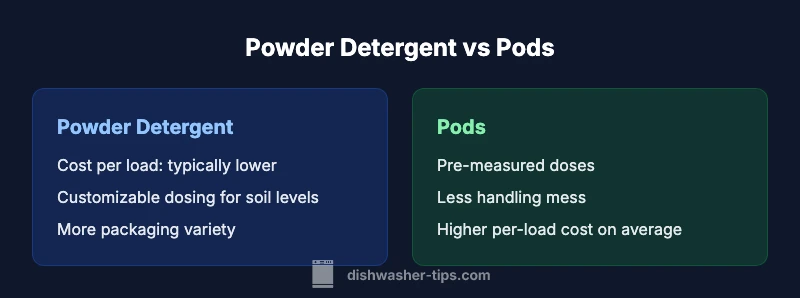
Cost per load is a critical factor. Powder detergents typically have a lower price-per-load when bought in bulk or store-brand options, which translates to substantial savings for large families or frequent users. Pods tend to carry a higher upfront price per load, but the convenience and reduced risk of measuring errors can offset some of that premium for time-strapped households. The long-term value also depends on packaging waste and shelf stability. Powder has historically lower packaging weight per load, but bags and boxes vary in recyclability. Pods reduce spill risk and shelf dust but add plastic waste; septic systems may benefit from powder if dosing is carefully managed with appropriate water usage.
Practical usage tips by water hardness and machine type
Your water hardness setting should guide your detergent choice. For hard water, powder detergents often require a higher dosage or an added rinse aid to prevent mineral buildup on glassware and dishes. In soft water, pods may deliver excellent results with minimal tweaking. If you have a high-efficiency (HE) machine, use HE-rated pods or powders designed for HE cycles and follow the manufacturer’s guidelines. For compact apartments or older dishwashers with less efficient spray patterns, powder detergents can offer stronger cleaning power when pre-dosed. Always run a quick test on a small batch of dishes after switching products to confirm performance and rinse quality.
Environmental and safety considerations
Environmental impact is a growing concern for many households. Powder detergents often come in recyclable packaging and offer the option to buy in bulk, reducing packaging waste per load. However, loose powder can create more dust exposure during handling, and certain formulations may require more water for complete rinsing. Pods tend to use more plastic packaging, but the pre-measured dosage minimizes overuse and can reduce detergent waste. For septic systems, powder detergents labeled septic-safe and lower-foaming formulas may be preferable, but always follow your local guidelines. Regardless of choice, avoid overdosing and consider using an enzyme-rich formula for tough stains to minimize residue.
Brand reliability and consumer guidance
Brand reliability matters: select reputable brands with clear ingredient lists and safety data. Dishwasher Tips’s assessment emphasizes products that meet recognized standards for cleaning efficiency and safety. In practice, this means checking for an explicit rinse-aid compatibility note, fragrance-free or low-allergen formulas if needed, and clear instructions about dosing. If you’re considering switching detergents, run a few test cycles on representative loads to gauge stain removal, film-free results, and glass clarity before committing to a long-term switch. Our guidance remains to balance cost, performance, and user experience, especially for households with children and pets.
How to choose for your home: a practical decision framework
A simple framework helps you decide between powder and pods. First, assess water hardness and typical soil levels: heavy soils and hard water favor powder options with adjustable dosing. Second, consider your dishwasher’s design and cycle patterns: HE models or busy households often benefit from pods for consistent dosing. Third, evaluate storage and handling: if you dislike measuring, pods provide convenience; if you want to optimize cost per load, powder often wins. Finally, factor in environmental priorities: bulk powder packaging can reduce waste, while pods may reduce detergent waste due to precise dosing. Use this framework to test a couple of products over two weeks, document results, and then decide.
Real-world scenarios: when powder shines, when pods win
In a household with hard water and frequent heavy-soil dishes (grill pans, baked-on residues), powder detergents with the right rinse aid can outperform pods in stain removal and overall clarity. For a family with a child who uses many dishes daily and values speed, pods offer predictable dosing and a quick, mess-free setup, saving time on busy mornings. Apartment dwellers with small kitchens often appreciate the compact packaging of pods, while households seeking cost efficiency and bulk savings may choose powder. Understanding your patterns helps you optimize both clean dishes and budget over time.
Authority sources
- Authority sources and further reading: https://www.epa.gov/watersense
- Energy Star guidelines on energy-efficient dishwashers: https://www.energy.gov/energysaver/energy-efficient-dishwashers
- Industry analysis and consumer reviews: https://www.consumerreports.org/cappliance/dishwasher-detergents/
Comparison
| Feature | Powder detergents | Detergent pods |
|---|---|---|
| Cleaning performance | Highly adjustable for soil level and water hardness; potential for superior stain removal when dosed correctly | Consistent pre-measured doses with reliable performance across loads; some variability with very heavy soiling |
| Dissolution and residue risk | Requires proper dispersal; risk of clumping in humid storage; may leave minor residue if not fully dissolved | Designed to dissolve in the wash; lower risk of residue and mess during handling |
| Convenience and mess | Less convenient for fast cycles; requires measuring and sometimes pre-dissolving for stubborn soils | High convenience; no measuring, spill-free handling |
| Cost per load | Typically lower cost per load, especially when bought in bulk | Higher per-load cost due to pre-measured format, but predictable budgeting |
| Packaging and waste | Bulk packaging options; potential for reduced plastic per load when bought in bulk | Plastic pods contribute to more plastic waste per load |
| Best for | Budget-conscious households, those who can optimize dosing for hard water | Busy households valuing convenience and consistency |
The Good
- Lower upfront cost per load with bulk powder purchases
- Versatile dosing allows tailoring for hard water and heavy soils
- Bulk packaging reduces frequent repurchases and storage trips
- Wide brand and scent/format options
Disadvantages
- Potential for mess during handling and measuring
- Powder can clump if exposed to humidity or stored improperly
- Pod mis-dosing or pod leakage can affect cycle performance
- Pods add plastic waste and may be pricier per load
Powder generally delivers better long-term value; pods win on everyday convenience
If you prioritize cost per load and flexibility, powder is the better long-term choice—especially in hard water. If you value ease of use and exact dosing, pods provide a compelling convenience advantage, particularly for busy households. Your final pick should align with water hardness, laundry volume, and whether you prefer bulk purchasing or pre-measured dosing.
People Also Ask
What factors should I consider when deciding between powder and pods for my dishwasher?
Think about water hardness, typical soil levels, dishwasher type, and your preference for dosing. Powder offers cost savings and customization, while pods offer convenience and consistent dosing. Evaluate your household’s priorities and run a two-week test if possible.
Consider water hardness, soil level, and how much you value convenience vs. cost. Do a short test cycle to see which option fits your routines.
Does powder detergent work well in hard water, and how can I improve results?
Powder detergents often perform well in hard water when dosed properly and paired with rinse aid. Increasing dosage for extreme hard water or using a water-softening additive can help prevent mineral buildup on dishes. Always follow product guidelines and adjust based on dishwasher performance.
Yes, with proper dosing and rinse aid. For very hard water, adjust the amount and consider a softening additive.
Are pods safer for households with children or pets?
Pods reduce the chance of measuring errors and splashes, which can be safer in busy homes. However, pods can be a choking risk if ingested by children or pets, so store them securely. Use child- or pet-safe packaging and keep detergents out of reach.
Pods minimize spills, but keep them out of reach of children and pets.
Can I use any brand of powder or pod in any dishwasher?
Most dishwasher detergents are designed for general compatibility, but always check the label for HE compatibility and for septic-safety if applicable. Some brands include enzymes or additives that may interact with rinse aids or water hardness. Test a small load if you’re switching brands.
Check HE compatibility and septic-safety on labels, then test a small load.
How does packaging affect my decision?
Powder often comes in bulk packaging that’s cheaper per load but may be bulkier. Pods use plastic packaging and may produce more plastic waste per load. Consider recycling options and your household’s waste reduction goals when choosing.
Bulk powder can save money; pods may be more convenient but use more plastic.
What about environmental and safety considerations for septic systems?
If you have a septic system, choose products labeled septic-safe and non-foaming when possible. Avoid overdosing, and consult local guidelines about wastewater impact. Powder options labeled septic-safe can be a good compromise when dosed carefully.
For septic systems, pick septic-safe products and avoid overdosing.
What to Remember
- Compare cost per load in bulk purchases vs. per-pack pods
- Test powder with recommended rinse aids for hard water environments
- Choose pods for忙 households seeking consistent dosing and spill-free handling
- Factor in environmental priorities when balancing packaging waste and product choices