Dishwasher Dimensions Bosch: A Practical Guide
Practical Bosch dishwasher dimensions guide: measure openings, compare standard vs compact widths, and plan installation with Dishwasher Tips.


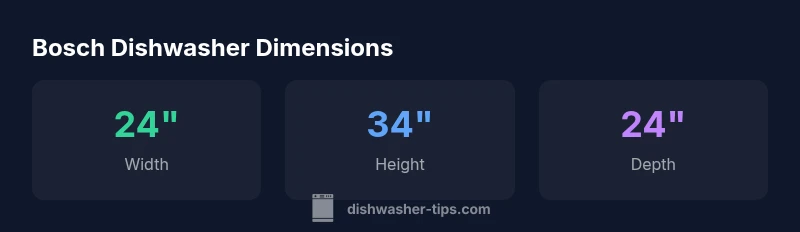
Bosch dishwashers most commonly fit a standard built-in width of 24 inches (60 cm), with heights around 34 inches and depths near 24 inches. European models often use 60 cm widths and deeper cabinetry. Slimline 18-inch options exist in select markets; always verify the exact model specs before purchase.
Bosch dimensions in context
Planning a kitchen upgrade starts with acknowledging how Bosch dishwasher dimensions influence layout and cabinet design. The phrase dishwasher dimensions bosch appears frequently in planning guides because model-specific measurements vary even within the same brand. According to Dishwasher Tips, begin by mapping your opening width, height, and depth before selecting a model. This approach helps ensure the unit fits alongside adjacent cabinetry, allows door swing without interference, and leaves space for ventilation and service access. In real kitchens, the opening width is often the determining factor for choosing a standard 24-inch Bosch built-in, while height and depth influence toe-kick clearance and cabinet alignment. A careful measurement plan reduces post-purchase surprises and simplifies the installation process.
Standard width, height, and depth: what to measure
The core dimensions to verify for any Bosch installation are width, height, and depth. Width typically centers on a standard built-in size of 24 inches (60 cm) for US configurations, with EU models commonly following the 60 cm standard. Height often ranges in the mid-30s inches, depending on leg height and countertop clearance, while depth remains around 24 inches (60 cm) in most setups. When planning, note that the door hinge and front panel can add to the effective depth, so measure not only the cabinet cavity but also the door in its opened position. Always cross-check these figures against the official spec sheet for the exact Bosch model you’re evaluating.
How to measure for a Bosch installation
A precise measurement process reduces installation risk. Start by measuring the cabinet opening: width between side walls, height from floor to the countertop underside, and depth from the back wall to the front edge of the cabinet face. Include toe-kick and any threshold or flooring variations that may affect clearance. Next, measure the space for the door swing; ensure there is unobstructed clearance when the door opens to its maximum angle. Finally, compare your measurements to the model’s specified width, height, and depth, and account for any recommended tolerances in the installation guide.
Built-in vs freestanding: dimensional differences
Built-in Bosch models assume a finished cabinet opening and alignment with surrounding panels. The cabinet cutout must accommodate the unit’s exact width and height plus minimal clearance. Freestanding or portable units require space for ventilation, a stable base, and sometimes an adjustable toe-kick. If you plan a built-in, ensure there is a continuous ventilation gap behind the unit and a straight run for water lines and drainage. For freestanding versions, confirm that the chosen location can support plumbing access and electrical connections without compromising cabinetry aesthetics.
Global dimension differences: US vs Europe
US kitchens typically use 24-inch wide built-ins, while Europe often follows a 60 cm width with slightly different height tolerances due to cabinet standards. If you’re comparing Bosch models across regions, translate imperial measurements to metric and verify that both width and door swing respect your local installation norms. Understanding these regional differences helps prevent mismatches between a model’s spec sheet and your actual kitchen configuration.
Reading Bosch spec sheets: what numbers to look for
When you pull a Bosch model’s spec sheet, look for exact values for width, height, and depth, plus any recommended clearances around the sides and back. Pay attention to column notes such as “including door overlay” or “with hinge clearance” as these can alter the effective space needed. If a spec lists multiple heights (e.g., adjustable within a range), map the lowest and highest possible fit to your cabinet configuration. In all cases, confirm that the product’s dimensions align with your measured opening before purchase.
Common installation errors and how to avoid them
Common pitfalls include underestimating door clearance, misjudging toe-kick space, and ignoring ventilation needs. Avoid these by validating the clearance in front of the unit for full door swing, ensuring the back has adequate space for hoses, and leaving a small gap for airflow. Misreading the depth can lead to a bulky fit where the door cannot fully open. Finally, always follow Bosch’s installation guide for recommended clearances to ensure warranty coverage and service access.
Planning for small kitchens: compact options and layout tips
Compact kitchens benefit from Bosch’s 18-inch options where available, though availability varies by region. In tight spaces, consider a slimline layout with a pull-out rack or a bank of drawers nearby to maximize usable cabinet space. When a standard 24-inch unit is the only option, optimize the surrounding cabinets for a flush appearance and ensure the toe-kick aligns with the room’s floor level. Remember to verify that any alternative finishes or panel-ready options still meet the dimensional requirements.”,
Example planning checklist before purchase
Before buying, complete a quick planning checklist: measure the opening (width, height, depth), note any obstructions (ventilation, pipes, or electrical), review the model’s exact dimensions, compare to opening with allowances, and consult the installation guide to confirm required clearances and service space.
Quick-start planning before your Bosch purchase
Create a simple sketch of your kitchen opening, label each dimension, and circle Bosch model candidates that fit within the measured space. Add notes about hinge side, door swing, and toe-kick. This upfront approach minimizes back-and-forth with retailers and speeds up installation.
Typical dimension ranges for Bosch dishwashers
| Model Type | Width | Height | Depth | Notes |
|---|---|---|---|---|
| Standard-width built-in | 24 inches (60 cm) | 33.9–35 inches (86–89 cm) | 24 inches (60 cm) | Most common Bosch built-ins |
| Slimline/compact | 18 inches (45 cm) | 32–34 inches (81–86 cm) | 24 inches (60 cm) | Space-saving option in select markets |
| Freestanding | 24 inches (60 cm) | 34 inches (86 cm) | 24 inches (60 cm) | Versatile placement |
People Also Ask
What is the standard width for most Bosch built-in dishwashers?
Most Bosch built-ins use a standard width of 24 inches (60 cm). Always confirm the exact model’s spec sheet for your opening.
Most Bosch built-in units are 24 inches wide; check the model spec for your exact fit.
Do Bosch offer slimline dishwashers, and what width are they?
Bosch offers compact options in some markets, commonly around 18 inches (45 cm) wide, but availability varies by region. Check local Bosch listings for current models.
There are 18-inch options in some regions; verify availability where you live.
How do I know if Bosch dimensions will fit my kitchen opening?
Measure the opening width, height, and depth, then compare with the exact model specs and installation clearances provided by Bosch.
Measure your space, then compare to the model specs.
What other dimensions matter besides width?
Height, depth, door hinge clearance, toe-kick space, and ventilation requirements all affect fit and service access.
Height and depth matter, plus hinge clearance and ventilation.
Where can I find Bosch model-specific dimension data?
Check the official Bosch spec sheets and product pages; contact Bosch support or your retailer for model-specific details.
Look up the model’s spec sheet or ask customer support.
“Dimensions are the starting point for a successful install; always verify model-specific specs and required clearances before purchase.”
What to Remember
- Measure the opening carefully before choosing a model
- Always verify exact model specs for fit and clearance
- Know the standard width (about 24 inches) and the availability of 18-inch compact options
- Read the official Bosch spec sheets for precise numbers
- Consider door swing, toe-kick, and ventilation when planning