Understanding Dishwasher Energy Usage and How to Save Power
A data-driven guide to understanding dishwasher energy usage, exploring per-cycle energy ranges, and practical steps to save energy while keeping dishes spotless. Learn how to compare models, optimize cycles, and lower bills with expert tips from Dishwasher Tips.


Dishwasher energy usage directly shapes your monthly electricity bill. By understanding per-cycle energy, cycle options, and how load patterns influence real-world use, homeowners can cut consumption without sacrificing cleanliness. According to Dishwasher Tips, energy-saving habits and choosing Energy Star-rated models make a measurable difference over a year. This quick overview previews deeper analysis in the article.
What dishwasher energy usage means for your bill
Energy usage on a dishwasher is more than the label on the door; it directly influences your monthly electricity bill. According to Dishwasher Tips, understanding per-cycle energy, cycle choices, and real-world loading patterns helps you translate label numbers into real savings. Kilowatt-hours per cycle vary by model and setting, and price per
How dishwasher efficiency is measured
Efficiency metrics for dishwashers center on energy use per cycle, performance in cleaning, and water consumption. In many regions, Energy Star or equivalent labels indicate models that meet or exceed baseline efficiency targets. U.S. DOE testing protocols measure energy use across representative cycles, while label guides translate those results into consumer-friendly numbers. When evaluating a machine, look beyond the sticker and consider cycle options (eco, quick, heavy) and dry methods. The takeaway is that efficiency is a combination of the appliance’s design and how you operate it.
Real-world energy ranges by cycle and model
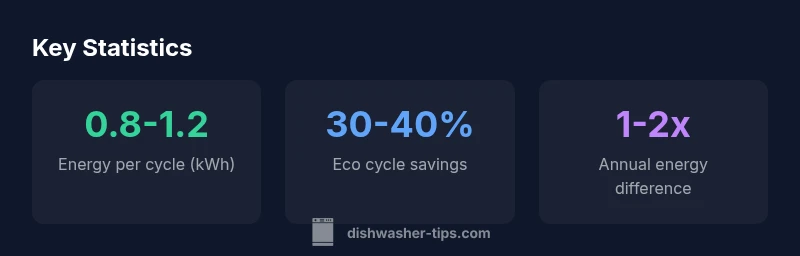
Real-world energy use varies by model type and cycle choice. In practice, front-load, high-efficiency (HE) models often land in the 0.5-1.0
How load size, soil level, and options affect energy use
Loading a dishwasher efficiently is a powerful lever for reducing energy usage. Run full loads whenever possible and avoid partial fills; this minimizes the number of cycles you run. Use eco or energy-saving cycles as the default, and reserve heated-dry options for times when dishes require quick drying or when ambient humidity makes air drying impractical. Pre-rinsing leaves more work for the machine and can add time to the cycle, indirectly affecting energy use. Regular maintenance—clean filters, spray arms, and seals—keeps water pressure and temperature stable, supporting consistent energy performance.
Tips to minimize energy use without sacrificing cleanliness
- Run full loads only; avoid partial cycles.
- Choose an eco/energy-saving cycle whenever dishes allow.
- Use air-dry or condensation drying instead of heated drying when possible.
- Skip pre-rinsing to reduce water and energy demands; scrape dishes instead.
- Schedule off-peak operating times if your utility offers time-of-use pricing.
- Keep filters and spray arms clean to maintain efficient water and energy use.
- Consider setting a lower wash temperature if your dishes tolerate it; some models automatically adjust energy use based on soil.
- Invest in a newer Energy Star-rated model when the budget allows; newer designs often use less energy across cycles.
Comparing energy labels and certifications
Labels like Energy Star provide a baseline for efficiency, but they don’t tell the whole story. Look at the operating modes and per-cycle energy figures for the cycles you actually use. The Energy Guide label (where available) can highlight expected annual energy usage, which helps you compare models across brands. When shopping, consider the total lifecycle cost, including maintenance and potential repair costs, not just the up-front price.
Practical scenario analyses: small apartment vs family home
In a small apartment with 1-2 occupants and light dish usage, an energy-conscious model used on eco cycles could consume roughly 120-200
Estimated per-cycle energy and water use by common dishwasher types
| Model Type | Typical Cycle Energy (kWh) | Water Usage per Cycle |
|---|---|---|
| Front-load HE | 0.5-1.0 | 3-5 gallons |
| Top-load HE | 0.8-1.2 | 5-7 gallons |
| Dishdrawer/Compact | 0.4-0.8 | 2-4 gallons |
People Also Ask
How much energy does a typical modern dishwasher use per cycle?
Most modern dishwashers use roughly 0.5-1.2 kWh per cycle, depending on model and settings. Choosing eco modes and full loads can lower this range in practice.
Most modern dishwashers use about half to a little over one kilowatt-hour per cycle; use eco modes and full loads to reduce energy use.
Do eco or quick cycles save energy?
Eco cycles are designed to use less energy and water, usually by extending run times to maximize efficiency. Quick cycles use more energy for faster results but can still be energy-conscious when fully loaded.
Eco cycles save energy by using less water and longer, efficient washing. Quick cycles save time but may consume more energy if not fully loaded.
Does pre-rinsing dishes affect energy usage?
Pre-rinsing can increase water use and may not significantly reduce energy use. Modern dishwashers are designed to handle lightly soiled dishes efficiently when loaded properly.
Pre-rinsing uses extra water and doesn't necessarily cut energy. Let the machine handle lightly soiled dishes with proper loading.
Are drawer-style dishwashers more energy-efficient?
Drawer or compact models can be efficient for small loads, but energy use depends on the cycle you choose and how you load. Full loads remain the best energy strategy.
Drawer models can be efficient for small loads, but you still need full loads and smart cycles to save energy.
Should I pre-wash or rinse heavily soiled dishes?
Pre-washing heavily soiled dishes can waste water and energy. Scrape off excess food and let the dishwasher handle the rest with an appropriate cycle.
Pre-washing heavily soiled dishes wastes water and energy; scrape leftovers and let the dishwasher do the rest.
How can I estimate annual energy usage for a dishwasher?
Multiply the per-cycle energy by the estimated number of cycles per year, then adjust for your local electricity rate and any off-peak pricing. Use the product label’s annual energy figure as a starting point.
To estimate yearly energy use, multiply per-cycle energy by cycles per year and adjust for your electricity rate and usage pattern.
“Efficient dishwashing hinges on both the machine’s design and how you operate it. Good loading habits paired with smart cycle choices yield the biggest gains.”
What to Remember
- Run full loads to maximize energy efficiency
- Prefer eco/energy-saving cycles whenever possible
- Avoid heated drying when not needed
- Regular maintenance boosts efficiency
- Compare models using energy labels and total cost