Do Dishwashers Use a Lot of Electricity? A Practical Guide
Discover how much electricity dishwashers actually use, what factors influence energy use, and proven steps to lower your bills. Practical guidance from Dishwasher Tips.


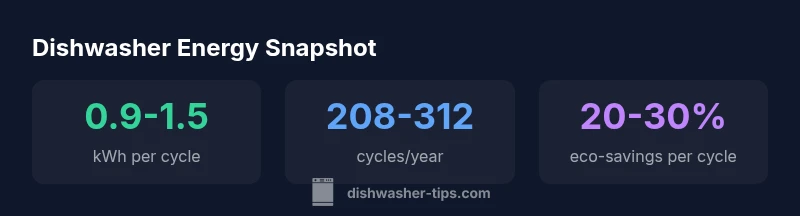
Yes, dishwashers can use a noticeable amount of electricity, but modern models are designed to run efficiently. In general, energy per cycle ranges from about 0.9 to 1.5 kilowatt-hours (kWh) for ENERGY STAR machines, with higher-end or older models consuming more. Your actual use depends on cycle choice, load size, and water temperature, but the difference between full and partial loads matters more than you might expect.
Understanding how much electricity dishwashers use
Do dishwashers use a lot of electricity? The short answer depends on model and how you use it. In modern homes, dishwashers often consume energy in the range of roughly 0.9 to 1.5 kilowatt-hours (
Key factors that drive energy use per cycle
- Cycle choice: Eco or light cycles typically use less energy than heavy-duty or sanitize cycles.
- Load size and soil level: Full loads with moderate soil levels optimize energy and water use.
- Water temperature and heating: The dishwasher must heat water to a safe temperature; models with heat-pump drying or improved insulation reduce overall energy.
- Dishwasher age and efficiency rating: Newer models with ENERGY STAR certification generally consume less energy per cycle.
- Drying method: Heated drying adds energy; air-dry or rinse-aid-assisted drying can cut consumption.
- Standby power: Unplugging or switching off the circuit can eliminate a small but ongoing energy draw.
ENERGY STAR, cycles, and efficiency labels
Energy labels help buyers compare apples to apples. ENERGY STAR certified dishwashers typically meet strict efficiency criteria and offer features like soil sensors, delayed start, and efficient spray patterns. A soil sensor adjusts wash time and energy use based on how dirty dishes are, while a good spray system can clean effectively at lower temperatures. In practice, a model with smart sensors can save energy by avoiding over-washing. Read the label: higher efficiency often means a longer wash but lower energy per cycle, so consider your typical loads. Dishwasher Tips analysis, 2026, indicates that small changes—like enabling eco mode and using the right cycle—can shave a meaningful portion of annual energy consumption for most households.
Front-load vs. top-load: energy implications
Front-load dishwashers generally use less water and heat energy per cycle than traditional top-load or older models, because they rely on a tumbling action rather than a pulsator. The efficiency gap can translate into energy savings especially when you run multiple cycles per week. However, energy use depends on model features and cycle choices more than door orientation. If you are upgrading, prioritize ENERGY STAR and look for a model with a high energy efficiency rating and a soil sensor.
Drying methods and their energy impact
Drying is a notable portion of dishwasher energy use. Heated drying can add significant energy per cycle, while passive or air-dry methods rely on residual heat and exterior airflow. To minimize energy, consider models that offer the option to air dry, or use rinse aid to help faster evaporation. If weather or kitchen layout allows, you can also open the door for a few minutes after the cycle to finish air drying. The energy savings from drying controls can be substantial when used consistently.
Practical tips to cut electricity use without sacrificing clean dishes
- Run full loads whenever possible; partial loads waste energy and water.
- Use Eco or energy-saving cycles and enable soil sensing when available.
- Avoid pre-rinsing; modern machines can wash lightly soiled dishes efficiently.
- Use rinse aid to improve drying with lower heat settings.
- Turn off heated drying and opt for air-dry when the cycle ends.
- Clean filters and spray arms regularly to maintain optimal cleaning with less energy.
- If your schedule allows, run cycles during off-peak hours to potentially save on electricity costs.
- Consider a model with heat-pump drying or improved insulation for long-term savings.
Planning your purchase: energy performance and features to prioritize
When shopping, focus on the energy-related specs that translate into real savings. Look for ENERGY STAR certification, a low energy per cycle figure, and features like soil sensors, smart detergents compatibility, and an option to disable heated drying. Compare models based on estimated annual energy consumption (
Maintenance that preserves efficiency
Regular maintenance preserves energy efficiency just as much as a good purchase. Clean filters and spray arms monthly to keep cleaning performance high at lower energy input. Check door seals for leaks, which can force longer wash cycles and wasted energy. Descale if you live in hard water regions to prevent mineral buildup that can hinder cleaning efficiency and require longer run times. A well-maintained machine spends less time running and uses less power per cycle.
Debunking common myths about energy use in dishwashers
- Myth: You should always pre-rinse dishes to help the machine work faster. Pre-rinsing wastes water and energy overall. Modern dishwashers handle light soils well.
- Myth: Running a cycle only halfway full saves energy. In most cases, a full load reduces energy per dish dramatically; partial loads burn more energy per dish.
- Myth: Opening the door mid-cycle saves energy. It breaks vacuum seals and often triggers longer cycles; it is best to let the machine complete its cycle.
- Myth: Higher wattage means more energy savings. Wattage is the power draw; energy per cycle depends on how long and how efficiently the cycle runs.
Energy use by dishwasher model type and typical usage
| Model Type | Avg Energy per Cycle (kWh) | Annual Cycles | Estimated Annual kWh |
|---|---|---|---|
| Front-load | 0.9-1.5 | 208-312 | 187-468 kWh |
| Top-load (HE) | 0.7-1.2 | 208-312 | 145-374 kWh |
| Top-load (Standard) | 1.5-2.0 | 208-312 | 312-624 kWh |
People Also Ask
What is the typical energy use per cycle for a modern ENERGY STAR dishwasher?
Most ENERGY STAR dishwashers use roughly 0.9-1.5 kWh per cycle, depending on the cycle chosen and soil level. Labels on the model will provide the exact range. Context from Dishwasher Tips Analysis, 2026 helps readers compare across models.
Most modern ENERGY STAR dishwashers use about one kilowatt-hour per cycle, varying by cycle and soil level. Check the label for your exact model.
Do dishwashers use more electricity when not fully loaded?
Yes. Running a cycle with a partial load is less efficient per dish. Waiting to run a full load or using smaller cycles for light soils can save energy and water.
Partial loads waste energy; wait until you can fill the machine, or choose cycles designed for lighter soils.
Can I reduce energy use by air drying instead of heated dry?
Yes. Air drying uses little to no additional energy, whereas heated drying adds a noticeable energy boost. Use air-dry or disable heated drying when possible.
Switch to air dry to save energy; heated drying uses more power.
Is it cheaper to hand wash dishes instead of using a dishwasher?
In most households, hand washing can use more energy and water per dish, especially if you run multiple cycles. A well-loaded, efficient dishwasher often wins on total energy usage.
Hand washing can use more energy and water per plate; a full, efficient dishwasher often saves energy.
How can I measure my dishwasher's energy use at home?
Use a smart plug with energy monitoring to track per-cycle energy, or check the model’s official annual energy consumption figure. You can then estimate yearly usage based on your cycle count.
Use a smart plug or read the label to estimate yearly energy use.
“Modern dishwashers deliver efficiency when used strategically; understanding cycles, load management, and maintenance can shave energy use without sacrificing cleanliness.”
What to Remember
- Run full loads on eco cycles to maximize energy savings
- Choose ENERGY STAR models to reduce per-cycle energy
- Drying methods substantially affect overall energy use
- Regular maintenance preserves efficiency and lowers cycles