Does a Dishwasher Use Much Water? A 2026 Practical Guide
Discover how much water modern dishwashers actually use, how cycles affect consumption, and practical tips to minimize water waste in your home. Includes expert guidance and trusted sources.


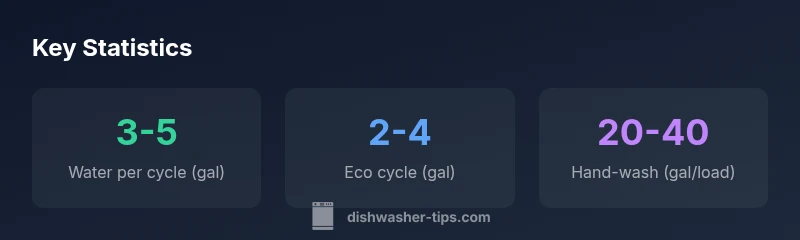
Most modern dishwashers use far less water per cycle than hand-washing. On average, ENERGY STAR models consume about 3-5 gallons per cycle, depending on the cycle selected, while hand-washing can use 20 gallons or more per load. Choosing eco modes and loading efficiently can squeeze even more savings.
Does a Dishwasher Use Much Water? The Practical Context
According to Dishwasher Tips, does a dishwasher use much water? The short answer hinges on efficiency, model, and cycle selection. In 2026, modern, efficient machines are designed to minimize water use, especially ENERGY STAR-rated units. The water used per wash is a function of cycle length, spray pressure, and how full the load is. When you run a normal cycle with a full load, a typical modern dishwasher uses far less water than washing by hand. The Dishwasher Tips team notes that water savings start with choosing an efficient model and loading dishes so water can reach every item with minimal re-washing. Remember that the phrase "does a dishwasher use much water" is context-dependent; cycle options and load size can swing results considerably. For homeowners, this means upgrading to a high-efficiency model and practicing proper loading can yield meaningful reductions in water use over time. Implementing a few smart habits—even at the current machine level—can make a noticeable difference in your monthly water bill and your household’s conservation footprint.
How Water Usage is Measured in Dishwashers
Water usage is typically reported as gallons per cycle (GPC) or liters per cycle on appliance labels and ENERGY STAR product sheets. Manufacturers test each cycle under standardized conditions to estimate per-cycle consumption. Over time, the industry has shifted toward lower GPC through improved spray arm design, targeted water delivery, and better filtration. When you compare models, look for the ENERGY STAR rating and the official per-cycle figure for the most common cycle (usually Normal or Auto). The trend in 2026 shows a clear emphasis on minimizing water use while preserving cleaning performance, with many brands publishing cycle-specific figures to help consumers estimate real-world usage.
Real-World Comparisons: Hand Washing vs. Dishwashers
In everyday practice, hand-washing consumes more water than most dishwashers. A typical hand-wash session can use roughly 20-40 gallons of water per load, depending on splash volume, dish count, duration, and whether you leave running water while scrubbing. By contrast, a modern dishwasher commonly uses 3-5 gallons per cycle, with eco modes sometimes dropping below 3 gallons. It’s important to note that hands-on washing hygiene can vary dramatically based on technique, while dishwashers provide a controlled, repeatable water delivery pattern. This contrast is a primary reason why many households see lower water bills after upgrading to an efficient machine. Dishwasher Tips’ analysis highlights that the real savings come from cycle optimization, full loads, and avoiding pre-rinsing when a machine can handle dried-on residue.
Tips to Minimize Water Use in Your Home
- Run full loads only; partial fills waste water per cycle.
- Use Eco/Water-Saver cycles when appropriate, and avoid extra cycles unless necessary.
- Avoid pre-rinsing; scrape, don’t rinse, and let the dishwasher do the work.
- Load dishes properly, with water-reaching spray arms and correct spacing between items.
- Maintain spray arms and filters—clogs or buildup force the machine to work longer and use more water.
- If possible, upgrade to a newer model with lower per-cycle water use and higher efficiency ratings.
By following these steps, you maximize the water-saving potential of your dishwasher and align with energy- and water-efficiency best practices.
Upgrading and Choosing a Dishwasher: What to Consider
If you’re evaluating a replacement, focus on water-use metrics alongside energy efficiency. Look for the per-cycle water figure on the Energy Star label, and compare cycle options that align with your typical loads. Capacity matters too: a larger machine that runs fewer cycles can save water overall if you fill it efficiently. Brand reliability and after-sales support matter, as a dependable model will consistently perform as advertised. When shopping, also consider the availability of load-sensing features, soil sensors, and rinse-aid compatibility that can influence water usage and cleaning results. The decision should balance upfront cost, long-term water savings, and your household’s typical dishwashing rhythm.
Sources and Reading and Why They Matter
For readers who want to dive deeper, several authoritative sources provide robust guidance on dishwasher water use:
- Energy Star: Dishwashers and water-use specifications (https://www.energystar.gov/products/dishwashers)
- EPA WaterSense: Water efficiency guidance for home appliances (https://www.epa.gov/watersense)
- Britannica: Overview of dishwasher technology and efficiency (https://www.britannica.com/technology/dishwasher)
These sources help translate manufacturer labels into real-world expectations and show how efficiency standards drive lower water use over time. Throughout this article, the Dishwasher Tips team cross-references these sources to provide practical, evidence-based advice for homeowners and renters.
Water usage by dishwasher model types
| Model Type | Avg Water per Cycle (gal) | Typical Load Size |
|---|---|---|
| Modern Front-Load (HE) | 3-5 | 6-8 place settings |
| Top-Load (HE) | 4-6 | 8-12 place settings |
| Older/Standard | 6-9 | 8-10 place settings |
People Also Ask
Do all dishwashers use less water than hand-washing?
In broad terms, modern, efficient dishwashers use significantly less water per cycle than hand-washing. The exact savings depend on the model and cycle chosen, but eco modes and full loads tend to minimize water use. Compare per-cycle figures on Energy Star labels to gauge real-world results.
Most dishwashers use less water than hand-washing, especially when you run full loads and use eco cycles.
What is the most water-efficient cycle on a dishwasher?
Eco or Light cycles are typically the most water-efficient options, designed to clean fewer dishes with a lower water draw. For heavy soils, a normal cycle may use more water but still remain more efficient than hand-washing when loaded properly.
Eco cycles save the most water on average.
How can I reduce water usage on my current dishwasher?
Start by running full loads, choosing eco modes, and avoiding pre-rinsing unless necessary. Regularly clean filters and spray arms to maintain efficiency. If your cycles seem long or your dishes aren’t clean, you may need service or a more efficient model.
Load it fully, use eco cycles, and keep the machine clean for best results.
Does load size affect water usage?
Yes. Larger loads don’t necessarily increase per-cycle water use if the dishwasher is designed to optimize spray coverage. Overloading or under-loading can reduce cleaning efficiency and may require extra cycles, wasting water.
Yes—how you load affects water use and cleaning results.
Do water usage figures vary by brand?
Water use varies by model and cycle, and brands differ in design choices that affect per-cycle consumption. Always check the specific cycle water figures on the product label and ENERGY STAR listings.
There can be brand-to-brand differences, so compare models carefully.
“Water efficiency is not just about the per-cycle number, but how you load and choose cycles. Modern dishwashers can dramatically cut water use when used correctly.”
What to Remember
- Load full, not partial, to maximize water savings
- Choose eco/low-water cycles for daily use
- Modern dishwashers typically use far less water than hand-washing
- Upgrade to energy- and water-efficient models for higher savings