Dishwasher vs Hand Washing Electricity: Energy Use Compared
Comprehensive, data-driven analysis of dishwasher vs hand washing electricity use, with practical tips to save energy and money while maintaining cleanliness.


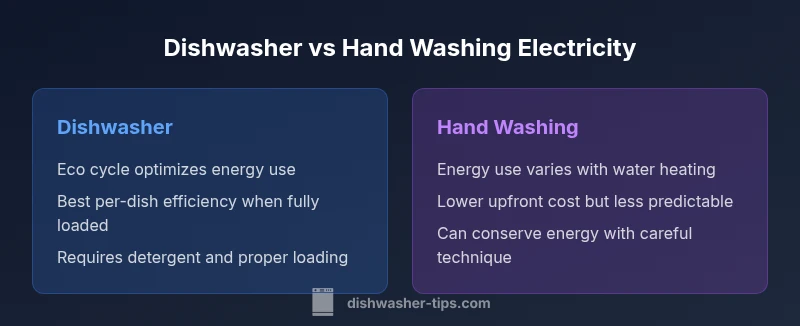
Dishwasher vs hand washing electricity: In most homes, a modern dishwasher uses less electricity per dish when it is fully loaded and uses an eco cycle, compared with hand washing where hot water heating and long scrubbing can raise electricity use. The overall energy win depends on load size, cycle choice, and water temperature. This article compares electricity use and offers tips to maximize efficiency.
Understanding electricity use in dishwashers vs hand washing
When you compare dishwasher vs hand washing electricity, you should start with where energy actually comes from in each method. In a modern dishwasher, electricity powers the motor, the water pump, the heating element, and the control electronics. The electricity cost is tightly linked to how efficiently the machine heats water, how completely it cleans, and how often you run cycles with a full load. In contrast, hand washing relies on running hot water from your tap and physical scrubbing. The energy involved may come primarily from heating water in your water heater, not from a machine, so the energy per dish hinges on how hot you run the water and how long you wash. The Dishwasher Tips team emphasizes that the energy impact of hand washing is highly variable, depending on faucet efficiency, user habits, and whether you pre-rinse or soak. If you’re aiming to minimize electricity use, the path that yields the lowest energy footprint around dishwasher vs hand washing electricity is typically to opt for a well-loaded dishwasher with an eco cycle, rather than prolonged hand scrubbing with hot water.
How to compare energy use: key factors
To weigh dishwasher vs hand washing electricity effectively, start with the big picture and then drill into specifics. Consider load size, soil level, and how often you wash. A fully loaded dishwasher benefits from economies of scale: the electricity used per dish drops as more dishes are cleaned in a single cycle. Hand washing, by contrast, scales with how many dishes you wash and how hot you keep the water. The Dishwasher Tips analysis highlights that habits—such as pre-rinsing, letting taps run while scrubbing, or using energy-intensive sanitizing steps—can dramatically swing energy outcomes. To compare fairly, measure energy use per dish or per load, normalize by the number of place settings, and account for cycle types and water heating sources. Also consider the age and efficiency of existing appliances; newer models often deliver better energy performance with familiar controls and eco modes.
The impact of water heating on energy consumption
A central factor in the dishwasher vs hand washing electricity debate is water heating. In a dishwasher, the unit heats water to a precise temperature within the appliance, often using energy efficiently through insulated tubs and rapid reheating controls. When you hand wash, hot water typically comes from the home’s water heater, which may run longer and at higher temperatures due to prolonged scrubbing. Energy usage therefore depends on heater efficiency, disposal of wastewater heat, and the duration of hot water flow. The Dishwasher Tips team notes that using cold or warm water for tasks like rinsing can substantially cut electricity use, but high-heat sanitizing cycles on a dishwasher may still be economical if you run full loads and skip extra cycles. Overall, water heating strategy is a major lever in the dishwasher vs hand washing electricity equation.
The role of load size and soil level
Load size and soil level are pivotal when comparing energy use. A full, well-arranged dishwasher creates the best energy efficiency per dish since the machine leverages its motor and heater for many items in one go. In hand washing, a large pile of dishes means longer hot water usage and extended scrubbing time, which can dramatically increase electricity draw. For homes balancing energy cost with cleanliness, the recommendation is to run full loads whenever possible and use lower-temperature cycles when feasible. The soil level matters too: heavily crusted utensils may require more water heating and longer cycle times, impacting total energy consumption. Efficient loading patterns—such as keeping cups and bowls in a direction that maximizes water reach—also improve outcomes for both methods.
Cycle types: eco vs standard vs quick
Different cycle types have a substantial impact on electricity use. Modern dishwashers often offer eco or energy-saving cycles that balance temperature, water use, and wash duration to minimize energy per dish. Quick or intensive cycles clean faster but can consume more electricity per dish if they repeat heating or use more aggressive spray patterns. For hand washing, adopting a consistent wash method with a basin and a defined rinse can reduce energy by limiting hot water use. The best practice is to choose eco settings on dishwashers for routine loads and reserve quick cycles for light soil when you’re short on time. Being mindful of the cycle you select is a straightforward lever to reduce electricity consumption in either approach.
Older vs newer dishwashers: efficiency improvements
Advances in dishwasher design over the past decade have made newer models notably more energy-efficient than older ones. Insulation improvements, better pumps, and more precise sensors help optimize water heating, cycle length, and overall energy use. When you compare dishwasher vs hand washing electricity, newer models often close the gap or tilt the balance toward dishwashers, especially with eco cycles and proper loading practices. However, if your current machine is a legacy unit with outdated components, the energy savings may be smaller, and investing in an efficient model can yield meaningful long-term reductions in electricity costs. The key is to evaluate efficiency ratings, cycle options, and typical usage patterns for your household.
Hand washing practices that save energy
If you opt to hand wash, you can still minimize electricity use by adopting a few disciplined habits. Use a basin or two to hold hot water instead of running the tap continuously, turn the heater down to a moderate temperature, and keep washing times short. Soaking stubborn pieces before scrubbing can reduce the need for hot water and effort, saving energy in the process. Keep a separate rinse water container to avoid heating more water than needed, and consider air-drying as an energy-saving alternative to towel drying. By refining your hand-washing routine, you can achieve lower electricity costs while maintaining dish cleanliness.
Economic and environmental implications
From an economic perspective, electricity cost per dish is a function of energy efficiency, load management, and usage patterns. The environmental impact aligns with energy source and consumption patterns—lower electricity use generally translates into fewer emissions and a smaller carbon footprint. In many homes, the energy savings from using an efficient dishwasher on full loads can be meaningful over time, particularly if the home’s electricity is generated from cleaner sources. Hand washing’s environmental impact depends on water heating energy and wastewater management, which can be less predictable but often more variable due to user habits. In sum, the energy landscape favors disciplined loading and cycle choices for dishwashers, and careful hot-water management for hand washing.
Real-world scenarios: what matters in daily routines
People’s routines drive energy outcomes more than intrinsic appliance efficiency alone. If your household routinely runs small loads, a dishwasher may end up using more energy per dish than a carefully managed hand wash. Conversely, a large family that runs full dishwasher loads daily generally achieves superior energy efficiency with a modern eco cycle. The takeaway is to align your method with your daily pattern: use a dishwasher for large, full loads and reserve hand washing for occasional special items, while applying energy-saving practices for either method. The Dishwasher Tips analysis underscores that small changes in habit—loading, cycle choice, and water temperature—can shift the energy balance noticeably.
How to optimize energy use when you choose to hand wash
For those who prefer hand washing, optimizing energy use means curbing hot water usage and improving efficiency of the washing process. Use a basin and heat only the amount of water you need. Wash items in batches to reduce water waste, and limit hot water exposure to essential tasks. When possible, use cold or warm water for pre-rinse and consider a mild sanitizer to achieve cleanliness without relying on high water temperatures. If you frequently hand wash, invest in a more efficient water heater or solar-assisted heating, and monitor your daily water-heating energy to determine where you can cut back.
How to choose energy-efficient dishwashing options
Choosing energy-efficient options requires evaluating three core factors: energy usage per cycle, water efficiency, and cycle options that maximize throughput per load. Look for Energy Star or equivalent efficiency ratings and read consumer reviews about real-world performance. Consider your household size and typical load volume to determine whether a high-capacity model or a compact model better serves you. Also factor in maintenance needs like filter cleaning and gasket integrity, which can affect long-term energy performance. Finally, factor in your willingness to adjust habits—such as loading patterns and cycle choices—as a key determinant of energy savings.
Common misconceptions and reality check
There are several myths about dishwasher vs hand washing electricity. One common belief is that hand washing always saves energy because it uses less power overall; in reality, hot water heating in homes can be quite energy-intensive, particularly with long washing sessions. Another myth is that any dishwasher automatically saves energy; the truth depends on load optimization, cycle selection, and model efficiency. A third misconception is that newer machines always perform best in every home; differences in water pressure, inlet temperature, and usage patterns can influence outcomes. The reality is nuanced: optimal energy savings emerge from pairing efficient equipment with mindful practices tailored to your household’s routine.
Conclusion: synthesis and actionable guidance
The dishwasher vs hand washing electricity debate is not a one-size-fits-all answer. For many households, using a modern, well-loaded dishwasher with an eco cycle yields the best energy efficiency per dish, especially when you commit to full loads and proper maintenance. If you hand wash, disciplined routines to minimize hot water usage can also achieve substantial energy savings. The most reliable approach is to assess your daily habits, compare your current energy bills, and, if needed, experiment with a few cycles or small-scale changes to determine the most energy-efficient path for your household.
Comparison
| Feature | Dishwasher | Manual Hand Washing |
|---|---|---|
| Energy efficiency approach | Optimized, controlled heating and cycles | Heats water externally; efficiency depends on heater and habits |
| Water usage impact | Designed for optimized water use per cycle | Highly variable based on water flow and rinsing practices |
| Load effectiveness | Most efficient per dish when fully loaded | Efficiency scales with time and water; less predictable per dish |
| Cycle options | Eco, heavy, quick cycles with sensors | No preset cycles; depends on user technique |
| Typical energy footprint | Lower per dish with proper loading | Higher if water is heated inefficiently or washing takes long |
The Good
- Often lower energy per dish when fully loaded
- Convenient and consistent results with standard cycles
- Reduced water use per dish under eco settings
- Better hygiene and sanitization with controlled heating
Disadvantages
- Higher upfront cost for some models
- Requires correct loading and maintenance to maximize savings
- Older units may underperform compared with new tech
- Hand washing can be less predictable in energy impact depending on habits
Dishwasher generally offers better energy efficiency per dish when properly loaded and using eco cycles.
Fully loaded dishwashers with eco settings typically minimize electricity use per dish. Hand washing energy depends heavily on water heating and technique; disciplined habits can reduce energy, but consistency favors modern dishwashers for efficiency.
People Also Ask
Is a dishwasher always more energy-efficient than hand washing?
Not always. Modern dishwashers tend to be more energy-efficient per dish when fully loaded and using eco cycles, but hand washing can be comparable if you limit hot water use and wash selectively.
In most cases, a well-used dishwasher saves energy per dish, but it depends on your load and settings.
How does load size affect energy use?
Load size dramatically changes energy use. Full loads maximize efficiency in a dishwasher; small loads waste energy per dish. For hand washing, more dishes mean more hot water and longer cleaning time, increasing energy use.
More dishes in a wash means more energy, especially if you heat hot water for a long time hand-washing.
Do eco cycles really save energy?
Yes, eco cycles are designed to reduce energy and water use by optimizing temperature, wash duration, and rinsing patterns. They are most effective on full loads with normal soil levels.
Eco cycles save energy when you have full loads and modest soil.
What about using cold water for hand washing?
Cold water hand washing can reduce energy use since the water heater isn’t asked to raise temperatures. However, effectiveness of cleaning may drop on tough soils unless you use proper detergents and pre-soaking.
Cold water can cut energy use, but it may not clean heavily soiled items well.
How often should I maintain my dishwasher to keep it energy efficient?
Regular maintenance—cleaning filters, checking seals, and ensuring proper water temperature—helps sustain energy efficiency. A poorly maintained unit can consume more energy over time.
Keep the filters clean and seals tight to maintain efficiency.
Is hand washing always less energy-intensive than a dishwasher?
No. While hand washing can use less energy in some situations, especially with careful hot-water management, dishwashers often win on energy per dish when fully loaded and used with eco settings.
Hand washing isn’t always cheaper—dishwashers often save energy per dish if used wisely.
What to Remember
- Load dishes fully to maximize efficiency
- Choose eco cycles to save energy
- Hand washing energy depends on water heating and habits
- Newer dishwashers often outperform older models
- Habits can dramatically shift energy outcomes