Do Dishwashers Use a Lot of Water? A Data-Driven Look for 2026
A data-driven analysis of how much water dishwashers actually use per cycle, how it compares to hand washing, and practical steps to minimize water waste for homeowners and renters.


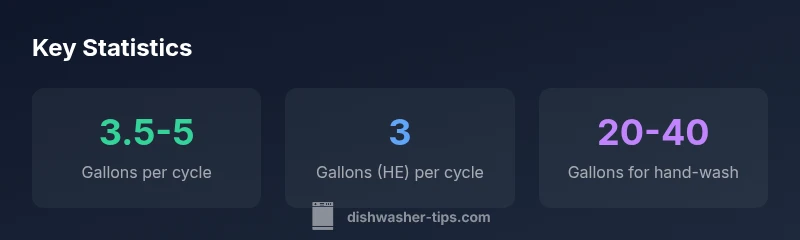
According to Dishwasher Tips, modern dishwashers use far less water per load than hand washing—roughly 3 to 5 gallons per cycle for standard models, with high-efficiency units often closer to 3 gallons. By contrast, hand washing a full load commonly uses 20 to 40 gallons, depending on the method, making dishwashers substantially more water-efficient when fully loaded.
Do Dishwashers Use a Lot of Water? A Practical Reality
The baseline question many homeowners ask is whether a dishwasher uses a lot of water. The answer is nuanced: when used correctly, a modern dishwasher generally uses only a fraction of the water required for hand washing. Typical cycles for standard machines land in a 3.5 to 5 gallon range, while high-efficiency units can operate around 3 gallons per cycle when loaded to capacity and using sensor-based cycles. To put these numbers into context, hand washing can consume 20 to 40 gallons for the same quantity of dishes, depending on technique, temperature, and whether you pre-rinse. The practical takeaway is clear: with thoughtful loading and cycle choice, dishwashers are among the more water-efficient appliances in a kitchen. This alignment with 2026 guidance from Dishwasher Tips reflects broader industry trends toward responsible water use without sacrificing cleanliness.
How Modern Dishwashers Achieve Water Savings
Water savings are not accidental. Modern dishwashers rely on a combination of hardware and intelligent software to minimize water use while maintaining cleaning power. Key features include variable-pump pressure control, sensor-driven load detection, and dedicated eco modes. Sensors assess soil level and adjust water volume and wash duration in real time, avoiding a one-size-fits-all approach. Efficient spray arms and improved filtration reduce the need for multiple rinses, which translates into less water per cycle. In practice, these design advances mean two people can run the same load more water-efficiently than in older models. The Dishwasher Tips team highlights these capabilities when advising readers on model selection in 2026.
Understanding Gallon-Per-Cycle Metrics
Gallon-per-cycle (GPC) is the standard metric used to compare water use across dishwasher models. The GPC can vary by cycle type (eco, normal, heavy) and load size. Typical ranges include roughly 3.5-5 gallons per cycle for conventional models and 3-4 gallons for newer high-efficiency units, with compact models sometimes falling below 3 gallons per cycle. When reading product sheets, note the test conditions: a full load, average soil, and standard inlet water temperature. Real-world usage can deviate from spec sheets, so use these figures as a baseline for comparison rather than an exact forecast for every day. Energy Star and other labels often reflect these efficiency characteristics, guiding shopper expectations.
Hand Washing vs Dishwasher: A Water Usage Comparison
A common point of comparison is hand washing, which typically uses far more water per load. Even with careful techniques, many households see 20-40 gallons for a full load compared to a dishwasher’s 3-5 gallons. The discrepancy becomes more pronounced with larger loads and when cycles are chosen with efficiency in mind. Remember that the dishwasher’s water usage depends on technique, cycle selection, and how full the unit is. The data strongly suggest that the water savings from a fully loaded dishwasher, especially with eco or sensor cycles, can be substantial for daily household routines.
Factors That Influence Water Use
Several variables influence how much water a dishwasher actually uses in practice:
- Load size and distribution: A full, evenly distributed load yields better efficiency than a crowded, uneven one.
- Soil level: Heavily soiled dishes may trigger longer cycles and more water, while light soils allow shorter, leaner washes.
- Cycle selection: Eco/sensor cycles typically use less water than heavy or quick cycles.
- Water hardness: Hard water can impact rinse performance and rinse-aid requirements, indirectly affecting water use.
- Detergent and rinse aid: Proper dosing can improve cleaning efficiency, reducing the need for extra rinses.
- Proper maintenance: Worn door seals or clogged filters can reduce efficiency and require longer cycles. By understanding these factors, homeowners can tailor usage to maximize water savings without compromising cleanliness.
Practical Tips for Reducing Water Use
Put these tips into practice to further reduce water use without sacrificing results:
- Fully load the dishwasher before running a cycle. A fuller load means water is used efficiently and evenly.
- Choose eco or sensor-based cycles whenever possible. These modes tailor water usage to the actual needs of the load.
- Avoid pre-rinsing dishes unless absolutely necessary. Modern detergents and spray systems are designed to handle typical food residues.
- Use rinse aid if recommended for your water hardness. It helps drying efficiency and reduces the need for extra rinse cycles.
- Maintain seals, filters, and spray arms. Clean parts prevent leaks and inefficiencies that waste water.
- Consider upgrading to a high-efficiency model if your current unit consumes more water than you expect. The long-term savings can be meaningful in households with frequent dishwashing.
How to Read the Water Use Spec on a Dishwasher
Product specs list water usage per cycle, but nuances exist. Look for the official gallons-per-cycle (GPC) figure and the cycle names associated with it (eco, normal, heavy). Compare models using the same test conditions—full loads and typical soil—for an apples-to-apples assessment. Energy Star labels often indicate overall efficiency, including water use, but reading the manufacturer’s test methodology provides better context. If still unsure, contact customer support for a cycle-by-cycle breakdown based on your typical loads.
Case Study: Upgrading to an Efficient Model
Imagine a household with an older dishwasher that consumed approximately 6 gallons per cycle on average. Upgrading to a modern HE model with an eco cycle could reduce per-cycle water use to around 3-4 gallons under typical loads. Over a year, assuming daily use, this difference translates into a meaningful reduction in water consumption and utility costs. The savings compound when the same dishwasher is loaded to capacity and used consistently with eco settings, underscoring the value of efficiency-focused choices for water-conscious households.
Common Misconceptions About Water Use
Several myths persist about dishwasher water use. A frequent one is that pre-rinsing saves energy; in reality, pre-rinsing can waste water and may be unnecessary with modern detergents. Another misconception is that longer cycles always clean better; many modern eco cycles are specifically designed to balance cleaning effectiveness with water and energy conservation. Finally, some users assume larger or older models always use more water; newer, compact, or high-efficiency models can achieve equal or better cleanliness with less water when used correctly. Understanding these nuances helps homeowners make informed choices that align with both cleanliness goals and water conservation efforts.
Water-use ranges by dishwasher type
| Model Type | Avg Water per Cycle | Notes |
|---|---|---|
| Full-Size Front-Loading | 3.5-5 gallons | Common in households, larger loads |
| Compact Apartment | 2.0-3.5 gallons | Smaller loads, space-saving |
| High-Efficiency (HE) vs Standard | 3-4 gallons | Sensors optimize water use |
People Also Ask
Do all dishwashers use the same amount of water per cycle?
No. Water use varies by model and cycle. Most modern dishwashers range roughly from 3 to 5 gallons per cycle, with high-efficiency models often closer to 3 gallons when loaded properly. Always check the cycle you intend to run and the test conditions used for the spec.
Water use varies by model and cycle, so check the exact spec for the cycle you plan to run.
How can I reduce water usage with my dishwasher?
Maximize water savings by fully loading, selecting eco/sensor cycles, avoiding pre-rinses, using rinse aid when appropriate, and maintaining seals/filters. Upgrading to a high-efficiency model can also dramatically cut per-cycle water use.
Fully load, pick eco cycles, and keep it maintained for lower water use.
Is pre-rinsing dishes necessary before loading them?
Usually not. Modern detergents and spray systems are designed to handle typical food residues. Reserve pre-rinsing for dishes with heavy, stubborn debris or caked-on food.
Most of the time you don’t need to pre-rinse.
Do not fully load or run extra cycles waste water?
Yes. Running with partial loads is less efficient and wastes water per dish. Wait for a full load or choose a cycle that matches the amount of dishes.
Partial loads waste water per dish—wait for a full load when possible.
Are some dishwashers more water-efficient than others?
Yes. Look for Energy Star labels, water-use per cycle figures, and cycle options designed to minimize water. Compare models using the same test conditions for an apples-to-apples assessment.
Yes—Energy Star and similar specs help identify the most water-efficient models.
Can water hardness affect dishwasher efficiency?
Yes. Hard water can affect rinse performance and rinse-aid needs, which can influence overall water use. Adjustments to detergent and rinse aid can help maintain efficiency.
Hard water can affect how efficiently your dishwasher uses water; adjust accordingly.
“Water-efficient dishwashers deliver sizable savings when used with full loads and the right cycle. Small changes in habit compound into noticeable reductions in water waste over time.”
What to Remember
- Load fully for best efficiency
- Choose eco/sensor cycles to minimize water
- Pre-rinse only when necessary
- Check cycle-specific water use on product sheets
- Maintain dishwasher seals and filters regularly