Do Dishwashers Use More Water? A Practical Guide
Explore whether dishwashers use more water than hand washing, how modern models save water, and practical tips to minimize usage. Learn with data from Dishwasher Tips Analysis, 2026.


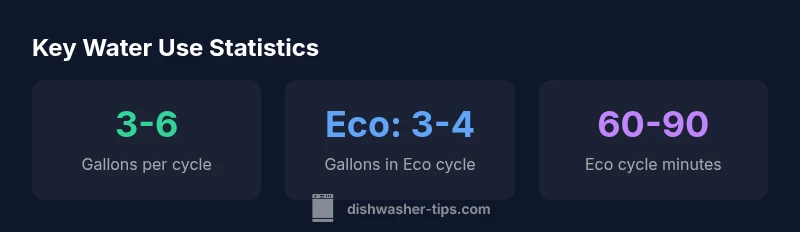
On average, modern dishwashers use about 3-6 gallons of water per load, far less than many older models or hand washing. In practice, efficiency depends on cycle choice, soil level, and load size; eco modes can cut water use by 20-50%. To minimize water use, run full loads, select Eco or Sensor cycles, and maintain seals. This helps answer the question: do dishwasher use more water? with concrete, actionable guidance.
Understanding Water Use in Dishwashers
Water efficiency in dishwashers hinges on multiple moving parts: the size of the machine, the cycle you choose, and how full the load is. Modern models are designed to spray water more efficiently, recapture residual rinse, and optimize flow through sensors. For homeowners curious about the core question, the key takeaway is that newer machines tend to use substantially less water per cycle than older ones and than the average hand-washed load if you proceed with a full, properly loaded cycle.
Do Dishwasher Use More Water than Hand Washing? A Reality Check
The question do dishwasher use more water is best answered with context. Hand washing can waste water quickly when the tap runs continuously or when you rinse dishes under running water. In contrast, a typical modern dishwasher uses a restricted amount of water per cycle, especially in Eco modes. The result is often less total water used per clean, provided you run full loads and avoid partial cycles. To compare fairly, consider that hand washing water use varies with technique, while machine use is more predictable per cycle.
How Modern Dishwashers Cut Water Usage
Newer dishwashers employ low-flow spray arms, efficient water recirculation, and sensor-based washes that shut off flow when dishes are clean. Features like soil-sensing, load sensing, and targeted spray nozzles reduce wasted water. Many models reach the EPA’s efficiency standards and qualify for energy-star ratings, which tend to align with lower water usage. Consumers should look for labels that specify gallons per cycle and ensure the machine is properly maintained to sustain efficiency.
What Factors Influence Water Use Per Cycle?
Water use per cycle is not fixed; it responds to cycle type (Eco vs Normal), soil level (light, normal, heavily soiled), and load size. Heavily soiled dishes may require more rinsing, increasing water use, while lightly soiled loads can get cleaner with less water if the cycles are properly calibrated. Hard water can also affect rinse efficiency and dirt removal, sometimes requiring more rinse cycles. In general, full loads in Eco or Sensor cycles minimize water use while maintaining cleanliness.
Practical Tips to Minimize Water Use
- Always run full loads; partial loads waste water and energy.
- Choose Eco or Sensor cycles when appropriate and use the delay feature to run during off-peak hours if water pressure is an issue.
- Regularly inspect door gaskets and spray arms; leaks force the machine to use more water.
- Use the correct amount of detergent; excessive suds can reduce rinse efficiency.
- If you have hard water, consider using a rinse aid, which can improve drying and may reduce the need for extra water in the final rinse.
How to Estimate Your Home's Water Use with a Dishwasher
To estimate, identify your dishwasher’s gallons-per-cycle specification and multiply by the number of cycles run weekly. Adjust for cycle variety (Eco vs Normal). Compare this to your typical hand-washing daily water use, which varies by technique. The result will show whether your household saves water with a machine. Dishwasher Tips recommends monitoring monthly water bills and adjusting usage patterns to maximize efficiency.
Common Myths About Water Use in Dishwashers
Myth: All dishwashers use the same amount of water. Reality: Modern dishwashers vary by model and cycle, with some using less water than others. Myth: Hand washing is always more water-efficient. Reality: Hand washing can waste water if run under a continuous stream; efficiency depends on technique. Myth: Eco cycles always save water. Reality: They do, but savings depend on soil level and how full the load is. Always check the product spec for gallons per cycle.
Buying Decisions: Models with Low Water Use
When shopping, compare gallons per cycle and check whether the model supports eco-friendly cycles, sensor wash, and soil-sensing capabilities. Look for independent testing results and certifications. A lower water-use figure should align with a strong cleaning performance. Balance water efficiency with energy efficiency, reliability, and maintenance costs to ensure long-term savings.
Maintenance to Preserve Water Efficiency
Maintain seals around the door to prevent leaks, clean spray arms to avoid clogged jets, and descale if you have hard water. A well-maintained dishwasher uses water as designed and reduces the risk of water waste due to mechanical inefficiencies. Regular maintenance is a simple, effective way to sustain the water-saving advantages of modern machines.
Comparison of water use between modern and older dishwashers
| Metric | Modern Range | Past Range | Notes |
|---|---|---|---|
| Water per cycle | 3-6 gallons | 6-12 gallons | Variation by model; eco modes reduce usage |
| Cycle length | 60-90 min | 45-60 min | Older models tended to run shorter cycles but used more water |
| Load optimization | Full loads maximize efficiency | Partial loads waste water | Always aim for full loads |
People Also Ask
Do dishwashers really use more water than hand washing?
Hand washing can waste water if the tap runs continuously; modern dishwashers use about 3-6 gallons per cycle, depending on the cycle and load. In many cases, a dishwasher is more water-efficient when used correctly.
Hand washing can waste water if you leave the tap running. Modern dishwashers are generally more water-efficient, especially with Eco cycles and full loads.
Which dishwasher cycle uses the least water?
Eco or Sensor cycles typically use the least water, especially when the load is light or moderately dirty.
Eco cycles usually use the least water; use sensor modes for mixed soil levels.
Do smaller loads waste water?
Partial or small loads tend to waste water and energy because the machine cannot optimize spray and rinse. Wait for full loads when possible.
Partial loads waste water; wait for full loads to maximize efficiency.
Does water usage vary by dishwasher type?
Yes. European-front-load designs and other high-efficiency types can use less water than conventional top-load models. Always check gallons-per-cycle on the spec label.
Different dishwasher designs vary in water use; check the label for gallons per cycle.
Can I reduce water usage without sacrificing cleaning?
Yes. Choose energy- and water-efficient models, use Eco or Sensor cycles, and ensure proper loading and detergent use to maintain cleaning while using less water.
Yes—eco cycles and proper loading can cut water use without sacrificing cleanliness.
What maintenance steps reduce water waste?
Regularly clean spray arms, inspect door gaskets for leaks, and descale hard water. Maintenance keeps water use aligned with the unit's specifications.
Keep sprays clean and seals tight to prevent extra water use.
“Water efficiency in dishwashers isn't just about the label; real savings come from how you load and cycle choice.”
What to Remember
- Choose Eco cycles to minimize water use
- Run full loads to maximize efficiency
- Compare models' water per cycle before buying
- Regular maintenance reduces leaks and wasted water
- Use sensor-based cycles for variable soil levels